



Piet Lombard, Directorate Plant Sciences, Sustainable Cropping Systems Research, Western Cape Department of Agriculture
Conservation agriculture (CA) has transformed dryland grain production in the Western Cape over the past two decades. Producers have embraced minimum soil disturbance, permanent soil cover, and diversified crop rotations, resulting in more resilient farming systems and improved soil health. Yet one important component of these rotations still has significant room for growth: grain legumes.
Many producers ask whether it is really necessary to test new cultivars before planting them commercially. The short answer is yes. In a farming environment where every hectare carries a substantial financial investment, cultivar evaluation is not a luxury – it is an essential risk-management tool. Just as wheat, canola, and barley cultivars are rigorously evaluated before being recommended to producers, the same approach is urgently needed for legumes if they are to become successful cash crops in Western Cape cropping systems.
A strong legume cultivar evaluation programme will give producers the confidence to diversify their rotations, improve nitrogen use efficiency, and create new income opportunities while strengthening CA systems.
Why cultivar evaluation matters
The value of cultivar testing is already well established in the Western Cape’s cereal and oilseed industries. Every year, new wheat, barley, and canola cultivars are evaluated under local conditions before they are widely recommended to producers.
These trials answer practical questions that every producer wants to know:
- Does the cultivar mature within the Western Cape’s growing season?
- Can it produce competitive yields under dryland conditions?
- How does it perform in different production regions?
- Is it resistant to important diseases such as blackleg in canola?
Elite cultivar trials provide the first screening of promising material from breeding programmes worldwide. Cultivars that are poorly adapted – perhaps because they mature too late, are susceptible to disease, or cannot cope with local climatic conditions – are eliminated before they ever reach commercial recommendation trials.
Without this process, producers would effectively become the testing ground. Imagine investing in expensive seed, fertiliser, and herbicides only to discover that a cultivar flowers too late, fails to fill grain before the season ends, or succumbs to disease. Given today’s high input costs, very few producers can afford that level of risk.
The same principle applies to legumes.
Legumes are essential to CA
Research conducted in the Western Cape has consistently demonstrated the value of legumes in CA rotations. Their contribution extends well beyond simply adding another crop to the sequence.
Legumes strengthen CA systems by:
- increasing diversity above and below ground;
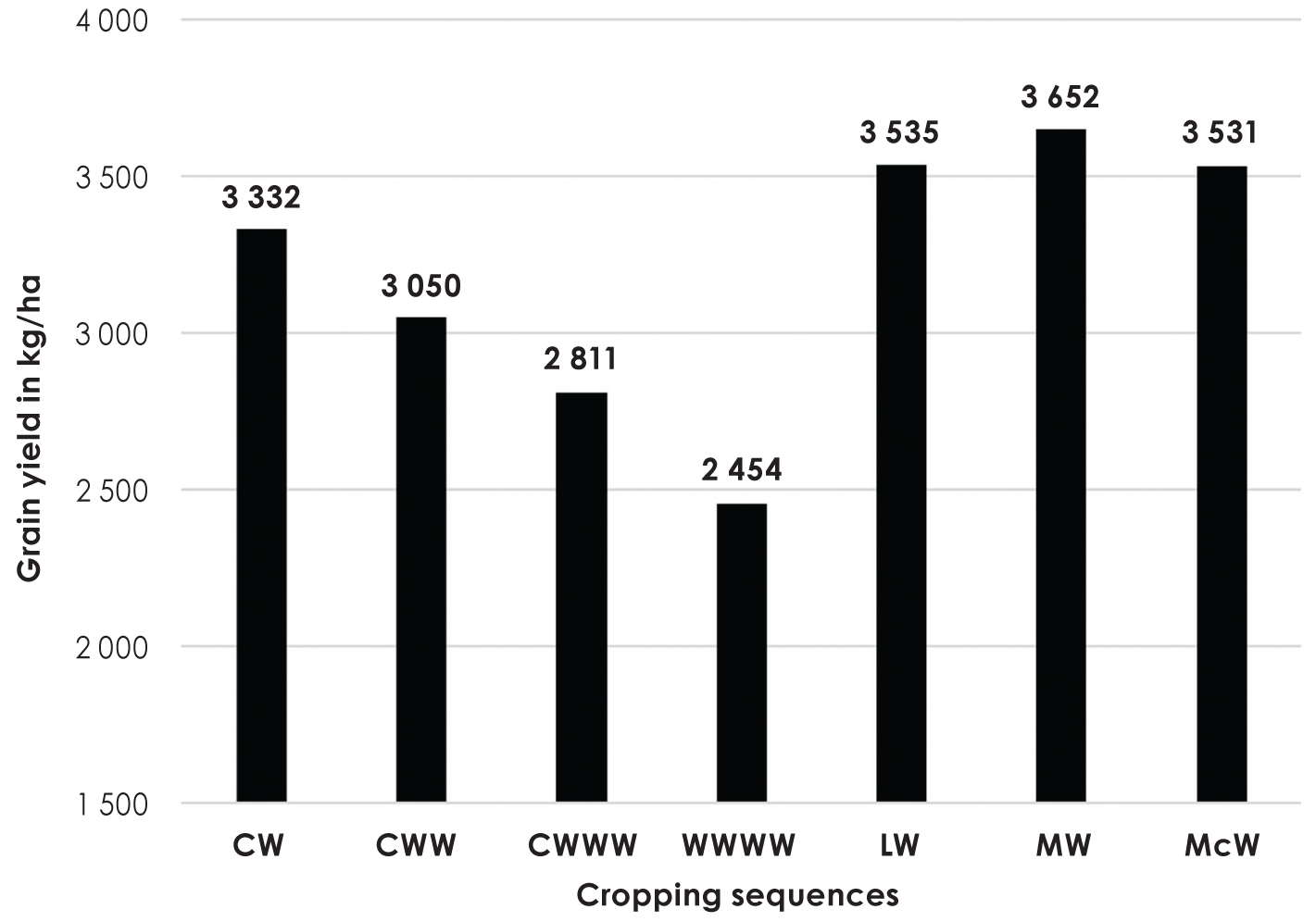
- improving yields of following crops (see Graph 1);
- fixing atmospheric nitrogen through its symbiotic relationship with Rhizobium bacteria;
- reducing nitrogen fertiliser requirements for following cereal crops;
- breaking disease and pest cycles; and
- providing additional herbicide modes of action for better weed management.
This diversity is one of the foundations of resilient cropping systems, particularly in Mediterranean environments where rainfall variability continues to increase.
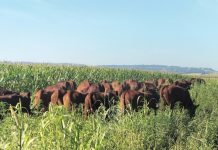
Western Cape producers already have excellent pasture legumes available for rotational systems, including medics, clovers, vetch, and lucerne. These species have played an important role in integrated crop-livestock systems for many years.
However, grain legumes remain the missing link.
The opportunity for pulse crops
Around the world, pulse crops such as lentils, chickpeas, peas, lupins, and faba beans have become important components of CA systems. Australia provides perhaps the best example, where pulses have become profitable rotational crops while improving the sustainability of cereal production.
In the Western Cape, producers currently have very limited choices. Commercial production relies largely on a single lupin cultivar and only a handful of faba bean cultivars. That is a very narrow genetic base for an industry that needs greater diversity.
Introducing new pulse cultivars offers two major opportunities. The first is agronomic. More legume options create more flexible rotations and improve the biological functioning of CA systems. The second is economic. Pulse crops provide producers with alternative income streams beyond wheat, canola, and barley, helping spread production and market risk across multiple commodities.
However, before these opportunities can be realised, cultivars must prove that they are adapted to local conditions.
Why local testing is indispensable
A cultivar that performs exceptionally well in Australia or Europe will not necessarily succeed in the Western Cape. Rainfall distribution, soil types, temperatures, diseases, and management systems differ considerably. A dedicated legume cultivar evaluation programme should test promising cultivars across multiple locations and seasons before making recommendations.
Testing cultivars for at least two growing seasons helps separate seasonal effects from genuine genetic adaptation, giving producers reliable information instead of one-year observations. This is precisely how a cultivar evaluation programme creates progress – by giving producers access to improved genetics while ensuring those genetics are properly tested before commercial release.
Every legume has its own requirements
Unlike cereals, legumes have very specific biological requirements. Successful production depends not only on choosing the right cultivar but also on matching it to the right environment and management practices.
Different pulse crops have different preferences: Lupins tolerate more acidic soils than many other pulse crops. Lentils prefer well-drained soils with a pH of approximately 6 or higher. Faba beans cope better with heavier, wetter soils and temporary waterlogging.
Understanding these differences is exactly why evaluation trials are necessary. They identify which crops – and which cultivars – fit particular production regions across the Western Cape.
The invisible partner: Rhizobium inoculation
One of the most overlooked aspects of legume production is the role of Rhizobium bacteria.
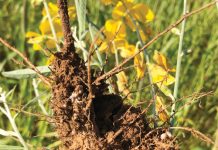
Every pulse crop depends on a specific group of rhizobia to form nodules on its roots and fix atmospheric nitrogen. These bacterial partnerships are highly specialised; one inoculant does not work effectively for every legume species.
When the correct Rhizobium strain is absent:
- nodulation may be poor or completely absent;
- nitrogen fixation is drastically reduced;
- crop yield potential declines; and
- the following cereal crop loses much of the rotational nitrogen benefit.
Rhizobia are also sensitive to soil pH and environmental conditions, making correct inoculation and soil management essential components for successful pulse production. For this reason, cultivar evaluation programmes cannot evaluate seed alone; they must also evaluate the complete production package, including inoculants and agronomic practices.
Lessons from Australia
Interest in expanding pulse production received fresh momentum during this year’s Conservation Agriculture Western Cape Jack Human Week, where Australian pulse specialist Dr Jason Brand shared lessons from Australia’s experience.
Australia’s rapid expansion in lentil production happened alongside widespread adoption of CA. Standing cereal residue became one of the keys to success.
Rather than removing wheat stubble, producers retained it on the soil surface. Lentils, with their naturally low and spreading growth habit, use the standing residue as physical support, effectively growing over the stubble like an umbrella. This improves airflow, keeps pods off the soil surface, and makes harvesting considerably easier.
Dr Brand also highlighted opportunities that appear highly relevant for the Western Cape:
- Lentils are well suited to CA systems with retained residue.
- Soil pH management is essential for successful lentil production.
- Herbicide-tolerant lentil cultivars could provide valuable new weed-management options.
- Newer Australian faba bean cultivars offer shorter growing seasons and improved podding characteristics compared with cultivars currently available locally.
Encouragingly, he has indicated that there might be a possibility of introducing new options in the Western Cape following discussions with some of his peers on our behalf.
Beyond production: markets matter too
Successful pulse production is about more than growing a crop. There must also be a profitable destination for the harvest. Many grain legumes have growing demand in both local and export markets for human consumption. However, market access differs between crops and cultivars, and quality requirements can be stringent.
A cultivar evaluation programme therefore contributes to more than agronomic recommendations. It also helps identify cultivars that meet market requirements for:
- grain quality;
- seed size and colour;
- export specifications; and
- processing suitability.
Without viable markets, many pulse crops are worth little more than livestock feed, reducing their attractiveness as cash crops.
Protecting innovation through improved seed
Another challenge facing the development of grain legumes is the widespread use of farm-retained seed and informal ‘brown-bag’ seed sales between producers. While producers understandably look for ways to reduce input costs, this practice has long-term consequences for innovation. Plant breeding requires significant investment over many years to develop cultivars with improved yield, disease resistance, and adaptation.
If breeding companies cannot recover those investments, they have little incentive to introduce new cultivars into the South African market. The result is exactly what has already been experienced with lupins: very limited cultivar choice and slow genetic improvement.
Building the next generation of CA rotations
The Western Cape has become a South African success story for CA. The next step is to strengthen these systems with a broader range of profitable grain legumes. As climate variability increases and input costs continue to rise, producers need more resilient and diversified cropping systems – not fewer options. Grain legumes can play a pivotal role in achieving that goal, but only if the right cultivars are available and properly tested.
The bottom line
Cultivar evaluation is not simply about finding the highest-yielding legume. It is about identifying cultivars that fit Western Cape CA systems, work with local soils and climate, respond to the correct Rhizobium inoculants, meet market requirements, and ultimately improve whole-farm profitability.