

Maintaining a high level of efficiency is the basis for the financial success of sunflower production. The selection of well-adapted cultivars is a simple and effective way to improve efficiency, but information on their performance is needed.
The aim of the sunflower cultivar trials is to generate information to support a sensible selection of cultivars. The cultivar recommendations in this document stem from such an evaluation, made possible by collaboration between the ARC-Grain Crops and several seed companies, with financial support from the Oil and Protein Seeds Development Trust.
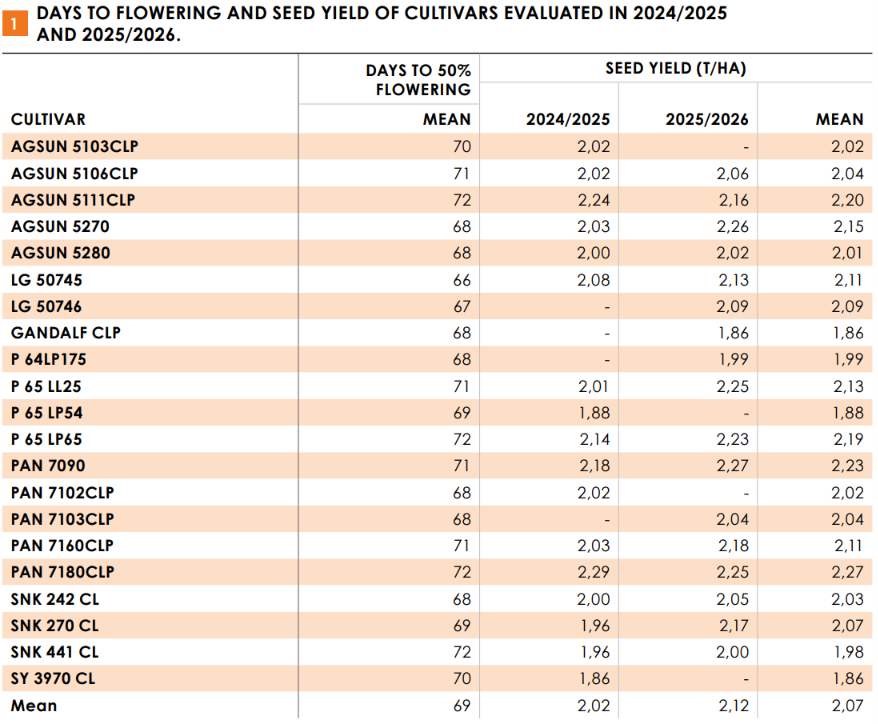
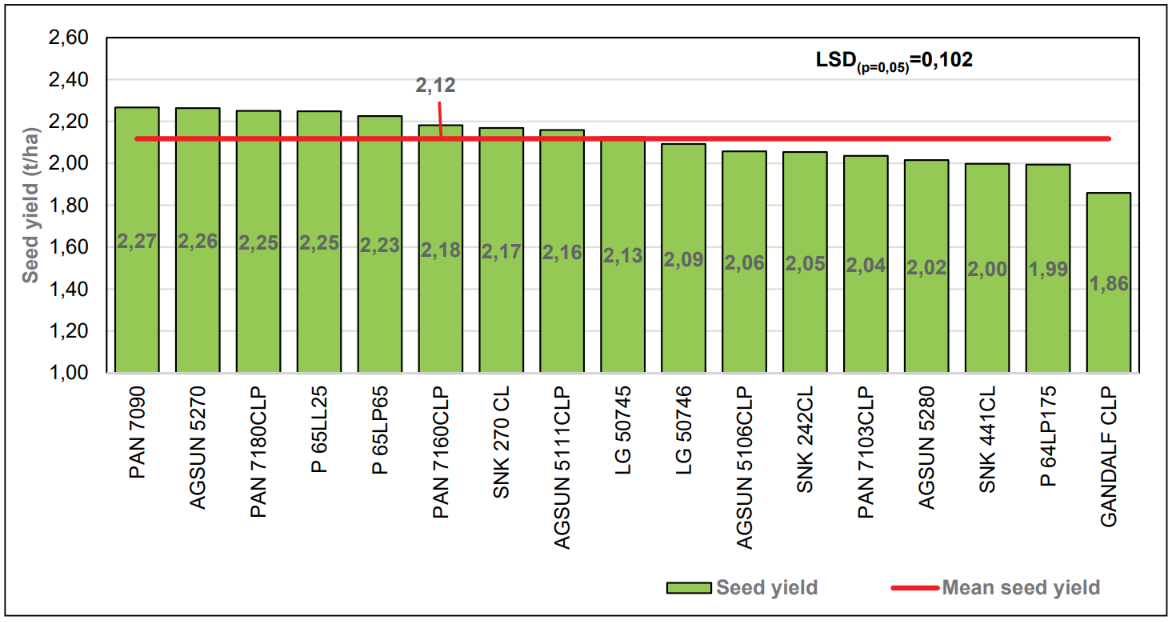
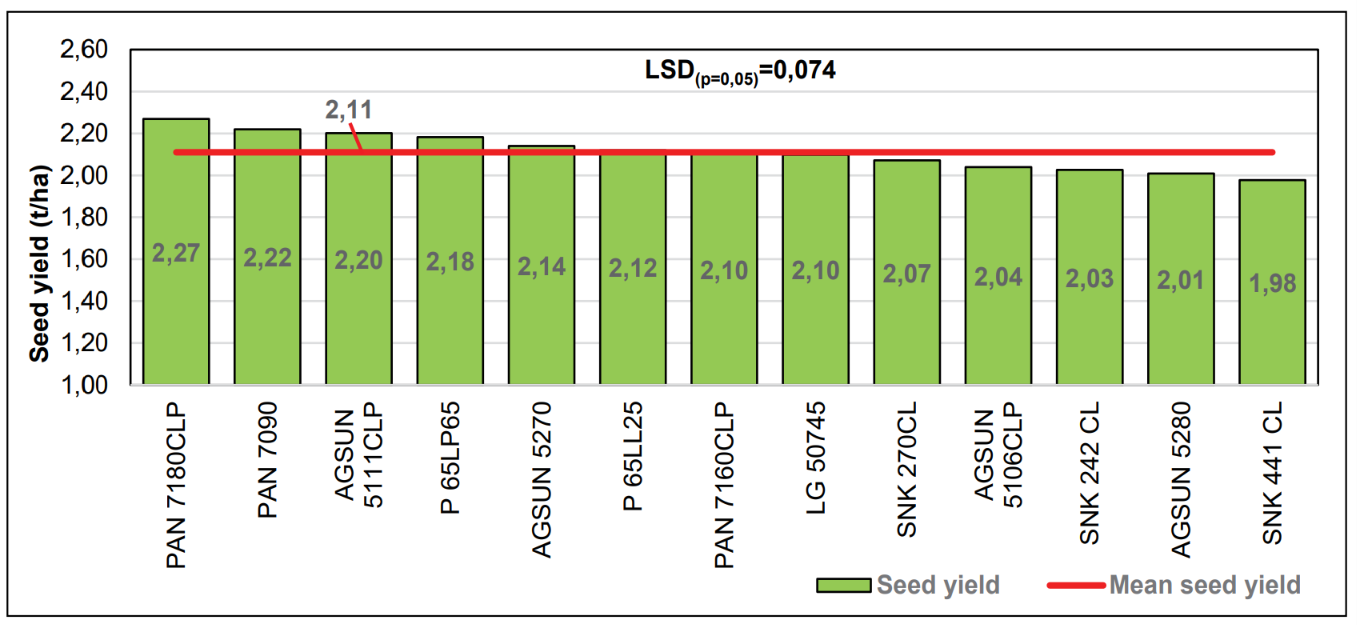
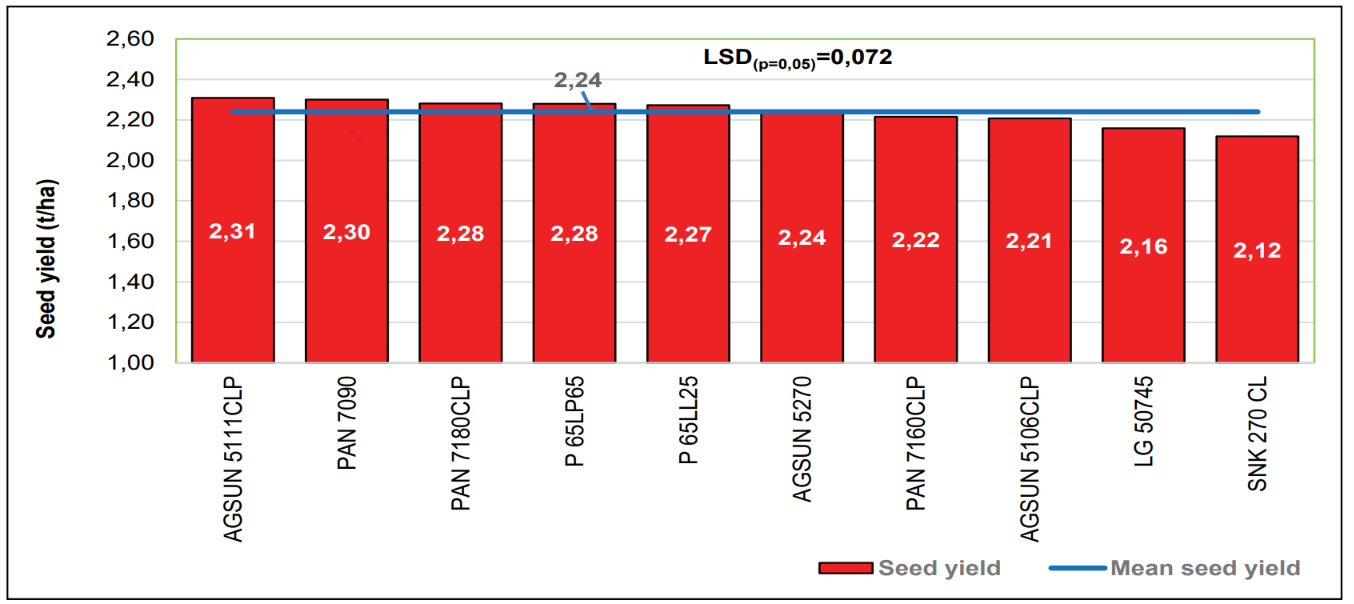
During the 2025/2026 season 17 cultivars, of which four were new introductions, were evaluated in 21 field trials. Table 1 shows the growing season lengths of these cultivars as well as their mean seed yields for 2024/2025 and 2025/2026. The graphs show sunflower seed yields for one year (Graph 1), two years (Graph 2) and three years (Graph 3).
Yield probability
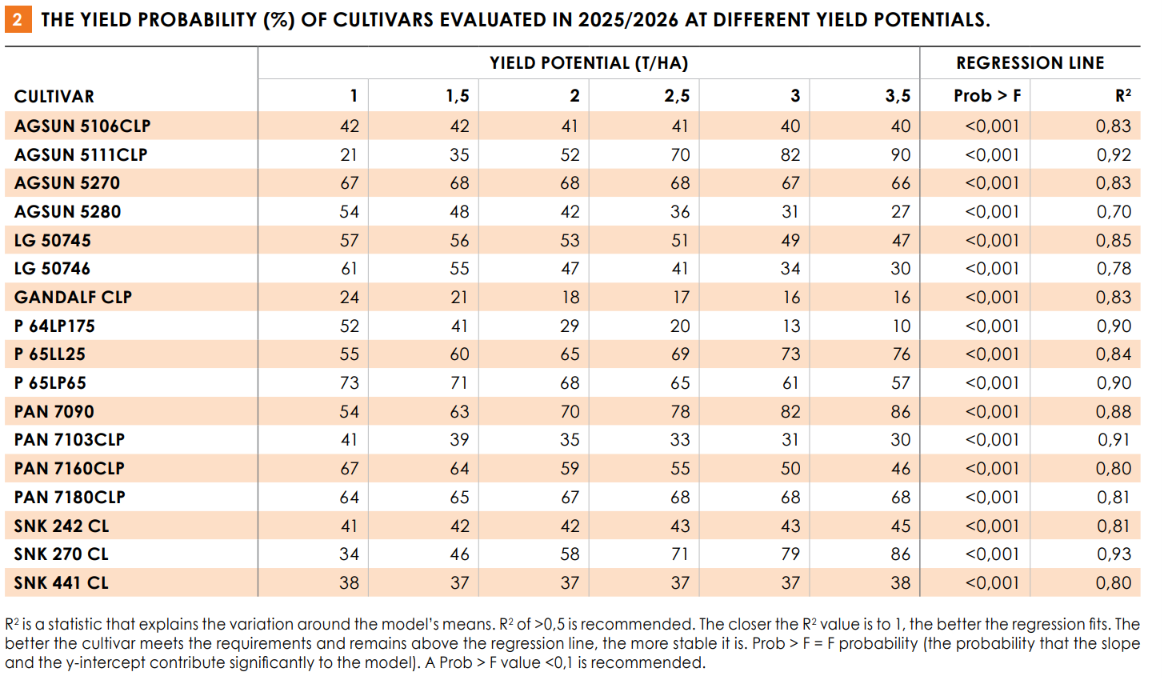
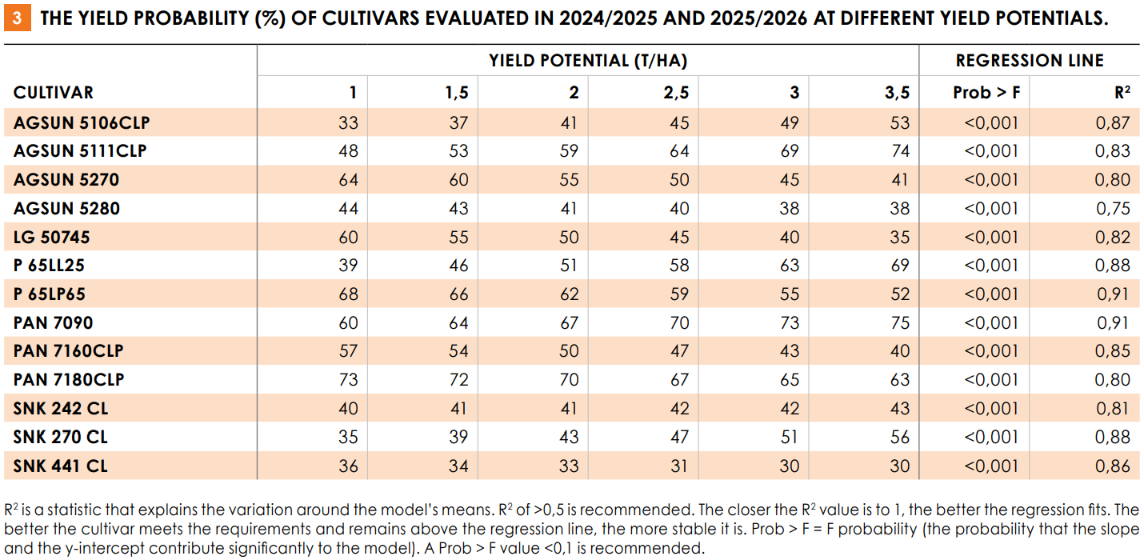
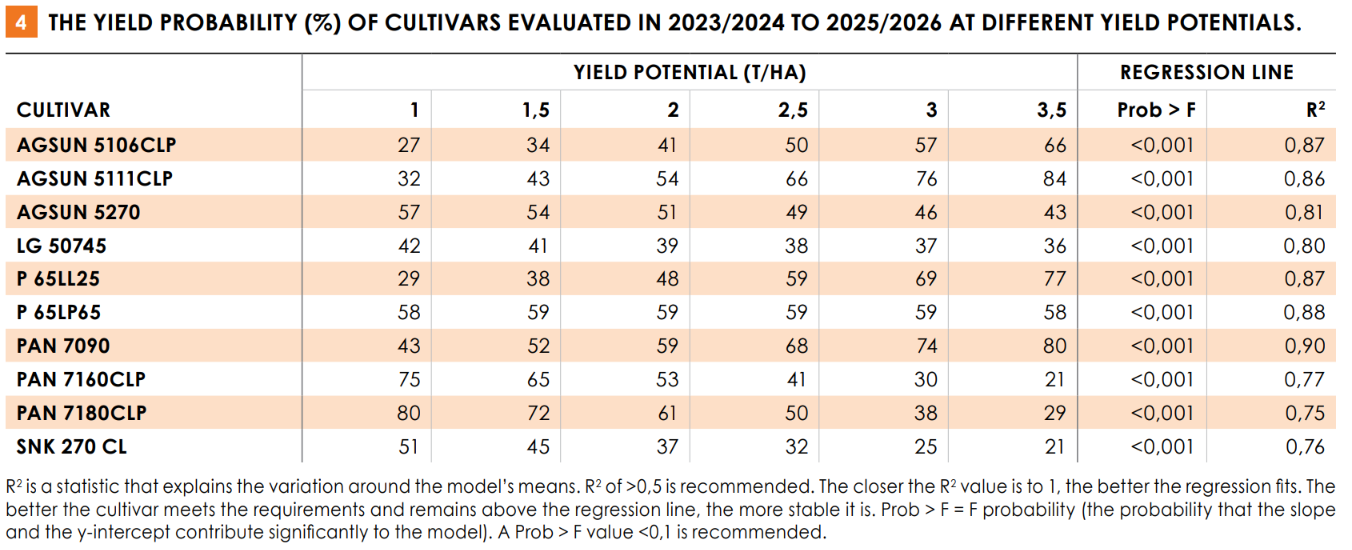
A cultivar’s yield probability is the probability of realising an above-average yield at a given yield potential. For instance, if the yield probability of a cultivar at a particular yield potential is 60%, the chance of realising a yield above the mean across all cultivars is 60%, with a 40% chance of obtaining a yield below the mean.
Table 2 shows yield probability values for the cultivars tested in 2025/2026. Since new cultivars are introduced and some are removed annually, a multi-season reliability analysis is only possible for a limited number of cultivars. Table 3 presents yield probability values for 13 cultivars evaluated in 45 trials during 2024/2025 and 2025/2026. Table 4 shows probability values for ten cultivars that were evaluated in 68 trials during the 2023/2024 to 2025/2026 growing season.
Using the three-year dataset, planting date was incorporated into cultivar selection. Separate probability tables were generated for November, December, and January plantings, enabling cultivar selection based on planting date and field yield potential (Tables 5a, 5b and 5c). Graphs 4a, 4b and 4c show the three-year seed yields for November, December and January plantings, respectively.
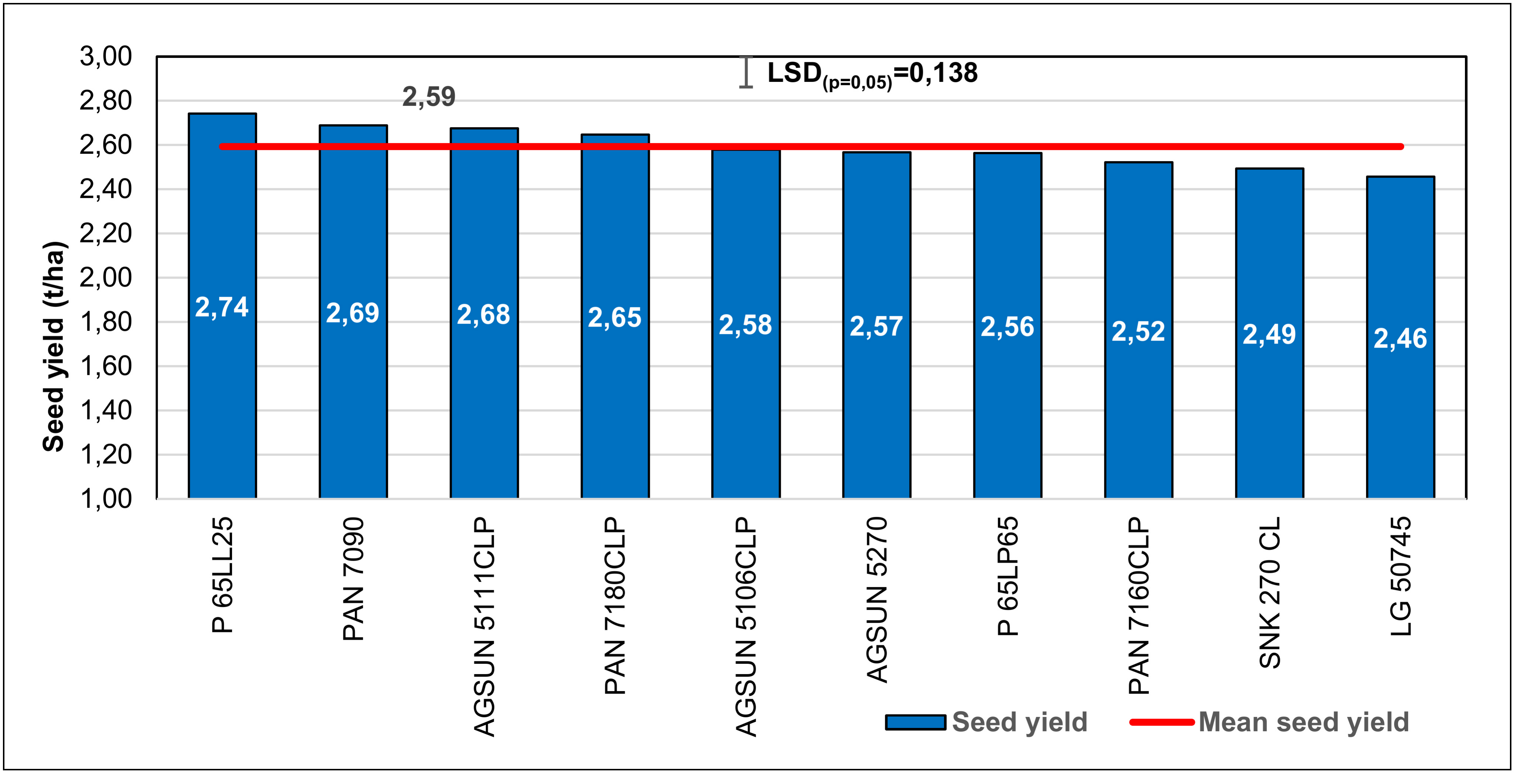
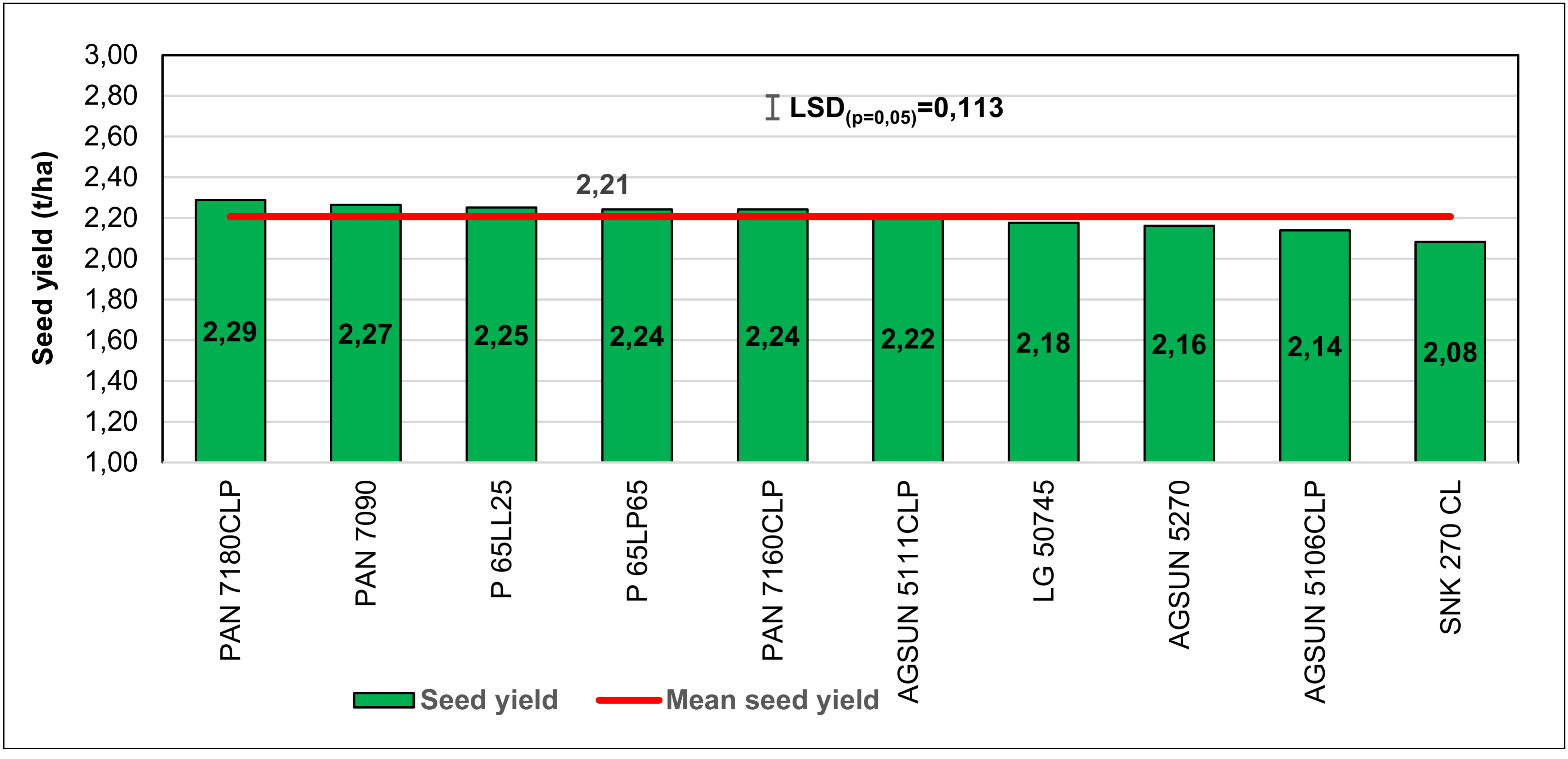
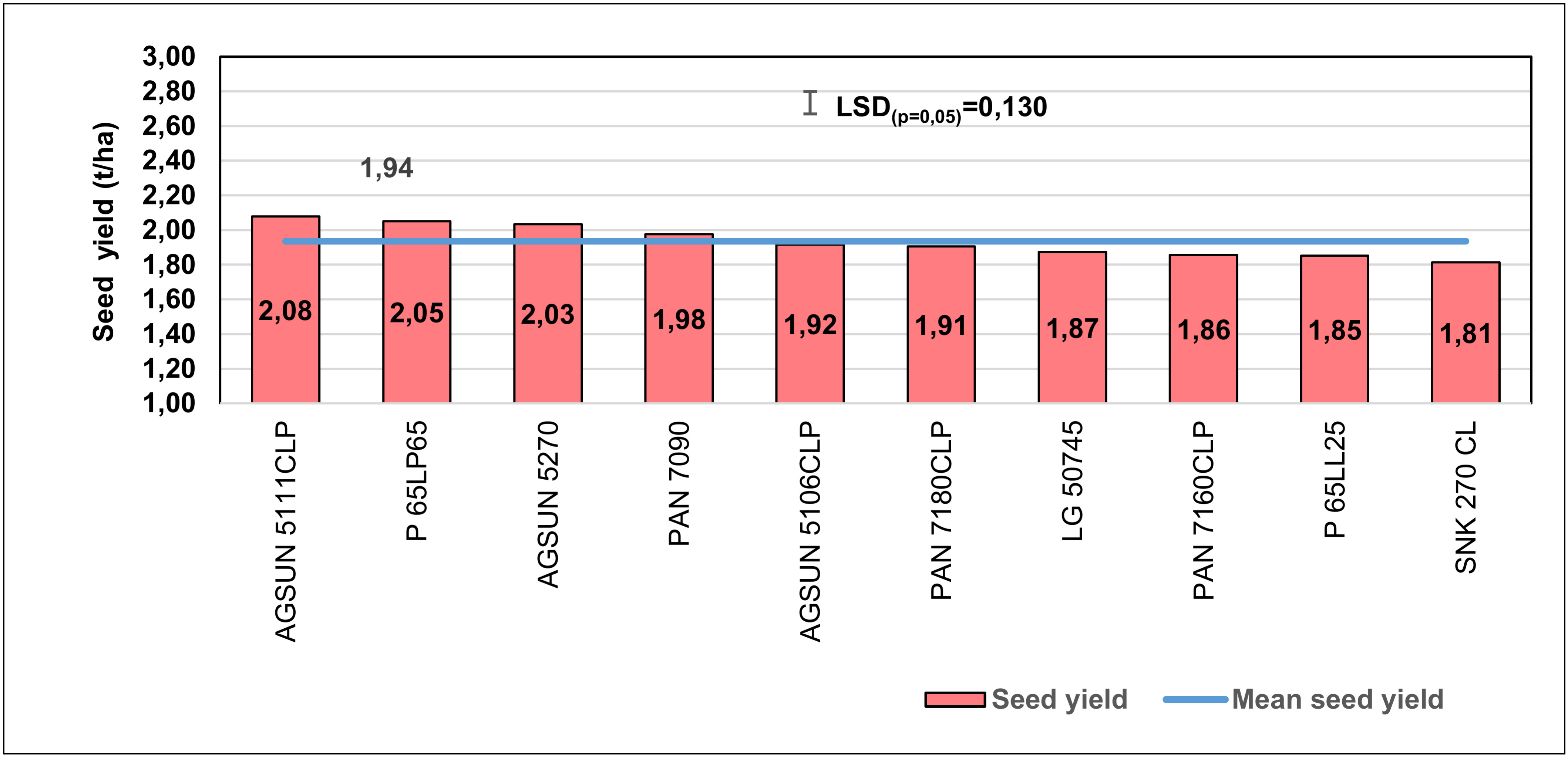
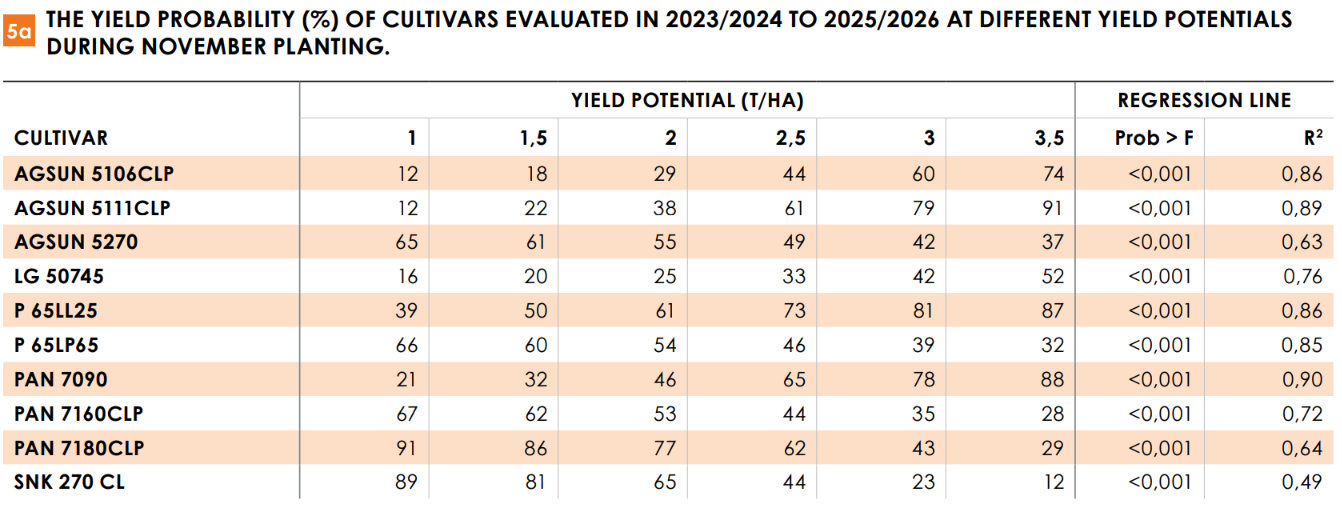
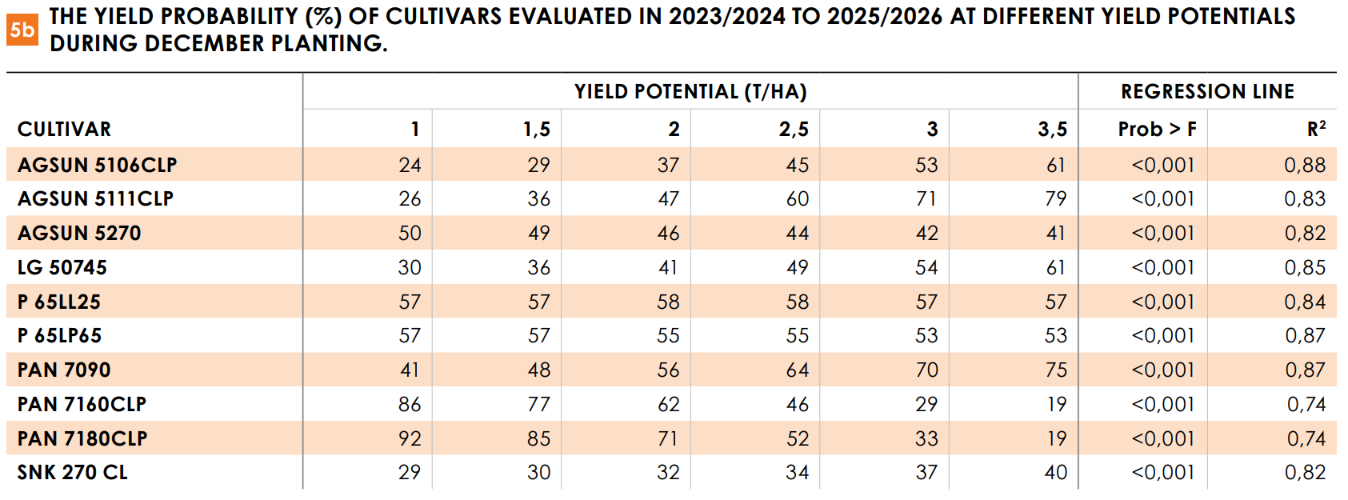
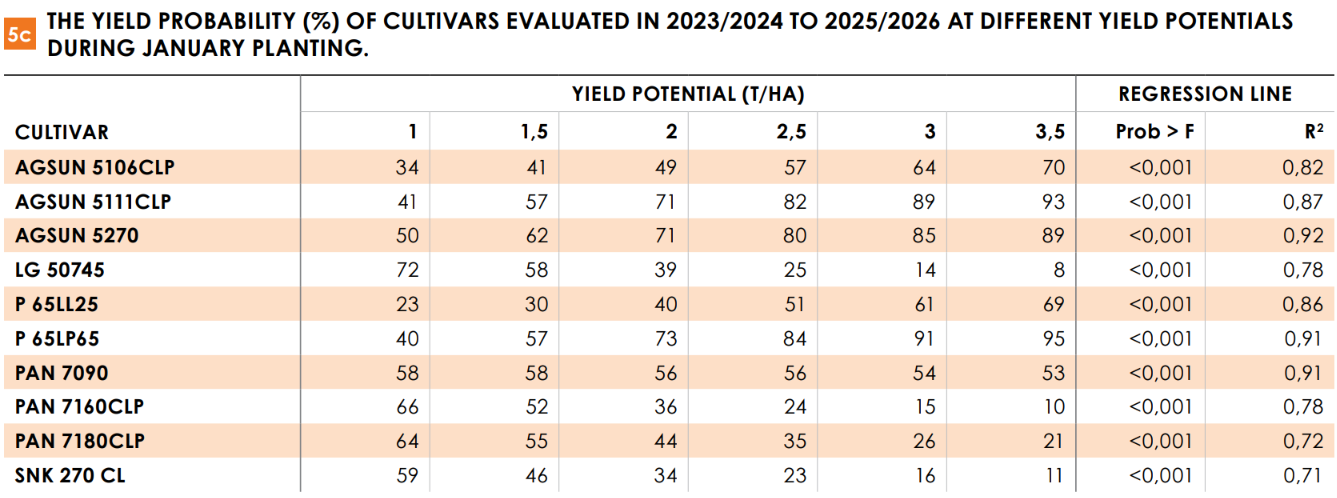
Table 3 and Table 4 can be used to select a core of cultivars. This selection can be expanded with cultivars selected from Table 1 and Table 2. It is advisable to grow more than one cultivar and to include new cultivars only on a limited scale.
Cultivar selection from the yield probability table
Determine the yield potential of a particular piece of land and set a yield target. The long-term mean yield of a particular field is usually a good indicator of the yield potential and can therefore serve as a yield target. Consult the yield probability tables next.
Cultivars with the highest yield probability values in the column below a given yield potential are those with the best chance of performing well under those conditions.
Tips to optimise sunflower yields
- Choosing the correct hybrid is one of the key decisions every grower has to make before the beginning of a season. Growers should consider not just the yield, but also yield stability, yield potential, and yield probability according to a realistic yield potential for each field. The stability of a cultivar is determined by the closer the R2 value is to 1 and the smaller the F probability is (preferably <0,1).
- Planting date: Plantings during November up to mid-December will benefit yield significantly as opposed to late season plantings in January or even February.
- Planting depth: A general recommendation for planting depth is an extreme challenge. In most cases sandy soils that tend to dry out quicker will necessitate deeper planting depth. Avoid poorly drained soils, as well as highly acidic soils.
- It is essential to run a millipede rotary harrow over the newly planted crop three to four days after planting, because a hard crust also causes a poor stand.
- Plant population should be based on soil type, rainfall, and yield potential. Keep to the optimal plant population of 35 000 to 42 000 plants/ha and maintain a row width of 91 cm.
- Crop rotation: Do not plant the same crop in the same field year after year. A two- or three-year rotation cycle is necessary to control diseases.
- Appropriate fertilisation is important and plays an important role in yields achieved. A fertiliser programme must always be based on scientific soil analysis. If it is possible, do not apply the full nitrogen requirement in one application. Rather apply half during planting and the other half at 30 to 40 days after emergence.
- Another vital key to achieving a good sunflower yield is good weed control, especially in the first 45 days in the life of a young seedling. Select a weed control programme suited to the weeds present, the cultivar and local conditions. Where herbicides are used, follow the registered product label and consult a qualified adviser.
This research was made possible through the financial support of the ARC and the Oil and Protein Seeds Development Trust.