

Abiotic (drought, temperature, salinity, and alkalinity) and biotic (weeds, diseases, and insects) factors affect sorghum production leading to poor production and productivity due to their impact on the growth and health of the sorghum plants. Climate change directly and indirectly affects agricultural crops and their corresponding pests.
Direct impacts are on pests’ reproduction, development, survival, and dispersal. In contrast, indirectly, climate change affects the relationships between pests, their environment, and other insect species such as natural enemies, competitors, vectors, and mutualists (Prakash et al., 2014). Insects are poikilothermic organisms; the temperature of their body depends on the temperature of the environment.
Sorghum (Sorghum bicolor) is a vital cereal crop grown in regions facing climate challenges such as in many parts of Africa, Asia, and the Americas. It is a resilient crop with natural tolerance to drought and heat, making it a key crop in the face of climate change. Among the biotic constraints affecting sorghum production in many parts of Southern Africa are insect pests, especially Lepidopteran stem borers and the invasive fall armyworm (FAW), Spodoptera frugiperda. These are considered the most crucial pests of sorghum in the region.
FAW is an invasive agricultural insect pest indigenous to tropical and subtropical regions of the Americas (Sparks, 1979). The pest causes damage to over 350 host plants belon-
ging to 76 botanical families, but it is primarily a pest of maize and sorghum (Kenis et al., 2022). The most frequently consumed plants are maize, sorghum, Bermuda grass, and grass weeds. Field crops like barley, cotton, oat, millet, rice, sugarcane, tobacco, and wheat are frequently consumed, and vegetables are occasionally attacked.
A pest without borders
The insect first became a food security threat to most African countries in 2016 when it was detected colonising maize fields in Nigeria, West Africa (Goergen et al., 2016). Subsequently, the pest spread to other African countries, including South Africa in 2017. The route of the infestation is not clear, and it is subject to speculation. According to Goergen et al. (2016), the existence of two FAW subpopulations in different parts of Africa suggests that the infestations are from two different introductions. Mitchell et al. (1991) reported that prevailing winds can support the migration of FAW. Currently, many countries in Sub-Saharan Africa that were invaded by FAW are confronted with a huge threat to the food security and livelihoods of millions of smallholder farmers. In its native host range, FAW is present all year round (Kenis et al., 2022).
FAW exists in two strains that are adapted to different host plants and are impossible to distinguish morphologically without the use of genetic material (Nagoshi, 2022; Durand & Nam, 2024). First there is the maize (or corn) strain that feeds predominantly on maize, cotton, and sorghum. The second is the rice strain that feeds primarily on rice and pasture grasses. The two strains are morphologically identical but differ in phero-
mone compositions, mating behaviour, and host range. The maize strain is the most invasive strain (Durand & Nam, 2024).
The worm completes its life cycle in approximately 30 days in summer and approxi-
mately 60 to 90 days under cooler temperatures (Deshmukh et al., 2021). Adult FAW moths are strong flyers and display extreme invasive nocturnal behaviour (Kenis et al., 2022). Female adults are highly fecund and lay spherical eggs, with the total egg production per female averaging about 1 500.
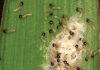
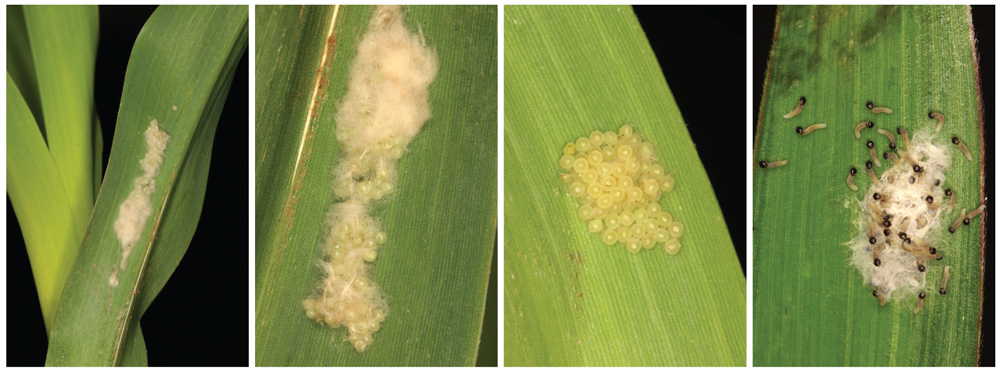
Eggs are oviposited in masses of 100 to 200 underneath the leaves, but also on the upper side and on stems (Bateman et al., 2018). However, when the population is high, eggs can also be laid on top of leaves and stalks of young sorghum seedlings. The eggs are cream-white to greenish grey in colour and covered with anal hair or a layer of web lookalike material tissue (hairy covering) (Figure 1) (Visser, 2018; Bhusal & Bhattarai, 2019).
Source: D. Visser
Destructive stage of FAW
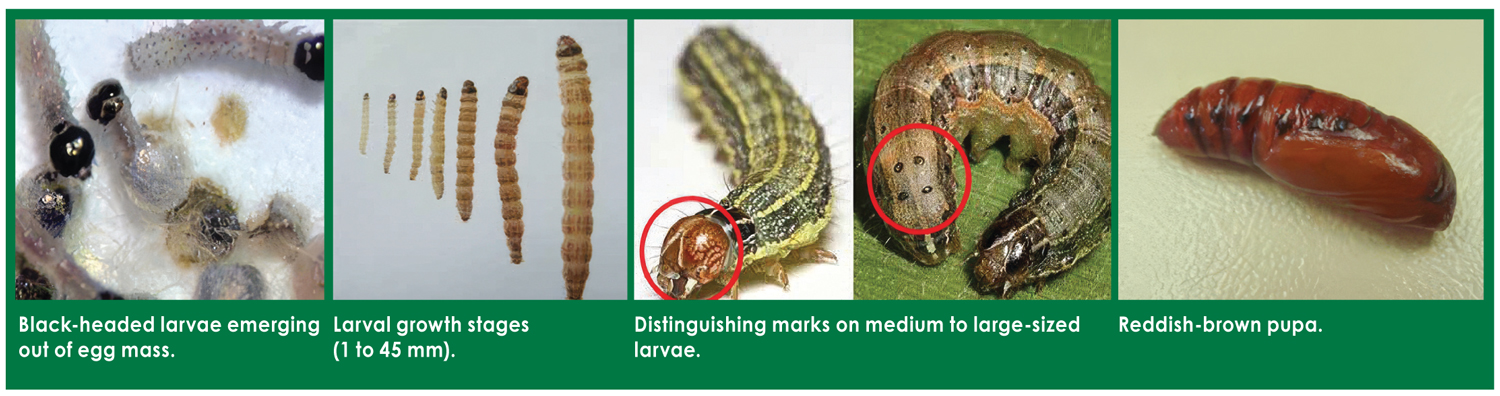
The larval stage is the destructive stage in the life cycle, and it has six larval instars that vary in size and pigment. Small caterpillars may appear greenish, while bigger larvae vary in colour from orange to green and black or brown. They have distinctive morpho-
logical marks: an inverted white Y-shape on the head, four large black spots arranged in a square on the eighth segment, and four small dots on the dorsal surface of all other segments (Figure 2).
Photos: Ivan Cruz, Embrapa
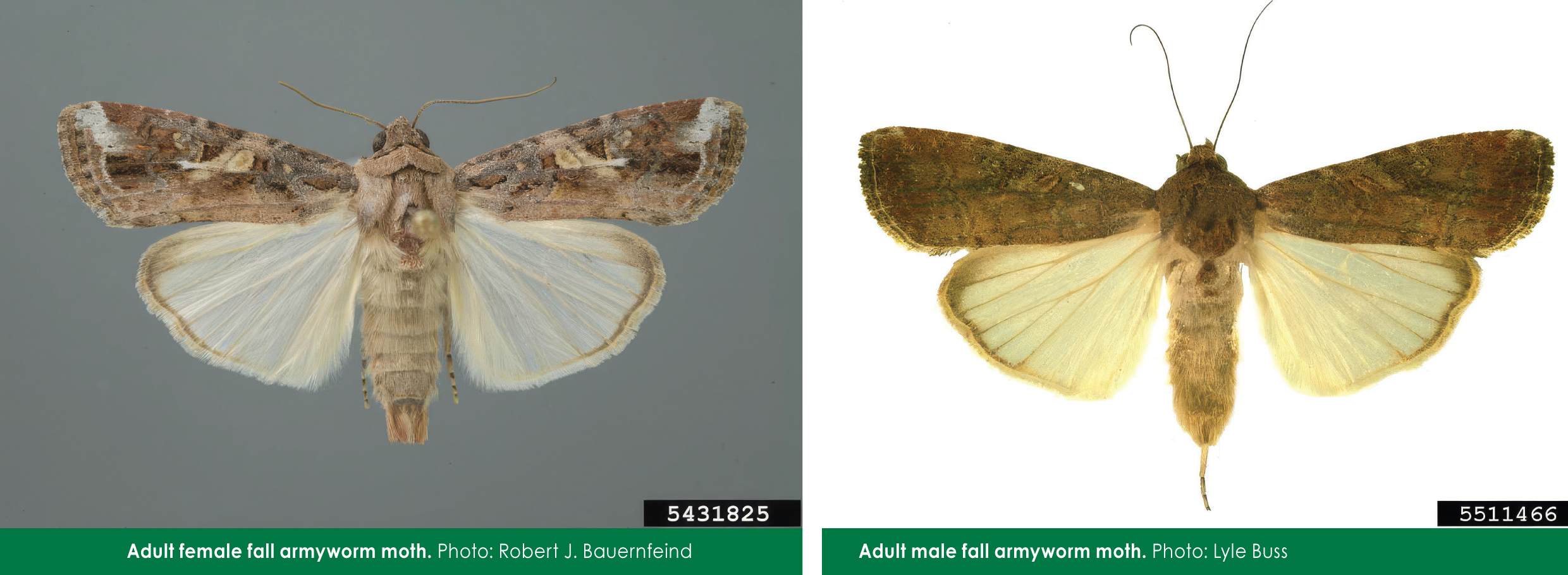
Female adult moths are mostly active in humid evenings, particularly in summer or when temperatures are warm. Female and male moths can be distinguished by forewing colours, patterns, and their size. Females are slightly bigger than the males in size and their forewings are less distinctly marked, while male forewings are shaded grey and brown (Figure 3).
Field surveys of FAW in sorghum crops were conducted in six sites in the three districts of the Limpopo Province between January and March 2024. A total of 20 sorghum plants from two different age groups (pre-tasselling and post-tasselling) were selected at random and checked for indication of damage caused by FAW. The pre-tasselling plants were between four to six weeks old, while the post-tasselling plants were at the blossoming to soft-dough stage. The number of plants that were damaged were calculated by tallying whorl damage in 20 randomly chosen areas in each maize and sorghum field to determine the occurrence. A high abundance of FAW was recorded in Rondebosch Boerdery (68%) in the Waterberg and Motlolo Dryland (20%) in Sekhukhune. Muswodi Dipeni (8%) and Tshivhongweni (4%) – all in the Vhembe district – recorded the least.
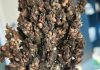
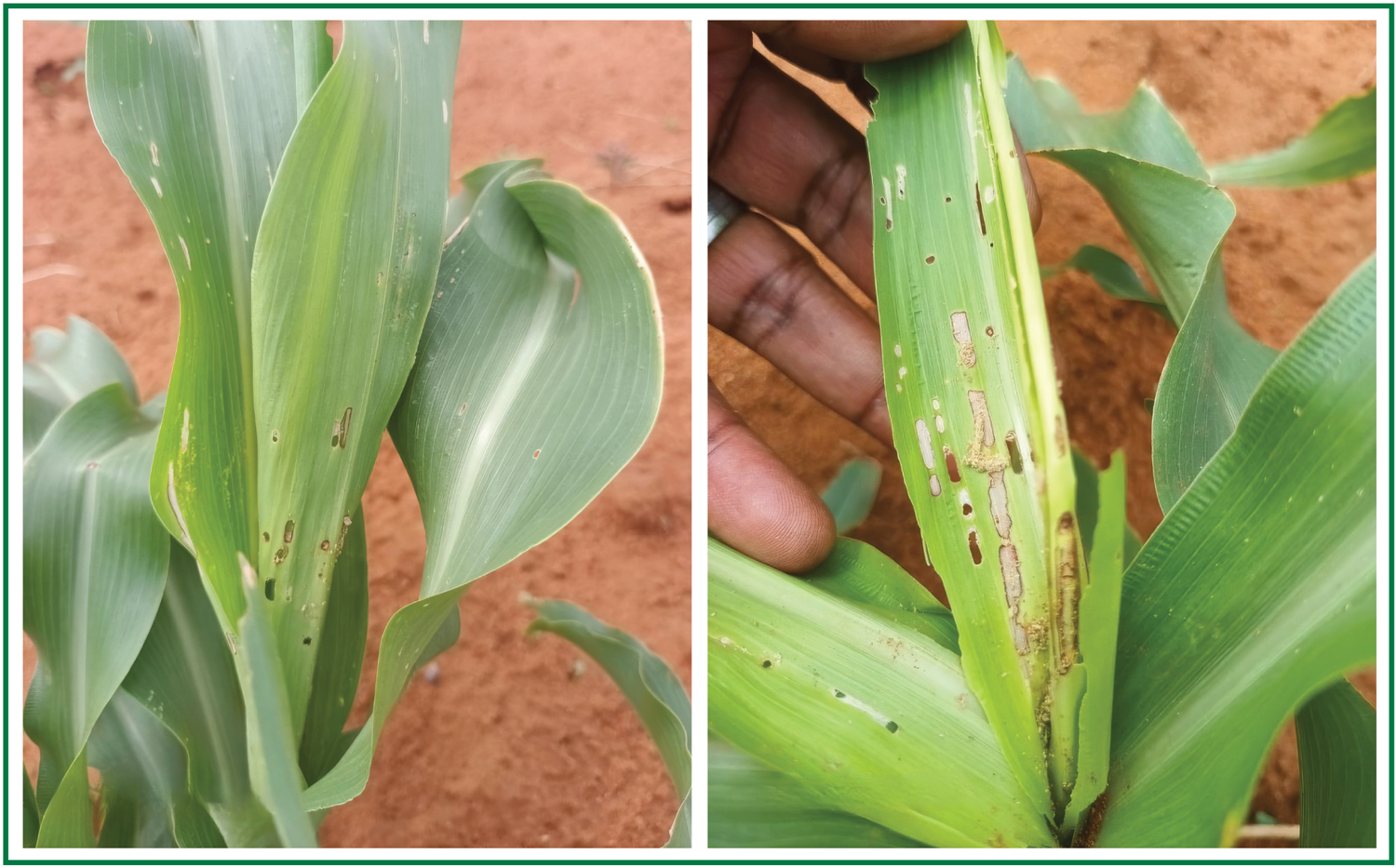
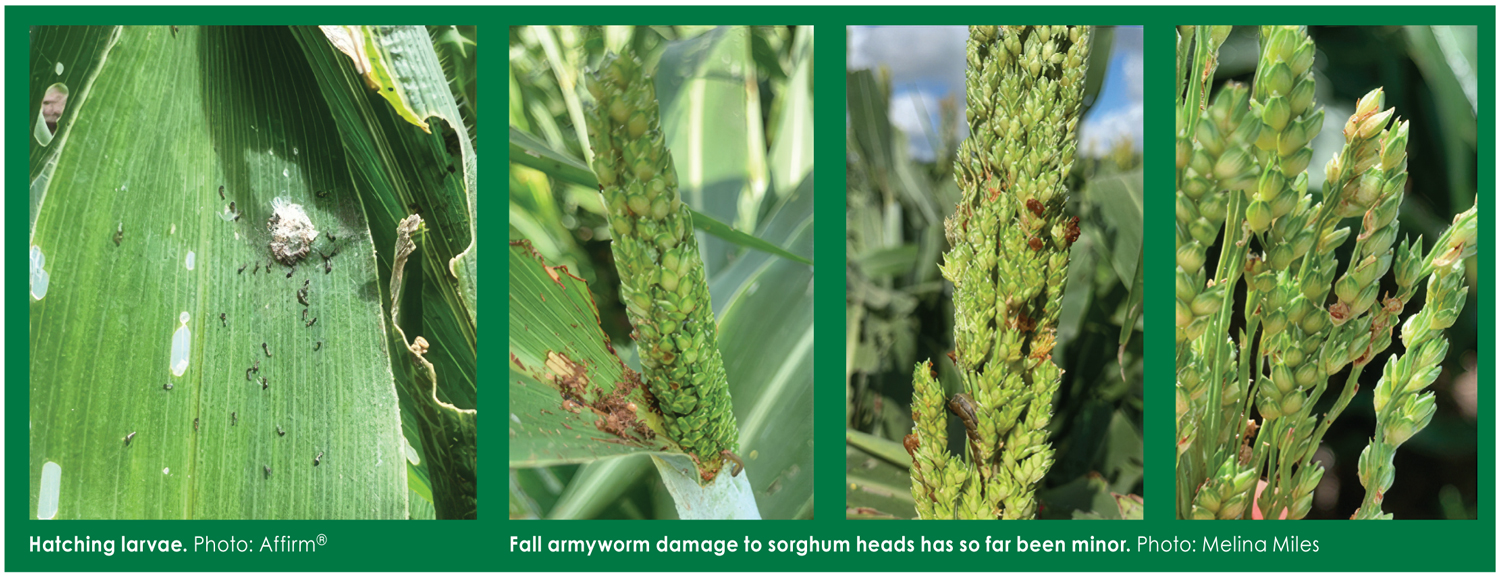
The larvae caused damage by consuming leaves, and the symptoms were observed as transparent elongated patches, irregular hole-like windows on the leaves, holes in stems, and sawdust-like larval frass (Figure 4 and 5). The larvae also burrowed into the growing point (bud, whorl, etc.), destroying the growth potential of plants, or clipping the leaves. The damage to the sorghum heads so far has been minor (Figure 5).
Control strategies
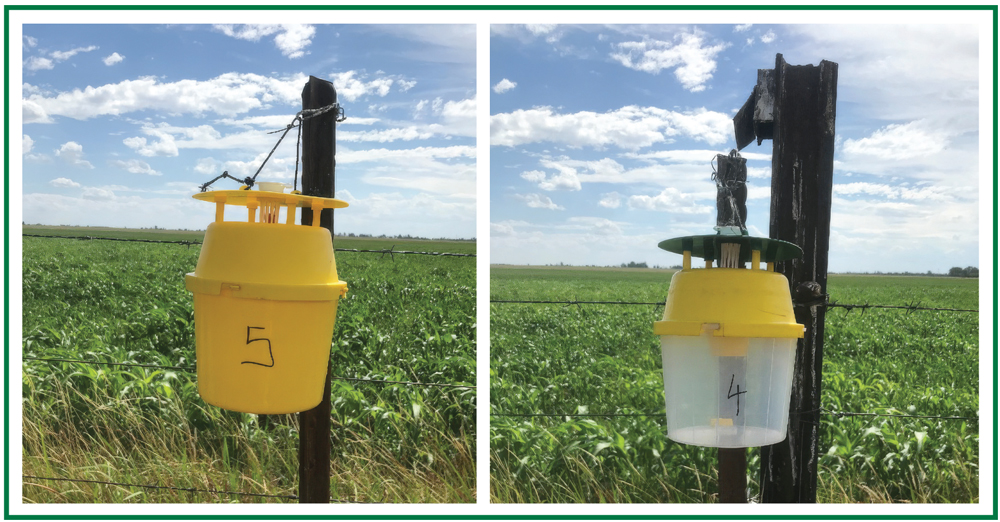
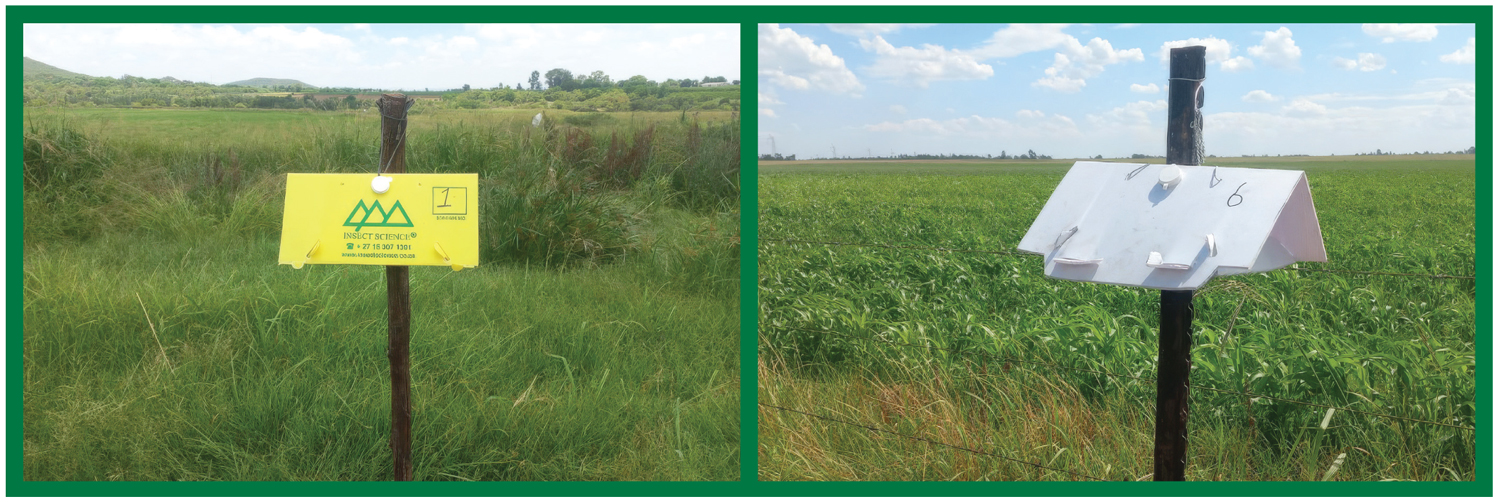
Various control strategies have been adopted by producers to control FAW across the world. Pest monitoring or trapping for early detection is essential by regularly checking sorghum crops for eggs, larvae, and damage. Producers should monitor for FAW in sorghum as they would for cotton bollworm, paying particular attention to signs of infestation at the establishment stage. Sex pheromone traps baited with lures –
two-component lure (-7-dodecenyl acetate and Z-9-tetradecenyl acetate) and
three-component lure (Z-11-hexadecen-1-yl acetate, Z-7-dodecen-1-yl-acetate and
Z-9-tetradecen-2-yl-acetate) – are used in monitoring and managing FAW populations. Commercial traps are usually available in various designs and colours to monitor and/or mass trap specific invasive agricultural pests (Figure 6 and 7).
Early planting and planting early-maturing varieties provide a feasible solution to FAW by bypassing the moth’s arrival time (Bhusal & Chapagain, 2020). Intercropping sorghum with Desmodium intortum (greenleaf ticktrefoil) as push will repel FAW moths away from the sorghum plant, while Pennisetum purpureum (Napier grass) planted at the board of a field will attract pests, keeping them away from the maize field (Khan et al., 2018).
The use of biological control provides a promising sustainable and environmentally friendly technique for suppressing FAW. Pathogens such as viruses (Baculoviruses), entomopathogenic nematodes, entomopathogenic bacteria (Bacillus thuringiensis), and
entomopathogenic fungi (Beauveria bassiana) have been identified as potential biocontrol agents of FAW (Hussain et al., 2021. Numerous species of parasitoids affect FAW, such as Cotesia marginiventris and Chelonus texanus spp. that are also associated with other noctuid species. Among fly parasitoids, the most abundant is usually Archytas marmorat. Egg parasitoids species such as Trichogrammma spp. and Telenomus remus and larval parasitoids such as Chelonus bifoveolatus and Coccygidum luteu have been found to attack FAW in Africa and were identified as potential biocontrol agents (Tefera et al., 2019).
Integrated pest management
Various synthetic insecticides, including pyrethroids, organophosphates, and carbamates, are registered for the control of FAW under Act No. 36 of 1947. Visit CropLife SA for all registered chemicals: (https://www.croplife.co.za). However, FAW has developed high resistance against certain classes of chemicals (Yu, 1991). Therefore, producers are advised by the Insecticide Resistance Action Committee (IRAC) to rotate the insecticides based on the chemical classes and active ingredients (IRAC, 2021).
Effective management of FAW on sorghum requires an integrated pest management (IPM) approach – a single-strand pest control approach is deemed to be ineffective. The key strategies include early monitoring, cultural practices, the use of biological controls, and targeted chemical applications utilising varying modes of action. Monitoring, surveillance, and scouting are critical activities necessary for successful implementation of an effective IPM programme. This approach provides a workable solution to insect pest complications.
Click on the link for a list of references used in this article