


ARC-Grain Crops,
Potchefstroom

Dr Zaid Bello,
ARC-Grain Crops,
Potchefstroom
Weeds grow in the wrong place at the wrong time, competing with crops for water, nutrients, and light, thereby reducing crop yield and quality. Effective weed control remains a major challenge due to the increasing occurrence of herbicide resistance and the complexity of weed populations. Correct identification is the first step in developing an effective weed management programme because different species respond differently to herbicides and cultural practices. Misidentification can result in ineffective control measures and increased production costs.
Weed classification
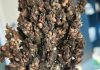
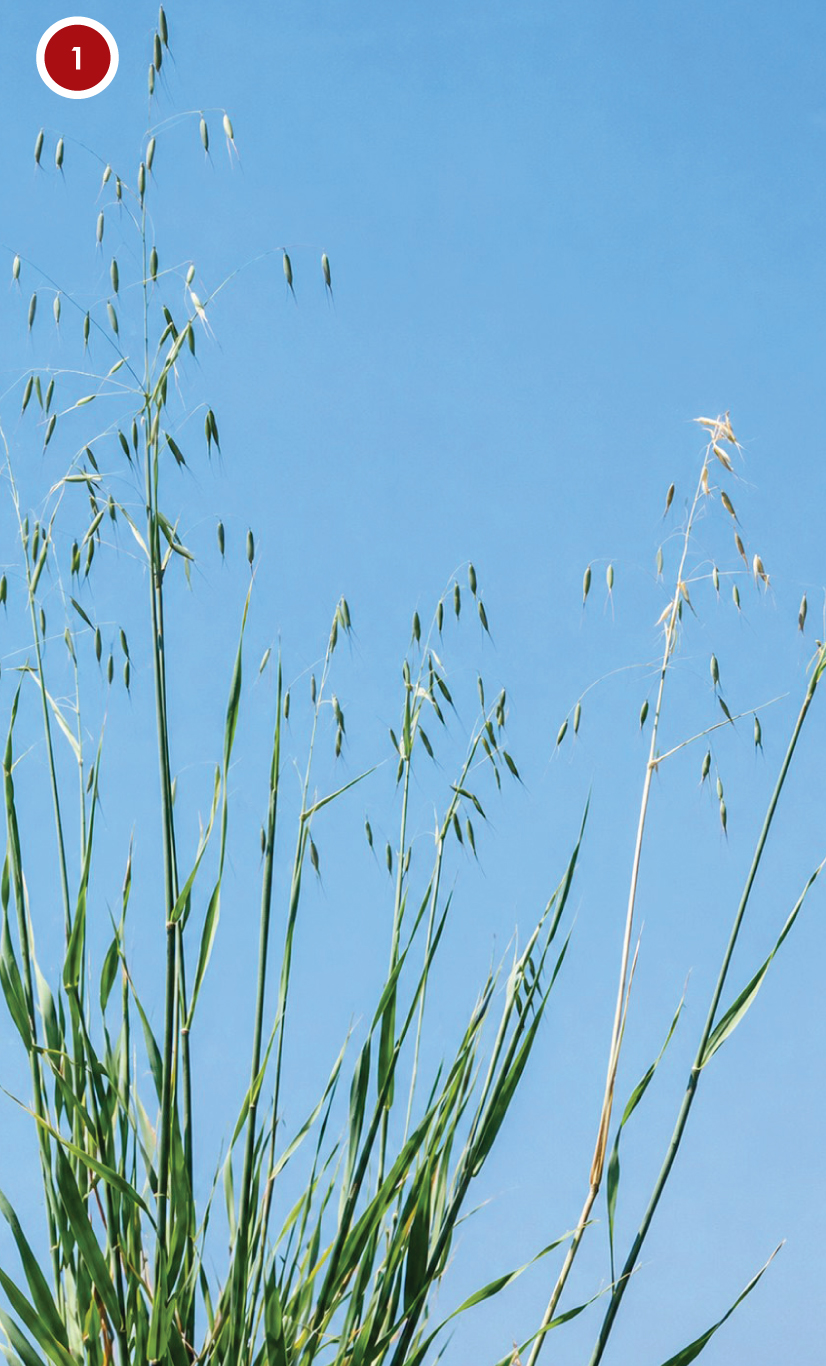
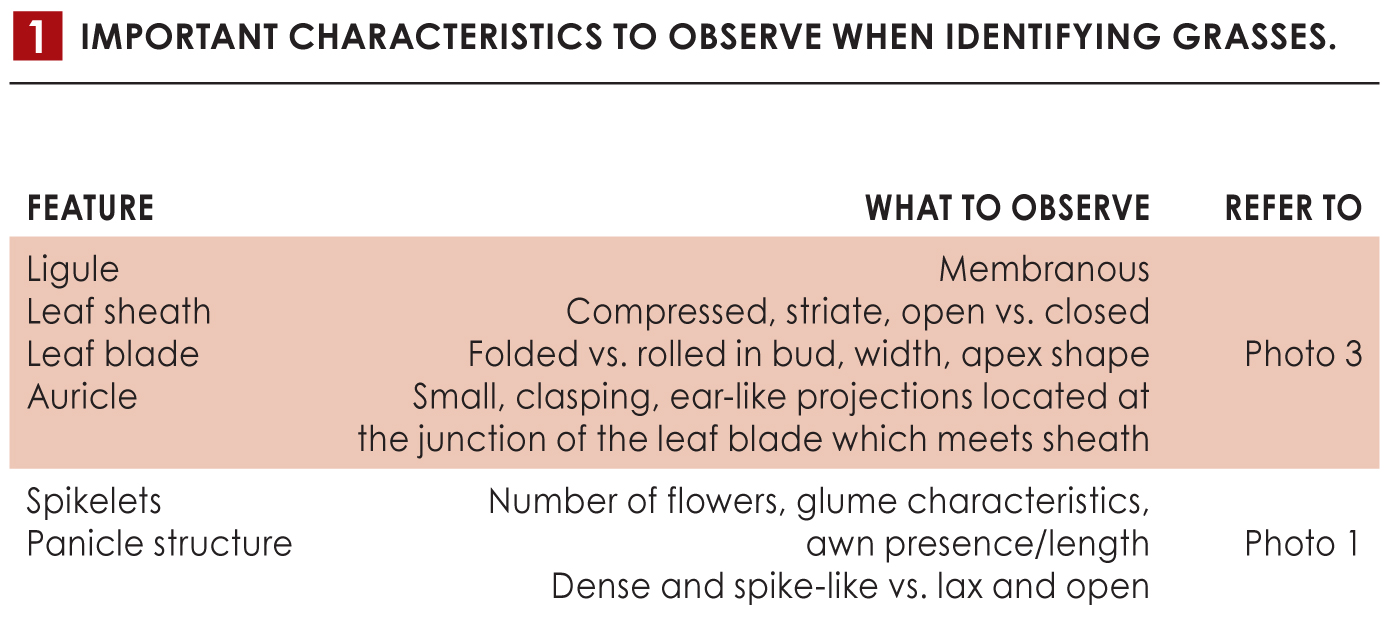
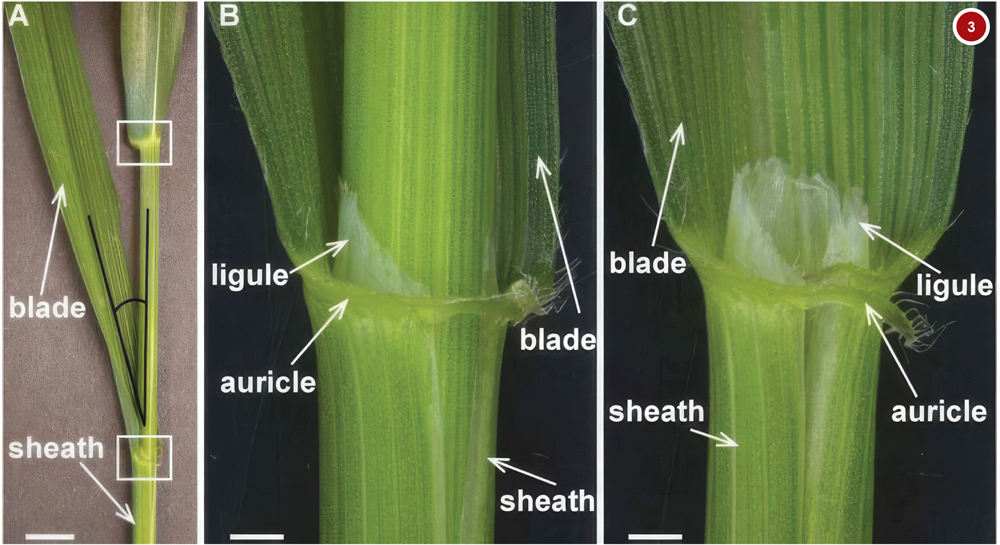
Weed classification plays an important role in weed identification, grouping plant species based on their physical traits and life cycles. This helps to rapidly identify the exact species, which is critical for selecting the correct herbicide, preventing resistance, and maximising crop productivity. Weeds are classified based on their morphology, life cycle, habitat and environment, and specific traits. Grasses, sedges, and broadleaves are examples of classes found in this group. For grasses, leaves are often the accessible features to observe. Grasses possess hollow, cylindrical stems featuring nodes and exhibit parallel venation in their true leaves. Grass is often difficult to identify, especially at early growth stages, but examples include wild oats (Photo 1), couch grass/Bermuda grass, and large crabgrass.
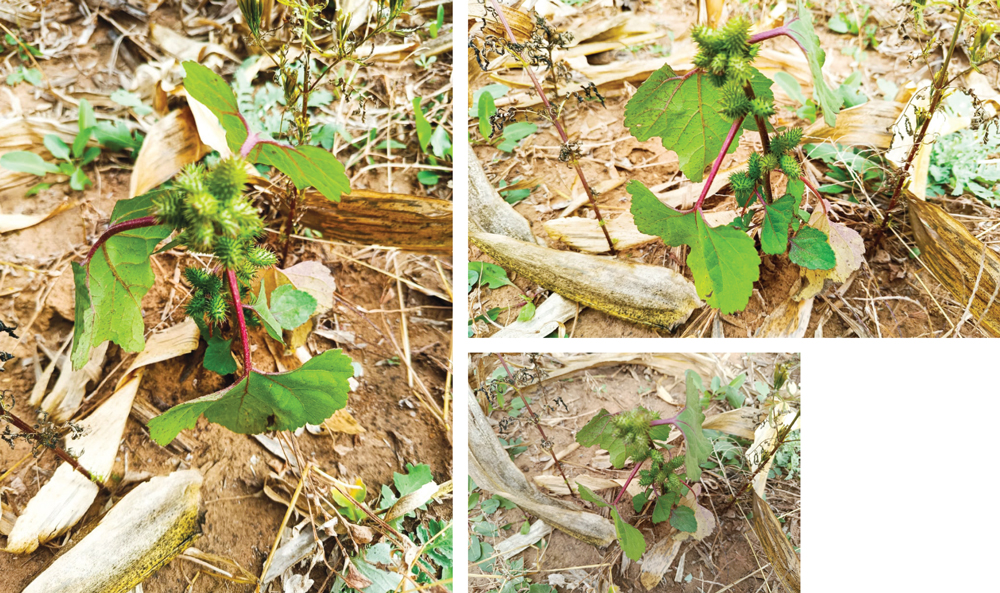
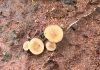
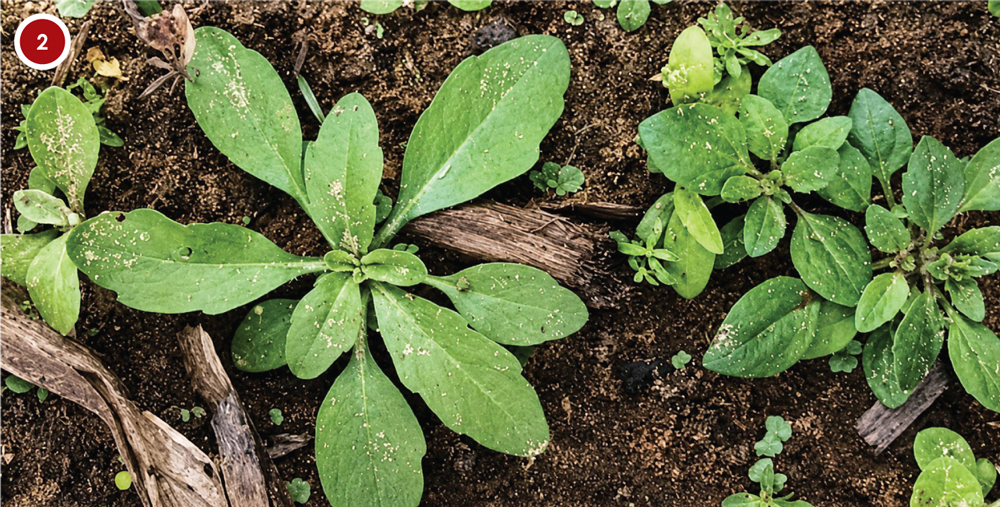
Broadleaves, as the name suggests, typically possess broad foliage of varying shapes. They normally have wide, flat leaves with a net-like vein pattern. They emerge with two seed leaves, in contrast to grassy weeds which emerge with only one. Examples include common pigweed, blackjack, cocklebur, flaxleaf fleabane, and Conyza spp. (Photo 2).
Sedges are tough, grass-like weeds that flourish in wet, poorly drained soil. The difference between sedges and standard turfgrasses is their stems. Sedges have a distinct, solid triangular stem in cross-section. They reproduce aggressively through underground rhizomes and small tubers (called nutlets), making it difficult to hand-pull them. Pulling merely snaps the tubers, stimulating further growth.
Key morphological features to observe
Weed classification facilitates ease of weed identification in crop fields. The following characteristics should be recognised during weed identification, in a sequential order:
- Depending on the species characteristics, stems are important for early weed identification because they provide features before reproductive development, such as stem shape, texture, hairiness, and node arrangement. For example, couch grass can be identified by its jointed stems with distinct nodes.
- Root system traits, including taproot or fibrous roots and the presence of vegetative propagative structures (e.g., rhizomes, stolons, and tubers) are important for distinguishing weed species. These characteristics are especially valuable in identifying perennial weeds such as common couch grass, which is characterised by creeping white rhizomes.
- Reproductive characteristics (flowers, seeds, fruits) provide the most reliable identification, especially at maturity. Colour, size and symmetry, number of floral parts, and inflorescence type (panicle, spike, head) help with identification. For example, wild oats (Avena fatua) produce loose panicle seed heads (Photo 1).
- Seed and fruit shape, size and colour, presence of structures such as awns, burrs, or hairs, and dispersal mechanisms are also used for identifying weeds.
- Growth habit (annual, biennial, or perennial) and life-cycle timing (when the plant emerges relative to crop growth, e.g., winter vs. summer annuals) can also be used for identification.
- Habitat/location is particularly important because certain weeds are associated with specific environments. Some weeds dominate disturbed agricultural lands, others are more common on roadsides or natural ecosystems, and some are associated with specific cropping systems such as no till or undisturbed soil. Knowledge of the production system narrows down potential weed species during identification.This provides valuable clues for weed identification and improvement of management strategies. Weed communities under conservation agriculture (CA), which is based on minimum soil disturbance (no till), permanent soil cover, and crop rotation, often differ from those found under conventional tillage. No-till systems typically retain weed seeds near the soil surface, resulting in shifts in weed flora from annual broadleaf species towards grassy annuals and perennial weeds. Horseweed, ryegrass, and perennial weeds with rhizomes may become prevalent under no-till systems. In contrast, conventional tillage buries weed seeds and disrupts underground vegetative structures, favouring species adapted to frequent soil disturbance.
Weed identification workflow
A simple workflow for weed identification involves a stepwise approach:
Step 1: Field observation
Carefully inspect the weeds in the field. Start by observing the entire plant, noting its general appearance and growth stage. Whenever possible, identify weeds when flowers, fruits, or seed heads are present, as these structures provide the most reliable characteristics for species identification. Observed features can then be compared with the morphological characteristics and habitat information. Take high-quality pictures or preferably uproot and sample identified weeds.
Step 2: Compare with books
These recommended books can be used to compare morphological characteristics and habitat information.
- Guide to Grasses of Southern Africa (Van Oudtshoorn, 2002)
- Common Weeds of Crops and Gardens in Southern Africa (Botha, 2010)
- Problem Plants of South Africa. Briza Publications (Bromilow, 2003)
Step 3: Mobile applications and AI tools
- After field observation, use multiple apps for comparison.
- Take high-quality photos which include leaves, stems, flowers, and seeds.
- Identify grasses at the flowering stage whenever possible, as they are often difficult to distinguish before reaching the reproductive stage. Grass identifications through apps prior to flowering should be treated with caution. It is advisable to always cross-check books and authoritative sour
- Artificial intelligence (AI) tools and weed plant identification applications such as Pl@nt Net, iNaturalist, PictureThis, and Flora Incognita are increasingly being used worldwide. Although apps are useful, they are not a substitute for taxonomic knowledge, especially for grasses and in situations with herbicide resistance.
Step 4: Authoritative sources and online resources
-
- Before making management decisions, particularly herbicide selections, uncertain identifications should be verified using authoritative resources such as the following:
-
-
- SANBI Red List database (SANBI 2024)
- Biodiversity Explorer (Invasive Species) and NEMBA lists. Click on the link for the legal status of invasive plants.
- SANBI National Herbarium. Click on the link to submit plants (dried and pressed at flowering stage) to SANBI.
- Click on the link to access the SANBI application form.
-
The aim: effective weed management
Accurate weed identification remains the foundation of effective weed management. Through the Conservation Agriculture Farmer Innovation Programme (CAIFP), the ARC-Grain Crops is currently carrying out field surveys on weeds found in different cover crop-based crop rotation systems under CA. These trials provide an opportunity to evaluate locally adapted weed management practices while also providing opportunities aimed at improving the understanding of weed management.
Participation by producers is particularly important, as they provide a critical link between research and practical implementation under commercial farming conditions. The current survey is one of the platforms to strengthen collaboration between researchers, extension practitioners, and producers. Plans to strengthen weed identification capacity within the ARC-Grain Crops weed science team through collaboration with authoritative institutions and specialists are also ongoing. In the long term, ARC-Grain Crops aims to contribute towards the development of a South African weed identification and verification network that can support producers, improve decision making, and improve sustainable management of herbicide-resistant and problematic weeds in CA systems.
Find a list of the references used in this article here.