


research coordinator, Grain SA

Dr Henry Njom,
ARC-Grain Crops,
Potchefstroom

Yolanda Mthembu,
scientist: Production,
Department of
Agriculture
Over the past two seasons, South African maize producers have become increasingly aware of a bacterial disease known as Goss’s bacterial wilt and blight, or simply Goss’s wilt. The disease is caused by the bacterium Clavibacter nebraskensis, which was first discovered in the United States in 1969. For many years, it remained an American concern, primarily affecting maize production in the Corn Belt states.
However, in recent times, the disease has made its way to southern Africa, raising concern among local producers, scientists, and policymakers because of its potential to cause yield losses, disrupt trade, and affect national biosecurity.
This article provides an updated outlook for the 2025/2026 season, highlighting a delimiting survey done by the Department of Agriculture (DOA) and the ongoing research and coordinated efforts to manage Goss’s wilt and protect South Africa’s maize industry. It reflects how science-based actions are strengthening crop resilience and national food security.
Why Goss’s wilt is a concern
The emergence of Goss’s wilt is not only an agricultural concern but also a biosecurity and trade issue. Because it is considered a quarantine disease in many countries, its detection in South Africa led to trade restrictions from some of our neighbouring states.
Botswana, Namibia, and Zimbabwe temporarily suspended or restricted maize imports from South Africa when the disease was reported to the IPPC (International Plant Protection Convention) in January 2025. Although the bans have been lifted, these trade barriers highlight the importance of managing the disease effectively to protect the country’s reputation as a reliable grain supplier.
Locally, while the disease has not yet caused large-scale yield losses, the potential remains. If left unchecked, and if weather conditions become favourable, it could spread widely and cause significant economic damage to producers and the industry.
Core management strategies for Goss’s wilt
At present, there are no known resistant or tolerant maize cultivars registered in South Africa against Goss’s wilt. However, in countries like the United States, planting resistant cultivars is the most effective management strategy.
In South Africa, we have been fortunate that the disease is still new, and the inoculum (bacterial population) in the environment remains relatively low. Furthermore, the environmental conditions over the past few seasons have not been highly conducive to disease development.
 These two factors – low inoculum levels and less favourable conditions – have worked in our favour so far. However, this window of opportunity must be used wisely. As the disease becomes more established, inoculum levels will rise, making outbreaks more likely. Producers should therefore adopt proactive management approaches, including:
- reducing residue build-up by practising crop rotation with non-host crops such as soybeans or small grains;
- avoiding mechanical injury to maize plants during cultivation;
- cleaning farm equipment between fields to prevent bacterial spread; and
- engaging with seed companies to learn which of their varieties have shown tolerance to Goss’s wilt in international trials.
What Grain SA, the DOA, and research partners are doing
To address the challenge of Goss’s wilt, a national effort has been launched involving multiple organisations. Grain SA, through its research coordination role, has organised a series of field trips in collaboration with the Forestry and Agricultural Biotechnology Institute (FABI) for sample collection. Also in 2025, the DOA conducted a national delimiting survey to determine the extent of Goss’s wilt across South Africa.
The results of this survey, which will be released soon, will form the basis for improved national monitoring and containment strategies.
This collaborative effort aims to build a clearer picture of the disease’s current distribution, its environmental preferences, and the strains present in South Africa. The findings will guide future management and breeding programmes.
Why quarantine is difficult in grain crops
Quarantine is traditionally an important tool for managing plant diseases by limiting the spread of infected material and enabling authorities to contain or eradicate pathogens. However, in grain crops like maize, quarantine is not practical due to the open-field nature of production and the annual planting cycle, which make isolation nearly impossible. For this reason, no quarantine measures will be imposed on producers.
Instead, producers are encouraged to report any suspected Goss’s wilt incidences to Grain SA. These reports are essential for understanding the disease’s distribution and severity across regions. Effective management therefore depends on producer vigilance, good agricultural practices, and close collaboration with researchers and government to safeguard South Africa’s maize industry.
Establishment of the Goss’s wilt research platform
To strengthen coordination and research capacity, a Goss’s wilt research consortium has been established. This consortium is coordinated by Grain SA and includes the Agricultural Research Council (ARC), the Council for Scientific and Industrial Research (CSIR), DOA, the Department of Plant and Soil Sciences at the University of Pretoria, and FABI.
The consortium’s objectives are to:
- build a culture collection of Clavibacter isolates representing South African strains;
- enhance diagnostic and surveillance capacity for bacterial diseases in maize;
- identify tolerant or resistant cultivars suitable for local conditions;
- promote knowledge exchange between producers, researchers, and policymakers; and
- develop management guidelines that are practical and region-specific.
Importance of accurate disease diagnosis
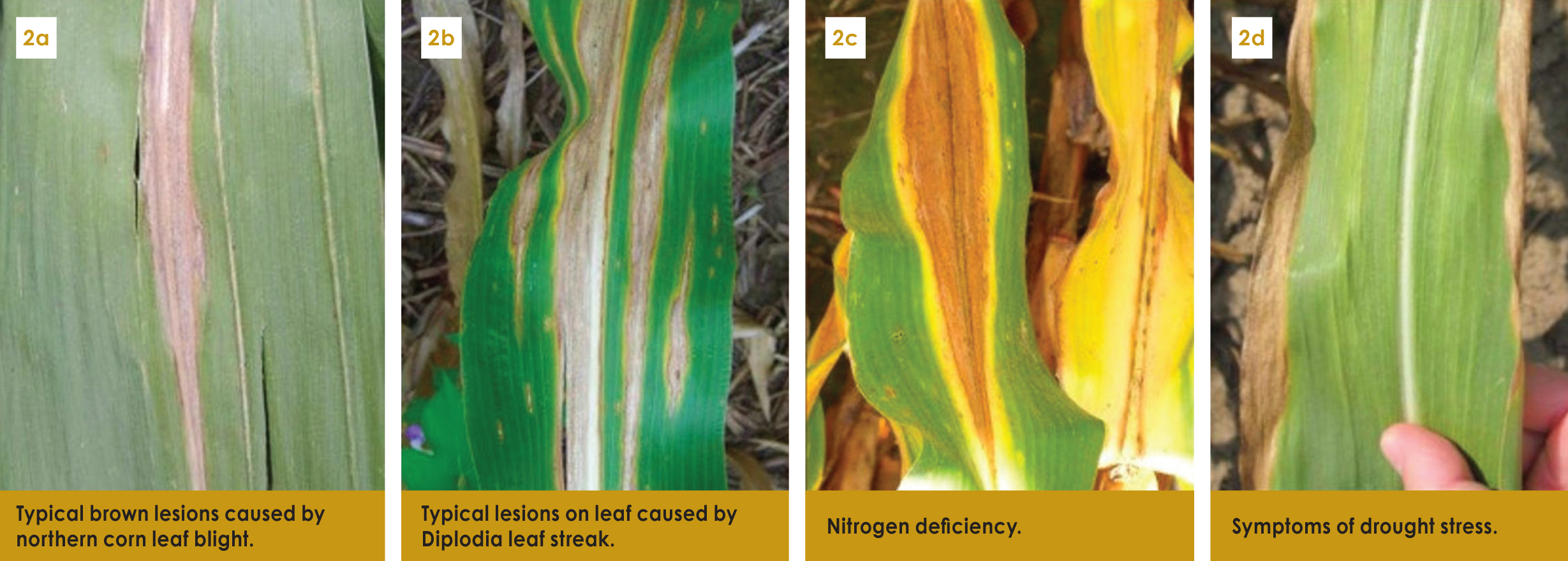
Because Goss’s wilt resembles other maize problems, accurate diagnosis is the foundation of effective management. It is not uncommon for producers to mistake Goss’s wilt for northern corn leaf blight (NCLB), nutrient deficiency, drought stress, or even chemical injury. Laboratory analysis is therefore crucial to confirm whether Clavibacter nebraskensis is present.
To support this process, producers are encouraged to report suspected cases and submit samples to Grain SA, the ARC, FABI, the Stellenbosch Plant Disease Clinic or the DOA. Early reporting allows experts to monitor disease spread, determine its severity, and implement appropriate control measures.
Recognising the symptoms
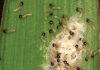
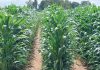
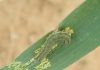
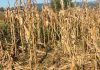
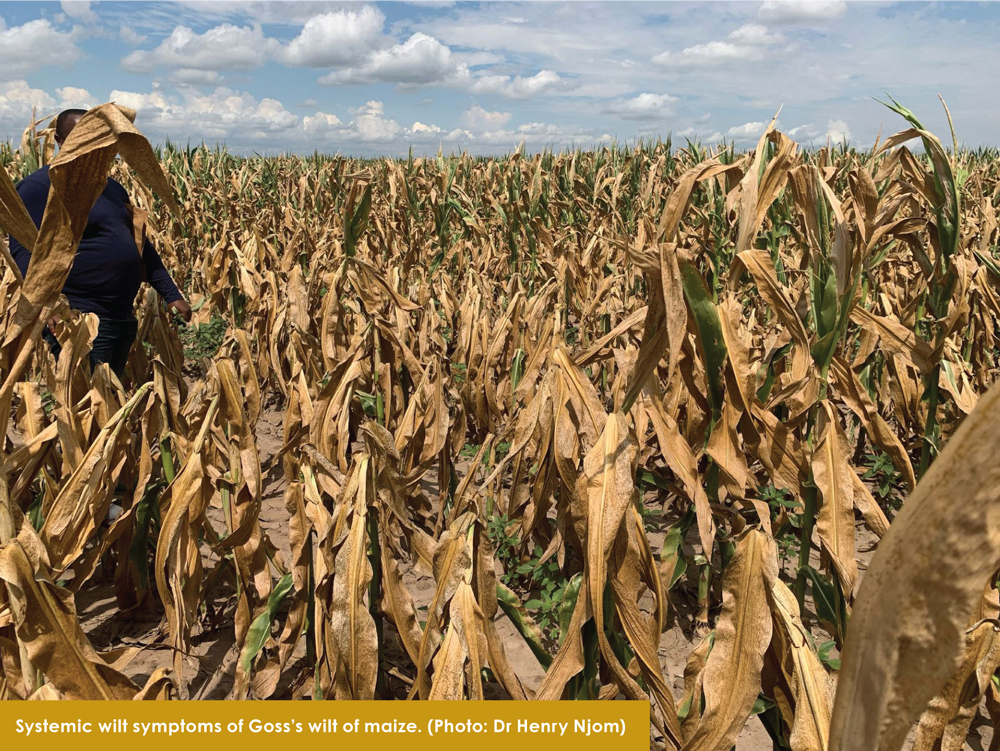
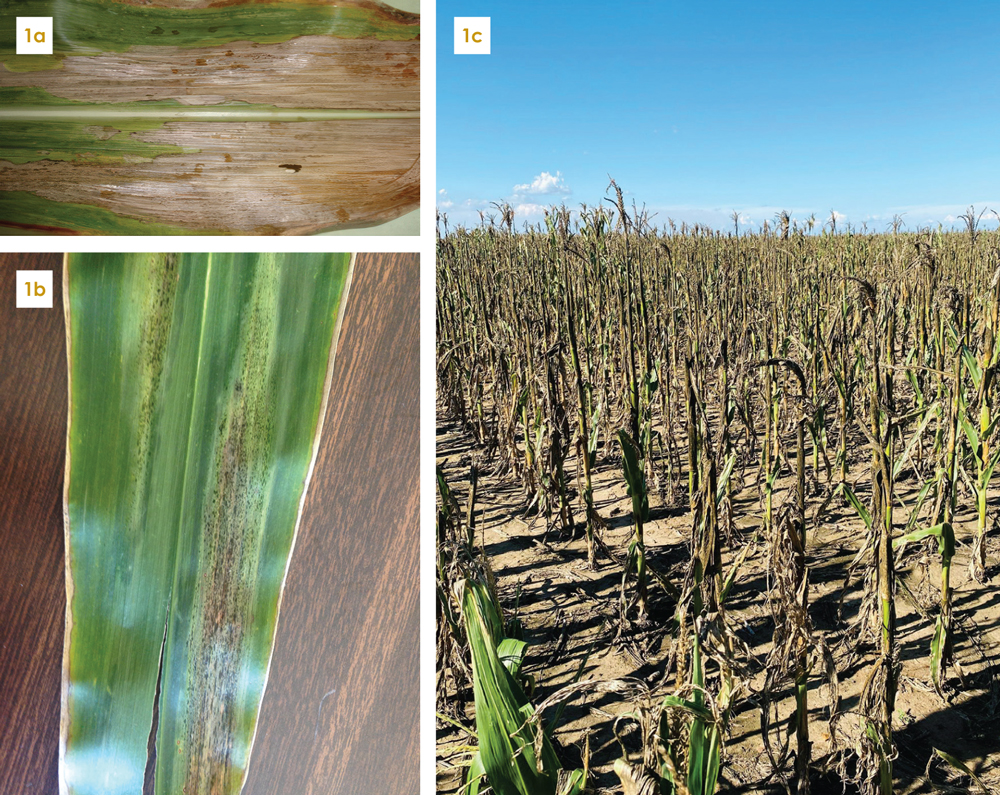
Goss’s wilt affects maize in two major ways, through leaf blight and systemic wilt. The leaf blight phase appears as long, grey-green or tan lesions with wavy margins that develop dark water-soaked spots (often called ‘freckles’). When sunlight shines on these leaves droplets of bacterial exudate can often be seen. When dried, the exudate may glisten and appear shiny on the leaf surface similar to varnish. The systemic phase – although less common – is more serious and results in the wilting and death of plants as the bacteria move through the plant’s vascular system (Figure 1).
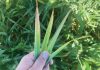
Unfortunately, the symptoms of Goss’s wilt can easily be confused with other maize diseases such as NCLB, Diplodia leaf streak, and even with abiotic stresses such as nutrient deficiencies and severe sunburn symptoms, particularly those caused by a shortage of nitrogen or potassium (Figure 2). This makes correct diagnosis essential. Producers who misidentify Goss’s wilt may waste money on fungicides that have no effect against bacterial diseases.
Looking ahead with optimism
Although Goss’s wilt poses a real challenge, South Africa is responding decisively. The collaboration between Grain SA, government, research institutions, and producers shows that the country has both the scientific expertise and the organisational structure to manage this emerging threat.
Producers are encouraged to remain alert and report any suspicious leaf blight or wilting symptoms. Together, through early detection, accurate diagnosis, and coordinated management, South Africa can keep Goss’s wilt under control and protect its maize industry for future generations.
The work being done now, from sample collection and field surveys to laboratory diagnostics and consortium coordination, lays the foundation for proactive, informed, and sustainable disease management.
 With continued partnership and scientific progress, the outlook for 2025/2026 remains positive. South Africa’s maize industry has weathered many challenges before, and with collaboration and vigilance, it will overcome this one too.
For more information and questions on Goss’s wilt, feel free to contact Dr Godfrey Kgatle (Grain SA research coordinator) at godfrey@grainsa.co.za.