


Department Plant
Sciences, Plant Pathology, University of the Free State

Dumolwenkosi Maposa,
Department Plant
Sciences, Plant Pathology, University of the Free State
For decades, the effectiveness of tillage systems in managing diseases caused by Sclerotinia sclerotiorum has remained a subject of debate among researchers and producers alike. Central to this debate is the position of sclerotia within the soil profile, which influences their survival, germination, and ability to produce apothecia. Tillage practices determine whether sclerotia remain on the soil surface, are mixed into the upper soil layers, or are buried deeper.
No-till systems aim to disturb the soil as little as possible, with seed planted directly into the previous crop’s residue and disturbance largely confined to the planting row. Reduced or minimum tillage uses implements such as chisel ploughs, discs, or cultivators to loosen and mix the upper soil layers without fully inverting the soil, while retaining some surface residue.
In contrast, conventional mouldboard ploughing cuts, lifts, and inverts the soil, typically to a depth of approximately 20 to 25 cm, incorporating much of the surface residue into the soil profile. Deep inversion ploughing follows the same general principle but operates at greater working depths. These systems, therefore, differ mainly in the depth, intensity, and degree of soil inversion they create. This article explores existing literature on how these different tillage systems influence sclerotial survival and germination, and what this means for the management of Sclerotinia diseases in oilseed crops.
The pathogen: Sclerotinia sclerotiorum
S. sclerotiorum is a destructive fungal pathogen responsible for Sclerotinia stem rot (SSR) in soybean and canola, and Sclerotinia head rot in sunflower. It has a wide host range, infecting more than 600 plant species, including crops such as cabbage, carrot, dry bean, lettuce, as well as several common weed species such as pigweed (Amaranthus deflexus), blackjack (Bidens pilosa), common cosmos (Cosmos bipinnatus), and tall khakibos (Tagetes minuta).
The ability to infect a diverse range of hosts has enabled the pathogen to become widely distributed across the globe, making it one of the most important and challenging fungal pathogens affecting agricultural production. In South Africa, it is a major constraint to soybean and sunflower production and is considered among the leading causes of yield losses. Recurrent epidemics caused by S. sclerotiorum have, in some cases, forced producers to reconsider their cropping rotations or reduce the area planted to soybean or sunflower due to the high risk of infection and associated economic losses.
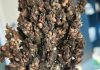
S. sclerotiorum is well known for producing survival propagules known as sclerotia, which are black, compact, melanised masses of hardened fungal mycelium. These structures enable the pathogen to survive in the soil for several years, with survival of up to eight years or longer reported under some conditions, even in the absence of a susceptible host. They are deposited on the soil surface as infected host plants mature, die, and decay at the end of the season.
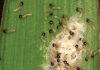
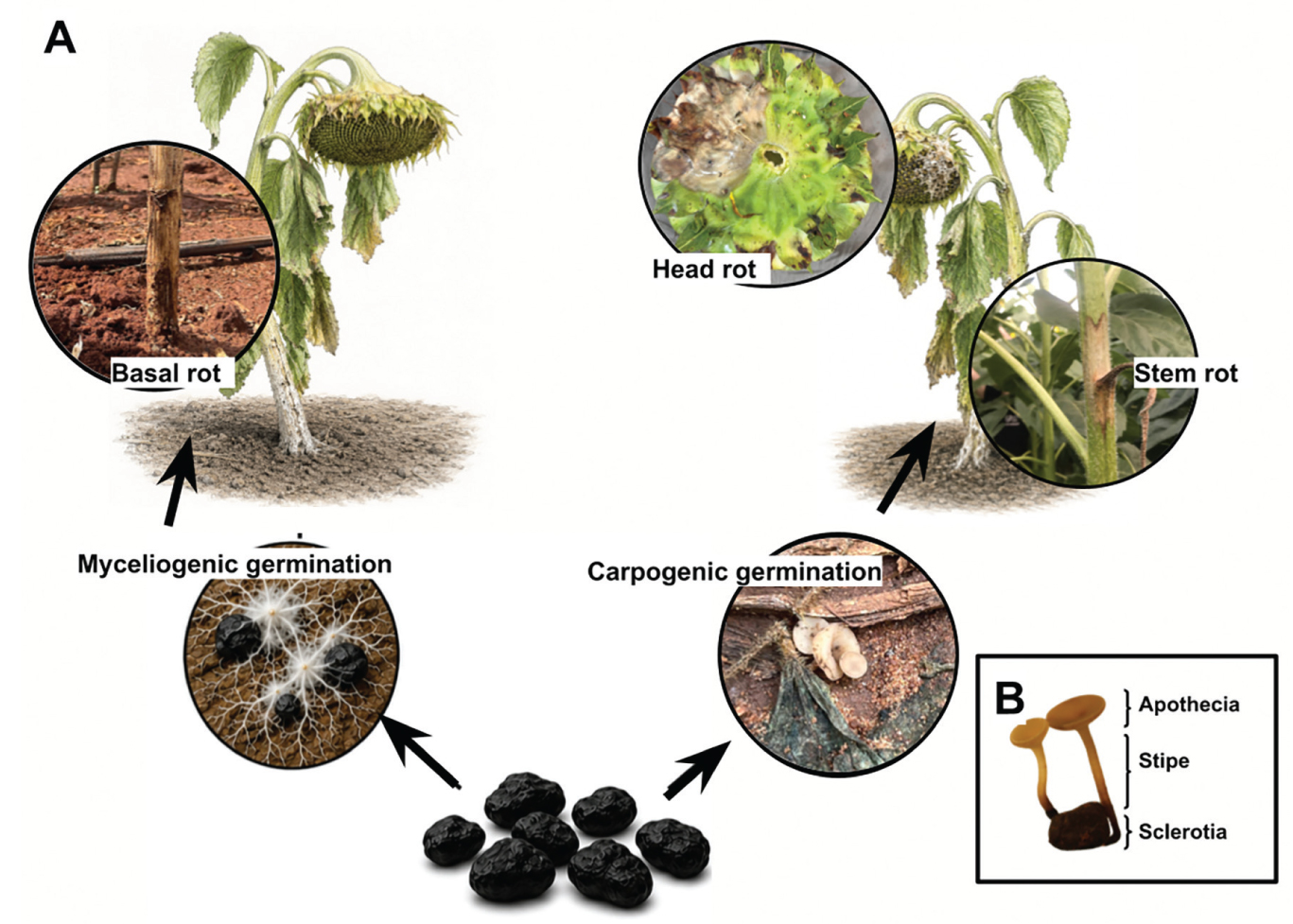
Under prolonged cool and moist conditions, typically soil temperatures of 12 to 20 °C and continuously moist soil in the upper soil profile, with soil water potentials above approximately −100 kPa, sclerotia may undergo carpogenic germination and produce apothecia that release airborne ascospores. Alternatively, through myceliogenic germination, sclerotia produce mycelium that directly infects susceptible host tissue (Figure 1).
Through these two modes of germination, S. sclerotiorum can infect a wide range of plant tissues, including sunflower heads, soybean and canola stems, leaves, and pods. As the persistent survival structures from which primary inoculum originates, sclerotia represent the principal target of management practices aimed at reducing disease carry-over between cropping seasons and mitigating disease initiation within the growing season. The viability and germination potential of sclerotia are influenced by several environmental and biological factors, including their position within the soil profile.
Position within the soil profile
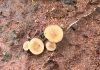
The concept of managing Sclerotinia diseases through tillage is based on the sclerotia’s position within the soil profile. Sclerotia located on or close to the soil surface can produce small ‘saucer-shaped’ apothecia, approximately 1 cm in diameter (Figure 1B). These structures are supported by thin stalks called stipes, which elevate the apothecia above the soil surface and allow the release of airborne ascospores. Stipes are typically 3 to 5 cm long, although lengths of up to approximately 9 cm have occasionally been observed. Burying sclerotia below the depth from which the stipes can successfully reach the soil surface may therefore reduce apothecial emergence and the production of airborne inoculum.
When sclerotia are left on or close to the soil surface, as generally occurs under no till, they remain within the zone from which apothecia may emerge (Figure 2A). However, this does not necessarily result in greater disease pressure. A lower prevalence of Sclerotinia stem rot has been associated with no-till systems than with minimum- or conventionally tilled fields, although disease incidence within affected fields did not differ among tillage systems. No till also consistently produced the fewest apothecia during the monitoring period of a long-term study. These findings suggest that the effect of leaving sclerotia near the surface is also influenced by environmental exposure and biological degradation, as well as by the absence of repeated soil redistribution.
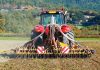
Under reduced or minimum tillage, implements such as chisel ploughs disturb and mix the upper soil layers without fully inverting the soil (Figure 2B). While this retains surface residue, reduced tillage may increase disease risk by retaining or redistributing viable sclerotia within shallow soil layers from which apothecia can readily emerge. A three-year study of Sclerotinia stem rot in soybean in southwestern Ontario identified reduced tillage as one of the factors associated with greater sclerotial density and a higher incidence of disease. However, the effects of this type of soil disturbance may change over time.
Minimum tillage using a chisel plough at a depth of 10 to 20 cm initially reduced apothecia production by moving sclerotia into deeper soil layers, but this benefit declined over time as repeated cultivation redistributed viable sclerotia and returned some to the soil surface, where they could once again germinate and serve as a source of primary inoculum.
Increasing the depth and intensity of soil disturbance forms the basis of conventional or deep inversion ploughing (Figure 2C). By burying sclerotia below the depth at which apothecia can successfully emerge, deep tillage (~25 to 30 cm) may limit carpogenic germination and, consequently, reduce apothecia production and the dispersal of infectious ascospores. This burial depth is important because apothecial stipes are generally only a few centimetres long, making it increasingly difficult for apothecia produced from deeply buried sclerotia to reach the soil surface.
Mouldboard ploughing from the long-term study initially suppressed apothecia production by placing sclerotia deeper within the soil profile. However, this effect declined towards the end of the monitoring period as repeated soil inversion redistributed viable sclerotia throughout the soil profile and returned some to depths from which apothecia could once again emerge.
Despite differences in the depth and degree of soil inversion, repeated chisel-and-mouldboard cultivation can redistribute sclerotia within the soil profile, potentially altering their capacity to produce apothecia over time. This shared response indicates that the initial effect of a tillage system may differ from its outcome after several growing seasons.
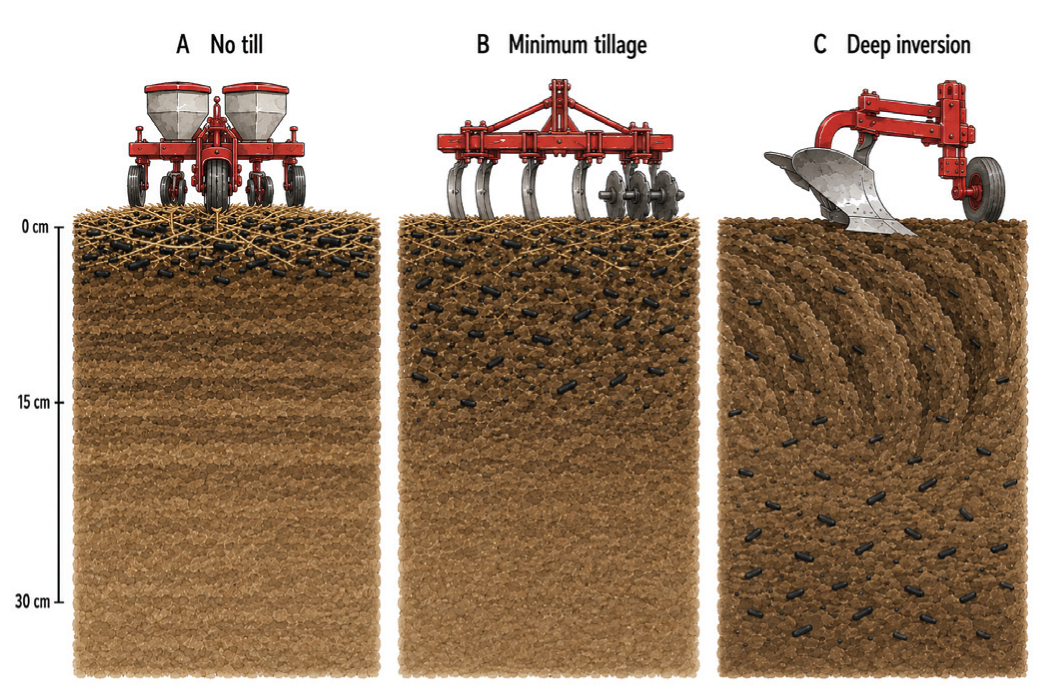
Illustration co-created by the authors using ChatGPT (OpenAI).
Sclerotinia management
Long-term management of Sclerotinia diseases requires a combination of practices that target different stages of the disease cycle. These may include selecting appropriate planting dates, using biological control agents, adjusting row spacing, and managing crop canopy development to reduce conditions favourable for infection. Crop rotation, field history, soil management, and the risk of sclerotial build-up should also form part of the decision-making process.
Tillage may offer a short-term advantage when sclerotia are buried below the zone from which apothecia can emerge, but this benefit must be considered alongside soil conservation, moisture retention, residue management, erosion risk, machinery requirements, and the sustainability of the broader farming system. Tillage is therefore neither a universal solution nor an inevitable setback. Its value depends on how the chosen system alters the position and persistence of sclerotia over time, and how that choice fits within the broader soybean or sunflower production system.
Sources
- Kurle et al. 2001. DOI: 10.2134/agronj2001.935973x.
- Garza et al. 2002. DOI: 10.1080/07060660309506988
- Mila et al. 2003. DOI: 10.1094/PDIS.2003.87.9.1048
- Rothmann, L & Maposa, D. 2025. Understanding the pathogenesis of Sclerotinia sclerotiorum in sunflower head rot. Oilseeds Focus, 11(4), 11-13.