

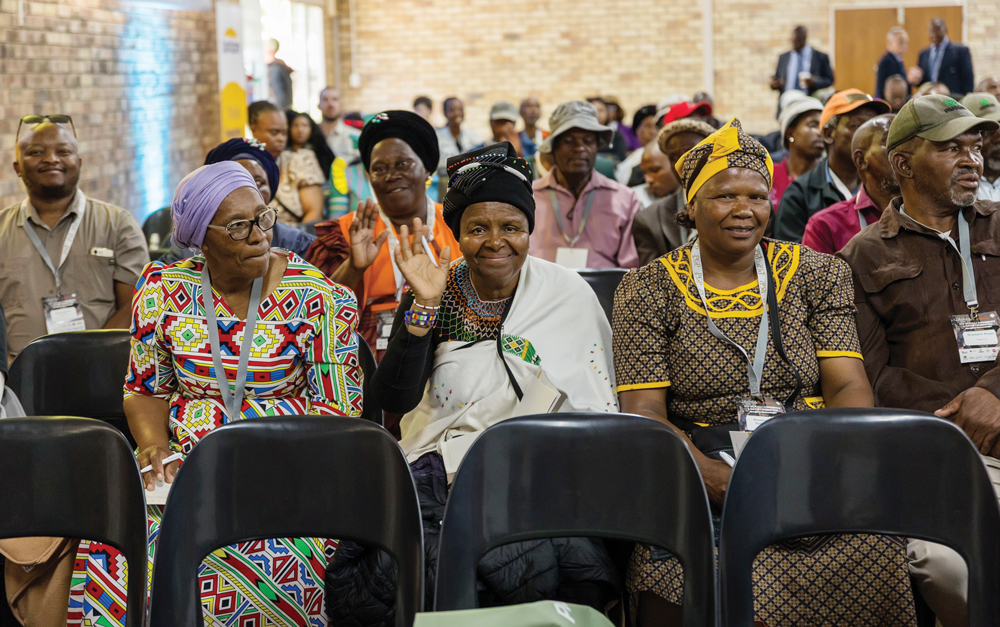
Robust discussions on pressing agricultural challenges, including land ownership, water rights, and increasingly adverse climatic conditions, were balanced by the recognition of farmers whose perseverance, dedication, and hard work had enabled them to reap the rewards of their efforts.
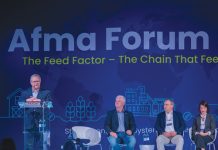
This aptly encapsulates the Phahama Grain Phakama (PGP) Ukukhula Conference and Day of Celebration, held at NAMPO Park on 8 October 2026.
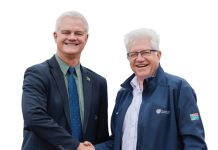
The keynote address was delivered by the newly appointed Minister of Agriculture, Willie Aucamp, whose attendance coincided with his first 100 days in office.
Aucamp underscored the pivotal role of agriculture in South Africa’s economy, emphasising its far-reaching contribution to livelihoods, food security, animal feed production, agro-processing, employment, rural development, and regional trade. ‘Without the farmer, we will not have food on our tables,’ he stated.
He highlighted the country’s annual maize production, which fluctuates between 10 and 16 million tonnes, depending on prevailing climatic conditions. This output supplies domestic demand while also supporting regional export markets. Aucamp further acknowledged the substantial contribution commercial grain producers make to the agricultural sector and the broader economy.
Drawing on his recent discussions with African Farmers’ Association of South Africa (AFASA) president, AJ Mthembu, Aucamp raised a fundamental question concerning land tenure and agricultural investment: how can farmers be expected to invest capital and build sustainable enterprises when they do not own the land they cultivate?
In a collaborative initiative, Aucamp and AFASA developed a proposal to identify 100 farmers in each province who currently lease government-owned agricultural land and to assess the viability of their farming operations. The Minister of Land Reform would assist in facilitating the transfer of the land into these farmers’ names, thereby streng-
thening their tenure security and potentially creating greater scope for long-term investment and development.
Land ownership formed part of a broader conversation about the structural challenges confronting South African agriculture. Other speakers and discussion groups empha-
sised the importance of land transfer, access to water rights, and resilience in the face of climatic uncertainty. Delegates also had the opportunity to deepen their under-
standing of risk management and the potential implications of the El Niño phenomenon for agricultural production.
In the afternoon, parallel breakaway sessions offered practical, actionable insights on topics including agricultural insurance and fertilisation strategies.
Beyond the formal presentations, the conference provided a valuable platform for producers to exchange experiences, broaden their knowledge, and engage with the realities facing farmers at different stages of their agricultural journeys.
A Day of Celebration
The celebratory spirit was palpable as the annual event honoured exceptional farmers across the spectrum of agricultural development, from subsistence producers to emerging commercial enterprises. The awards recognised not only their achievements, but also the perseverance, enterprise, and commitment required to build viable farming operations under often challenging circumstances.
The 2026 winners and finalists were:
Subsistence Farmer of the Year – Manqoba Nkosi (Donkerhoek, Mpumalanga)
Nkosi farms on communal land in Donkerhoek, where he was born, producing maize and raising cattle. He completed his N6 studies in Farm Management and has been a Grain SA member since 2016. Earlier this year, strong winds flattened his maize crop, presenting a formidable obstacle to his production efforts. Undeterred, Nkosi and his wife harvested the crop by hand, ultimately achieving a yield of 5 t/ha. Their deter-
mination illustrates the resilience required to sustain agricultural production in the face of adversity.
The other finalists in this category were Raymond Nhlabathi (Mpuluzi, Mpumalanga) and Hombile Nombebe (Qumbu, Eastern Cape).
Smallholder Farmer of the Year – Lubabalo Jordan (Mthatha, Eastern Cape)
Jordan’s journey into agriculture followed a career as an electrical engineer in Cape Town and Ireland. Having returned to farming, he now cultivates maize on 13 ha of communal land and also keeps livestock. He acknowledged Grain SA’s instrumental role in encouraging and supporting him throughout his agricultural journey. In addition to managing his own farming activities, Jordan serves as chairperson of his local study group, helping to foster knowledge-sharing and collaboration among fellow farmers.
The runners-up in this category were Mfaniseni Mnculwane (eMangweni, KwaZulu-Natal) and Simon Motau (Sehlakwane, Limpopo).
Potential Commercial Farmer of the Year – Kopano Lentswetshipi
(Mooifontein, North West)
Lentswetshipi cultivates maize and sunflower on 200 ha of communal land, demon-
strating the potential of communal land to support larger-scale agricultural enterprises. He credits his father with imparting essential farming skills and acknowledges Grain SA’s significant contribution to his development as a farmer. He also benefits from mentorship through PGP. In addition to crop production, Lentswetshipi keeps livestock, which he markets primarily through auctions and a nearby abattoir.
The runners-up were Jeffrey Hlele (Ixopo, KwaZulu-Natal) and Vincent Ntuli (Springbokpan, North West).
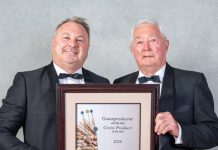
New Era Commercial Farmer of the Year – Masiu Farming Enterprise (Senekal, Free State)
Vincent Masiu continues to build on the agricultural foundation established by his father, OJ, while steering the family enterprise towards further growth and deve-
lopment. Armed with an honours degree in Agricultural Management, he combines formal agricultural training with practical farming experience. During the current season, the enterprise planted 480 ha of maize and 70 ha of sunflower.
Masiu attributes a significant part of his personal and professional development to Grain SA, which he credits with playing the most influential role in his life and farming journey. His achievement reflects the value of combining intergenerational farming knowledge, formal education, and institutional support in developing a sustainable commercial farming enterprise. In his brief acceptance address, a delighted Masiu expressed his enthusiasm for farming, saying that he loves what he does.
The other finalists in this category were Masinga Farming (Swartberg, KwaZulu-Natal) and Obakeng Mogogane (Mooifontein, North West).


New CEO
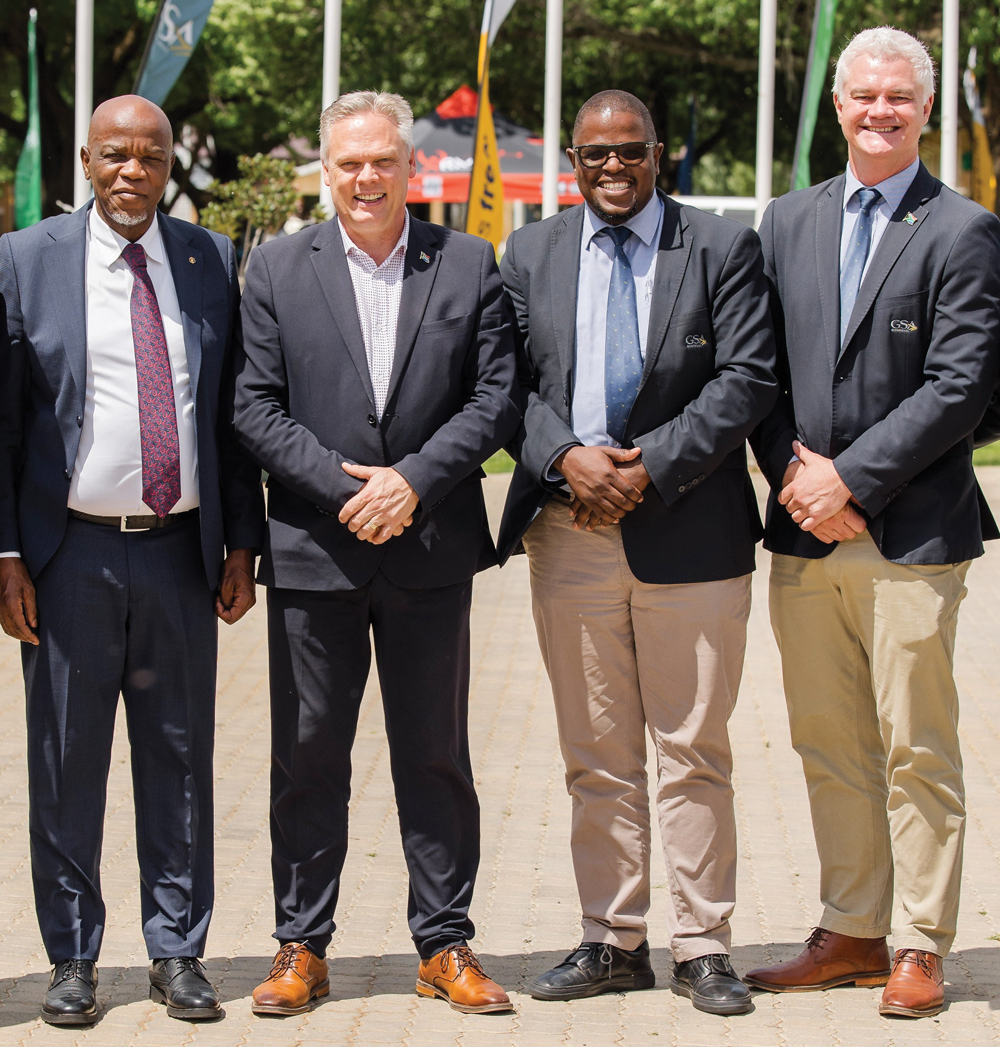
The event also marked the introduction of Khomotso Mashiloane as the newly appoin-
ted chief executive officer of PGP, signalling a new chapter in the organisation’s leadership.
In his address, Mashiloane thanked the PGP board members for their confidence in him and the trust they had placed in his leadership. He described his appointment as a privilege, expressing his commitment to serving as CEO and leading the PGP team.
Mashiloane explained that his background is rooted in agriculture and that he has gained experience in both the public and private sectors. Farmer development, he noted, has been a consistent focus all through his career.
‘Throughout my career, I have been involved in farmer development. In this new role, my approach will be simple – learn, understand, and strengthen.’
High-tonnage club
Producers who achieved the following tonnage milestones were recognised for their accomplishments:
500 tons
- Lebohang Khitleli (Eastern Cape)
- Masenga Farming (Eastern Cape)
- Mdibani Masilela (North West)
- Nkwe Metswamere (North West)
- Vincent Ntuli (North West)
1 000 tons
- Tau Itsebeletse (Free State)
- Kevinot Farming (Eastern Cape)
- Ngobile Matlaba (North West)
- Zoliwe Nombewu (Eastern Cape)
1 500 tons
- Victor Mafoko (North West)
- William Raphoto (North West)
2 000 tons
- Masiu Farming Enterprise (Free State)
- Mpho Munyai (North West)
3 500 tons
- Zacharia Legasy (Eastern Cape)
- Obakeng Mogogane (North West)
Partner recognition
PGP also acknowledged the contributions of its programme partners, whose support helps advance farmer development and strengthen agricultural enterprises.
The partners recognised at the event were:
- Absa
- Bayer
- Kagiso Trust
- Kgodiso Development Fund
- Khula
- Land Bank
- Land Bank Insurance
- Maize Trust
- Oil and Protein Seeds Development Trust
- Pannar Seed
- SA Winter Cereal Industry Agency
- Santam
- South African Cultivar & Technology Agency
- Standard Bank of South Africa Ltd