


Plant breeding methods have been changing since the domesti-
cation of the first crops. From visual selection of plants with desired traits, to using molecular markers for more efficient screening, breeders are continually exploring techniques to develop improved varieties faster. This is mainly due to the competitive nature of breeding whereby producers select varieties helping them manage the myriad of challenges they face, such as changing climatic conditions and profitability margins, to ultimately deliver the best return on investment.
Many tools, all leading to precision breeding
We live in the era of precision agriculture and producers have been using precision techniques to maximise profits. Similarly, we are entering the era of precision breeding where changes to a plant’s genome can be made in very specific ways to reach a desired outcome, such as disease resistance. The entire world is excited about this technology as the outcome could also be achieved with conventional breeding – precision breeding approaches just make it much faster.
The latest game-changing breeding approach is known by many names. New breeding techniques (NBTs), new genomic techniques (NGTs), gene editing and CRISPR are terms used interchangeably to describe the processes aimed at reaching one goal – precision breeding.
Since the mid-2010s, countries around the world have been drafting and implementing regulations for this breeding approach, with Argentina being the first country to implement regulations for precision breeding.
Regulations enable access to innovation
Why should a producer or the agricultural value chain care about regulations? Because regulations enable access to innovation. In South Africa, the Plant Improvement Act regulates the quality, production, sale, certification, listing, and trade of seed and other plant propagating material. The Plant Breeders’ Rights Act puts forth criteria for the protection of new plant varieties and provides exceptions for producers to save seed on farm. The Genetically Modified Organisms’ Act provides a regulatory framework for the safe use of organisms whose genetic material (DNA) has been altered by the addition of a gene from a sexually incompatible species. Without these pieces of legislation, producers would not be able to access innovative new varieties developed locally or globally.
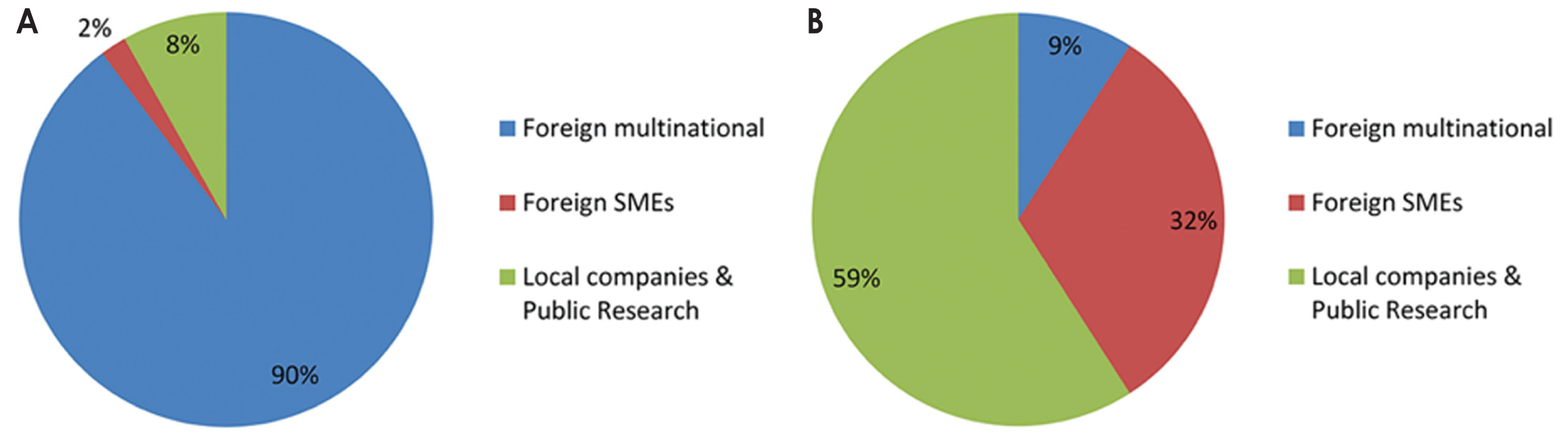
Graphs extracted from: https://www.frontiersin.org/journals/bioengineering-and-biotechnology/articles/10.3389/fbioe.2020.00303/full
The EU regulations provide for conventional equivalence|
The European Union (EU) recently reached a milestone agreement on how to regulate plants produced through precision breeding, following consensus between the EU Council, Parliament, and Commission. The EU uses the term new genomic techniques (NGT) to describe the suite of tools that can be used during precision breeding.
Broadly speaking, the EU categorises plants in the following way: i) conventional; ii) GMO; iii) category 1 NGT; iv) category 2 NGT; and v) organic.
Category 1 NGT plants are considered equivalent to conventionally bred or naturally occurring plants, and category 2 NGT plants are all other NGT plants (e.g., plants that will be considered like a GMO, such as insertion of a gene from a bacterium into maize). Once category 1 NGT plants have been verified to meet the requirements for this category, they will be exempt from the risk assessment procedure GMOs are subjected to and will be treated like conventional plants. Category 2 NGT plants will undergo a similar risk assessment process as GMOs.
To be considered equivalent to conventional plants, the EU implemented equivalence criteria and disqualifying traits. The equivalence criteria define the number of modifi-
cations that can be made to the plant’s genome and stipulate that inserting sequences from the conventional breeding pool, or inducing changes occurring in the conventional breeding pool, are considered conventionally equivalent.
Disqualifying traits are 1) herbicide tolerance; and 2) production of a known insecticidal substance. This means that even when a change is introduced from within the plant’s gene pool and that change results in herbicide tolerance, the plant will be classified as a category 2 NGT. The plant variety will then be subject to further risk assessment studies.
Other provisions were made for transparency purposes and include labelling of seed bags, establishment of a database where category 1 NGT plants can be tracked, as well as requirements for seed catalogues, variety registers, marketing documentation, and databases. Category 1 NGT plants will not be permissible in organic farming. Food and feed derived from category 1 NGT plants will not be subjected to GMO labelling requirements.
The rule of thumb to be considered equivalent to a conventionally bred plant, is that no DNA shall be inserted from a sexually incompatible plant species. For example, a plant can be considered conventionally equivalent if DNA was deleted, but not if a gene from maize is inserted into wheat.
Why do risk assessments matter?
Plant breeders and producers are equally reliant on nature, and so protecting our na-
tural resources is of the utmost importance. Companies comply with the necessary risk assessments to ensure the safety of GMOs to the environment, human health, and animal health. But the reality is that the regulatory environment adds cost and time to GMO development, in many cases making it prohibitively expensive for small compa-
nies and developing countries to produce and commercialise GMO crops.
South Africa has developed GMO crops which never reached the market due to the costs needed for commercialisation. A study by AgBioInvestor estimated the average cost to develop and commercialise a GMO to be at $115 million over a time span of 16,5 years. The regulatory phase has the longest duration of the overall process, accounting for almost 40% (37,6%) of the total cost of commercialisation and more importantly more than half (51,1%) of the time.
In Argentina, fit-for-purpose regulations were implemented from the mid-2010s, leading to an interesting phenomenon. Small companies and public institutes could participate in the development and commercialisation of crops produced using precision breeding, whereas the development and commercialisation of GMOs were dominated by large companies.
A study published in 2020 compared the differences in developer profiles between GMO products and precision-bred products based on the short period of time (around five years) Argentina had implemented regulations that differentiate between GMO and precision breeding. Although the results are preliminary and need to be confirmed in follow-up studies, it is interesting to note the opportunities precision breeding unlocked for local and public research.
Precision breeding and trade are now global discussion topics
Agricultural trade is becoming increasingly complex, not only for seed but for other commodities as well. At its annual congress in London in June 2026, the International Grains Council hosted a panel discussion titled ‘Gene Editing & Grains: Future-Proofing Policies for Global Markets’. While fruit and vegetables are often traded by variety, grains – particularly maize, wheat, and soybean – are usually traded in bulk, except in niche markets such as non-GMO products. This means the identity of a specific maize or wheat variety cannot always be guaranteed when grain is traded.
When regulations between countries are misaligned, we risk losing access to markets. A precision-bred plant regulated as conventional in one country (e.g., Argentina) could be considered a category 2 NGT plant in Europe and will require risk assessment studies not deemed necessary in Argentina.
Wheat, soybean, and maize grain are highly traded commodities that form the cornerstone of food security in many countries. Will we still be able to import wheat grain if it originates in a country that views precision-bred crops as conventional, whereas South Africa considers it GMO? Yes – but only if that commodity has the appropriate commodity clearance under the GMO Act. To obtain commodity clearance requires information that may not be available, which will be an impediment to trade.
Why do regulations matter for producers?
South Africa’s position is that precision-bred crops will be regulated under the existing GMO framework. South Africa has been the leader on the continent when it came to GMO regulations and successfully implemented a system in which GMOs are broadly used. According to a study by the South African National Biodiversity Institute (SANBI), South African GMO products have not had any detrimental environmental or health effects. One should also consider that the environment has probably benefited immensely from decreased pesticide use when insect-resistance traits are widely used.
Does regulation under the GMO Act imply all precision-bred crops will be regulated as GMOs? That is the working theory, although the entire seed industry will be very glad to be proven wrong. Do we need a completely new act to accommodate precision bree-
ding? No, not necessarily. The EU approach was to establish regulations that work alongside existing GMO legislation, and South Africa can do the same. The most impor-
tant step is to agree that it is necessary to regulate precision-bred crops according to risk, and not under the blanket of GMOs, to enable producers to continue accessing new plant varieties.
Producers will always have a choice
Producers will be able to continue choosing which crops they plant, whether it is conventional crops, GMOs, hybrids, seeds that were passed down from generation to generation, or precision-bred crops. Ultimately, seed companies are competing to deliver the best products that enable producers to farm profitably.
Final thoughts
Precision breeding is a term used to describe the latest breeding tools, which ultimately enables very specific changes to be made to a plant’s genome. Plant breeding is not stagnant, and we fully expect new technologies to be developed in future.
Regulating precision-bred crops based on conventional equivalence enables innovation. More importantly, it makes innovation accessible to public innovators, small businesses, and producers.
Risk assessments are important, but so are time and resources. If improved plant varieties can be brought to market more efficiently at lower costs (while not posing undue risks), producers could gain quick access to varieties with superior traits and better manage production challenges.