

Soil fertility comprises three aspects: physical, chemical, and biological.
Chemical fertility has historically been the subject of a lot of research, while biological fertility has recently started to get more research attention. However, the foundation of soil fertility – soil physics – has been very much neglected. It is a big misconception to assume that when chemical fertility has been assessed and analysed, the physical fertility is also fine. One can have a perfect chemical analysis but a very poor structure with limited or no soil biology activity.
This can be compared to the foundation of a building. The permanent physical parameters of the soil are the basic drivers/foundation of soil fertility. It is extremely important to make sure that these characteristics have been identified before addressing the chemical and biological fertility.
Soil classification has received a lot of focus, and most soils have been classified and named. Only experienced soil scientists can identify the soil characteristics and advise a producer on the soil management zones for the different soil types.
The awareness of biological fertility has grown significantly, and various companies have contributed and developed programmes and products to promote the concept, but the physical soil parameters are still lacking.
Despite an intensive awareness campaign by Fertasa and Grain SA, there are still problematic areas in liming programmes in South Africa, including issues like:
- lime quality;
- correct CCE (calcium carbonate equivalent) and misconceptions regarding the concept;
- lack of physical lime data (such as fineness);
- moisture content of limes;
- poor segmentation of liming products leading to poor application and collapsed soil structure; and
- financing issues (liming is a long-term investment programme which doesn’t get national support).
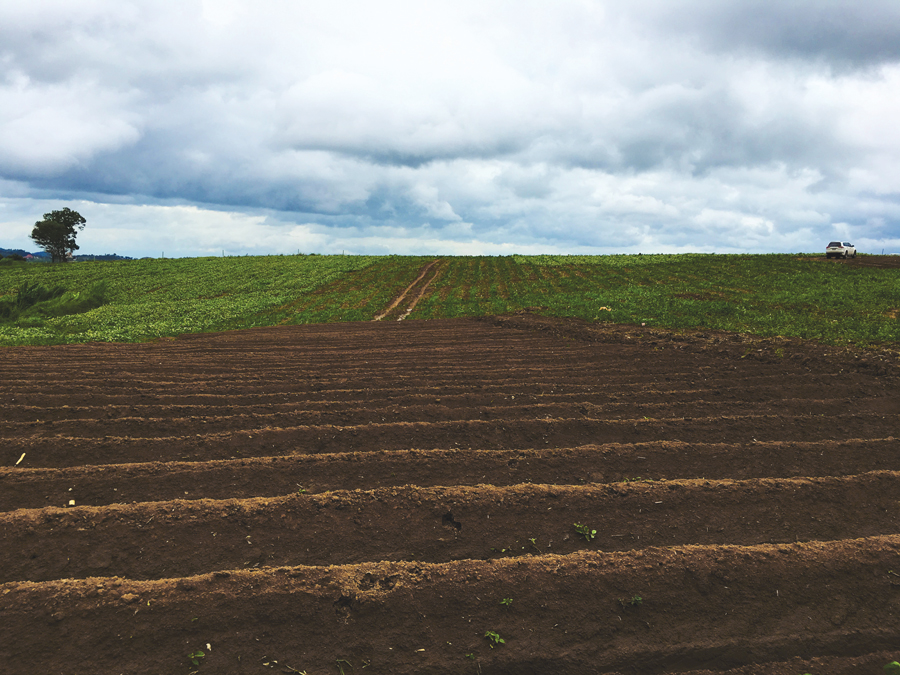
Issues that need continued attention
All of the above contribute to poor soil health, which is an identified undeclared national crisis according to the Fertasa Soil Acidity Working Group (2019).
Important basic soil characteristics, which need to be identified before any decision or recommendation can be made, include:
- soil texture;
- water retention and hydraulic capacity;
- aeration and porosity;
- ability to produce and maintain biomass and carbon levels in the soil; and
- buffer capacity and determined CEC (cation exchange capacity).
Up to now the basic principles for correcting soil biology have been:
- adoption of conservational soil tillage methods;
- avoidance of excessive chemical usage of fertilisers and agrochemicals;
- reduction of soil compaction by using a range of soil implements and physical methods;
- maximisation of soil cover by using organic materials and the retaining of organic surface residues by using cover crop strategies;
- improvement of organic matter by adding compost, manure, worm castings, organic acids, and biological microorganisms; and
- integration of livestock to feed soil biology in a more diversified ecosystem.
Key indicators of good soil biology/soil health have been identified and integrated, such as:
- earth worm activity and composition;
- soil aggregate structures; and
- respiration rates of microbiology organisms.
Some of the latest developments to address soil physical parameters include the following:
- Determining the correct CEC instead of calculating it. Analytical data are used to calculate the CEC mathematically, which is not very accurate. It is best to rather take a physical sample to the laboratory for the CEC to be correctly determined.
- Determining the undisturbed soil density and identifying the difference between that and the disturbed soil density. During normal soil sampling techniques, the soil is drilled, mixed, milled, and dried, delivering a disturbed soil density figure that differs significantly from the undisturbed state in the field experienced by the plant roots.
- Determining the clay dispersion. The importance of this concept has been neglected. Dispersion of clay particles is the beginning of the decay of soil structure and the start of soil compaction, negatively influencing the soil aeration and water hydraulic capacity of the soil. These impacts must be addressed and quantified before any soil cultivation methods, chemical application, or biological products are recommended. The physical and chemical dispersion of clay particles can now be identified and quantified, enabling the soil scientist to recommend a dispersed soil flocculation programme.
Misconceptions exist because soil fertilisation programmes are based on soil analysis, often only using the concentrations of nutrients (ppm). Not quantifying the physical nutrient content (kg/ha) on clay dispersion also leads to ignorance.
It is often also assumed that sandy soils with a low clay content is not susceptible to clay dispersion, but it is because the clay content is not quantified in kilogram or ton per hectare. The new methods of determining clay dispersion have indicated that more than 50% of the clay content in some soils are dispersed to less than two microns (um). It is also wrongly assumed that clay particles are only 2 um, and that it stays that way, because the dispersion is not quantified in a laboratory.
When the abovementioned aspects are not identified and verified, there are other implications, such as the following:
- Poor and reduced nutrient use efficiency (NUE). Very low NUE figures have been reported lately, in many cases less than 50%. This means that overspending or overapplication has become an accepted method to rectify shortfalls in fertiliser programmes. Compacted and anaerobic soil have an extremely negative effect on nutrient mineralisation. Rising fertiliser prices are very concerning in this regard.
- Poor herbicide efficiencies have become the norm rather than the exception. Good aeration and soil microbe activity are crucial for the performance and breakdown of herbicides and pesticides. Producers often suffer herbicide damage to crops due to the ignorance and absence of basic soil physical indicators.
The good news is that due to a statistical research programme financed by Omya Idwala, different soils in the grain-producing area have been sampled and analysed. Subsequently a soil health assessment model has been developed by Prof Leon van Rensburg, soil physicist at Van’s Lab, after sampling several soil samples at different places. The CEC, undisturbed density, and dispersed clay particles have been measured in the laboratory while the assessment model has been developed with the collected data to determine the quantity of flocculant needed to flocculate the dispersed clay on a specific depth.
Data that are critical to assess good soil health include:
- the undisturbed soil density determined from a core soil sample (that is what the plant root is experiencing);
- the real CEC determined as described in Agrilasa (the Agri-Laboratory Association of Southern Africa) methods;
- the grade of clay particle dispersion as measured by the soil lab (which will give a good indication of the aeration of the soil and water infiltration); as well as
- the specific soil depth of the dispersed layer.
Sometimes it is crucial to apply rehabilitation methods, also called rectifying liming, to address the total soil fertility. Rehabilitation refers to methods to flocculate dispersed clay particles to prevent compaction of soils.
Omya Idwala, Van’s Lab, Biodyne, and Rula Agri work as a team applying the concept of total soil fertility.
Contact persons:
Johannes Nel (Omya Idwala SA): 082 808 1633
Prof Leon van Rensburg (Van’s Lab): 084 593 1214
Marco Anelli (Biodyne): 072 624 4512
Ruan Jonas (Rula Agri): 079 522 8639
Other specialists like Prof Charlie Reinhardt and members of the Agronomic Forum of South Africa form part of the 225 professional natural scientists that are taking part in this initiative.