



junior agricultural economist,
Grain SA
THE SALES OF AGRICULTURAL MACHINERY ARE OFTEN REGARDED AS AN INDICATOR OF PRODUCER CONFIDENCE IN THE AGRICULTURAL SECTOR. WHEN COMMODITY PRICES ARE FAVOURABLE, PRODUCTION PROSPECTS ARE POSITIVE, AND PROFITABILITY IMPROVES, PRODUCERS ARE GENERALLY MORE WILLING TO INVEST IN NEW EQUIPMENT.
Conversely, when uncertainty increases or margins come under pressure, machinery purchases are often among the first capital investments to be postponed. This is the trend observed in South Africa in 2026. Although the country is expecting one of its largest grain and oilseed harvests on record, tractor and combine harvester sales have slowed down. Delayed harvesting, higher production costs, and continued uncertainty regarding input costs and weather conditions have encouraged producers to delay major capital expenditure until the current season has been completed.
Tractor sales since January 2021
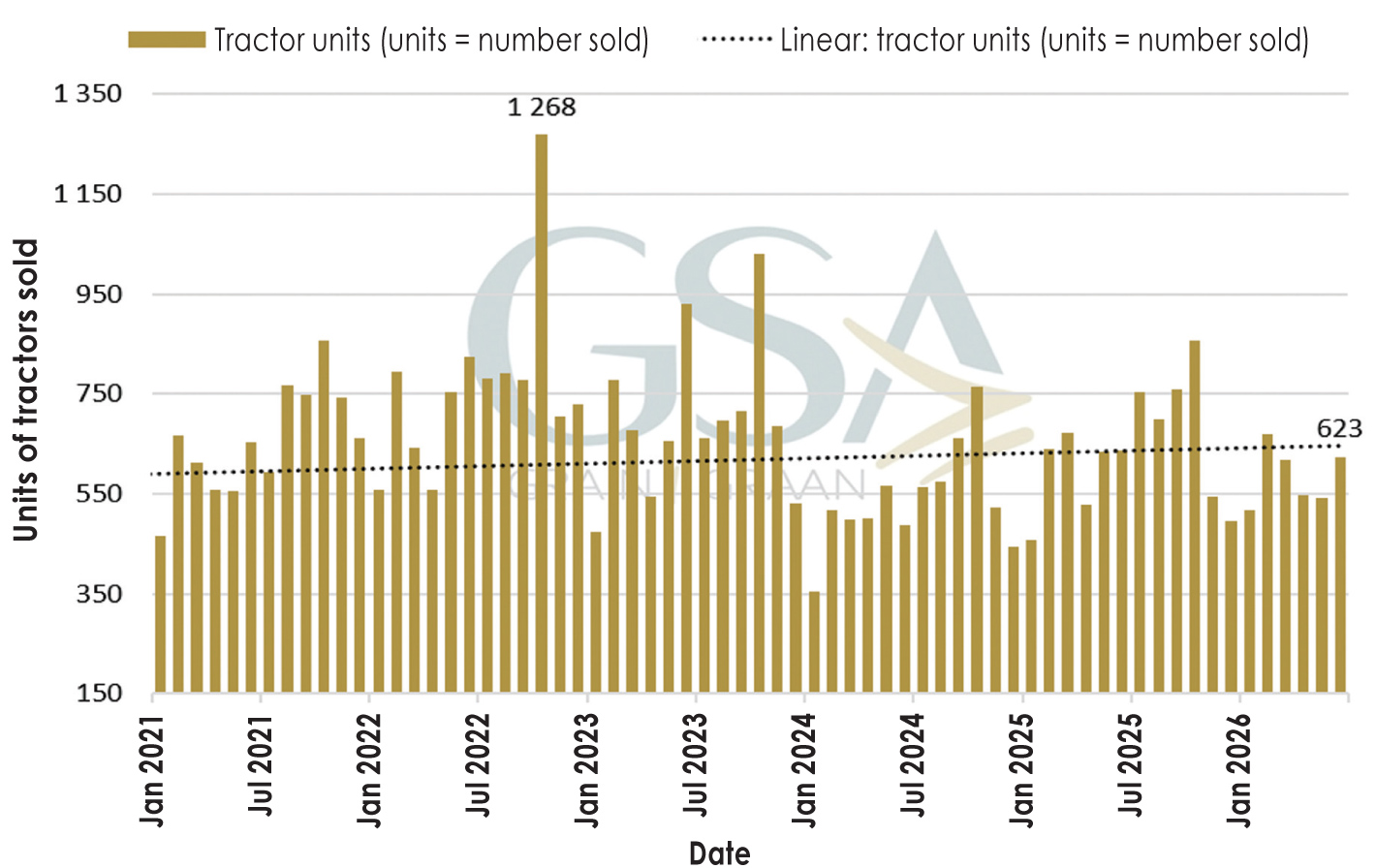
According to the South African Agricultural Machinery Association (SAAMA), tractor sales have generally trended upward since 2021, despite normal month-to-month fluctuations as shown in Graph 1. Machinery sales peaked in October 2022, with a total of 1 268 tractors sold as producers prepared for the 2022/2023 summer grain production season. That period coincided with high commodity prices and favourable production conditions.
Source: South African Agricultural Machinery Association (SAAMA)
Sunflower prices traded between R10 000 and R12 000/ton, soybean prices approached R10 000/ton, and maize prices remained well supported during that time (scan QR code on page 91 for report). At the same time, soybean production reached a then record 2,76 million tons, while maize production exceeded 16 million tons. Therefore, improved profitability and cash flow encouraged producers to replace machinery and expand their operations.
During the first few months of 2026, tractor sales showed signs of recovery, reaching 669 units in February after slowing down towards the end of 2025. Since then, sales have moderated. By June 2026, 623 tractors had been sold, compared with approximately 636 units in June 2025, representing a decline of 2%. On a year-to-date basis, tractor sales are 1,3% lower than during the same period last year.
Although the decline is relatively moderate, it reflects a more cautious investment approach. Under normal circumstances, machinery sales increase during the second half of the year as producers receive income from their harvest and prepare for the next planting season. However, the unusually wet conditions experienced during 2026 delayed maize harvesting across many production regions (scan QR code on page 91 for report). As a result, many producers are postponing machinery purchases until harvesting has been completed and income has been realised.
Fleet structure and mechanisation trends since 1991
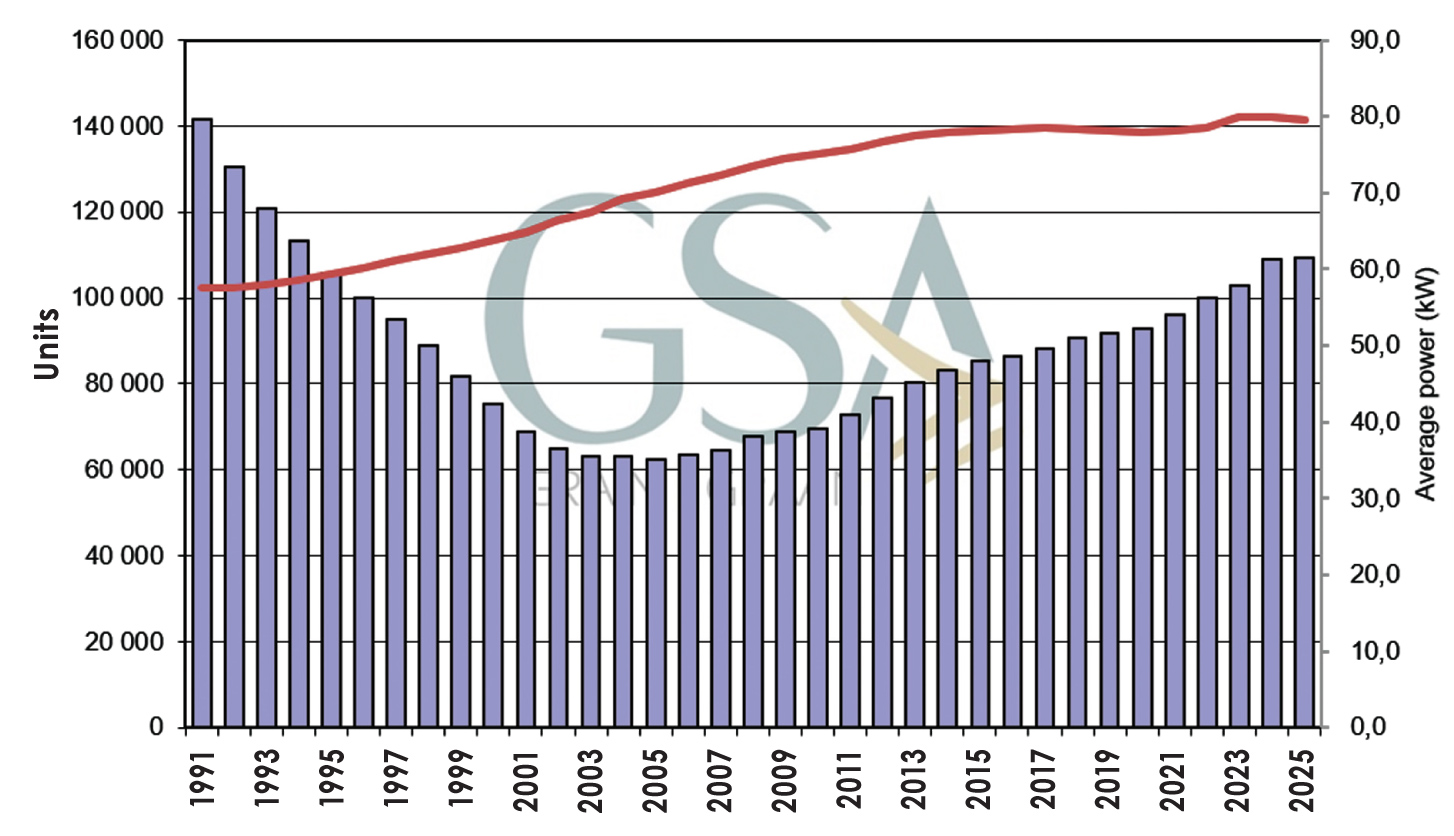
Although current sales trends provide insight into short-term producer sentiment, the longer-term structure of the tractor fleet offers a broader view of replacement demand and mechanisation trends. Graph 2 shows the total tractor fleet and average tractor power, measured in kilowatts (kW), since 1991. The size of the tractor fleet declined after 1991 before stabilising between 2005 and 2007. It has since increased, reaching 109 480 units in 2025. According to AGFACTS, annual new-tractor sales of at least 5 000 to 6 000 units will be required over the next few years to maintain the current size of the fleet. The tractor power has increased exponentially since the early 1990s, reaching an average of 80 kW.
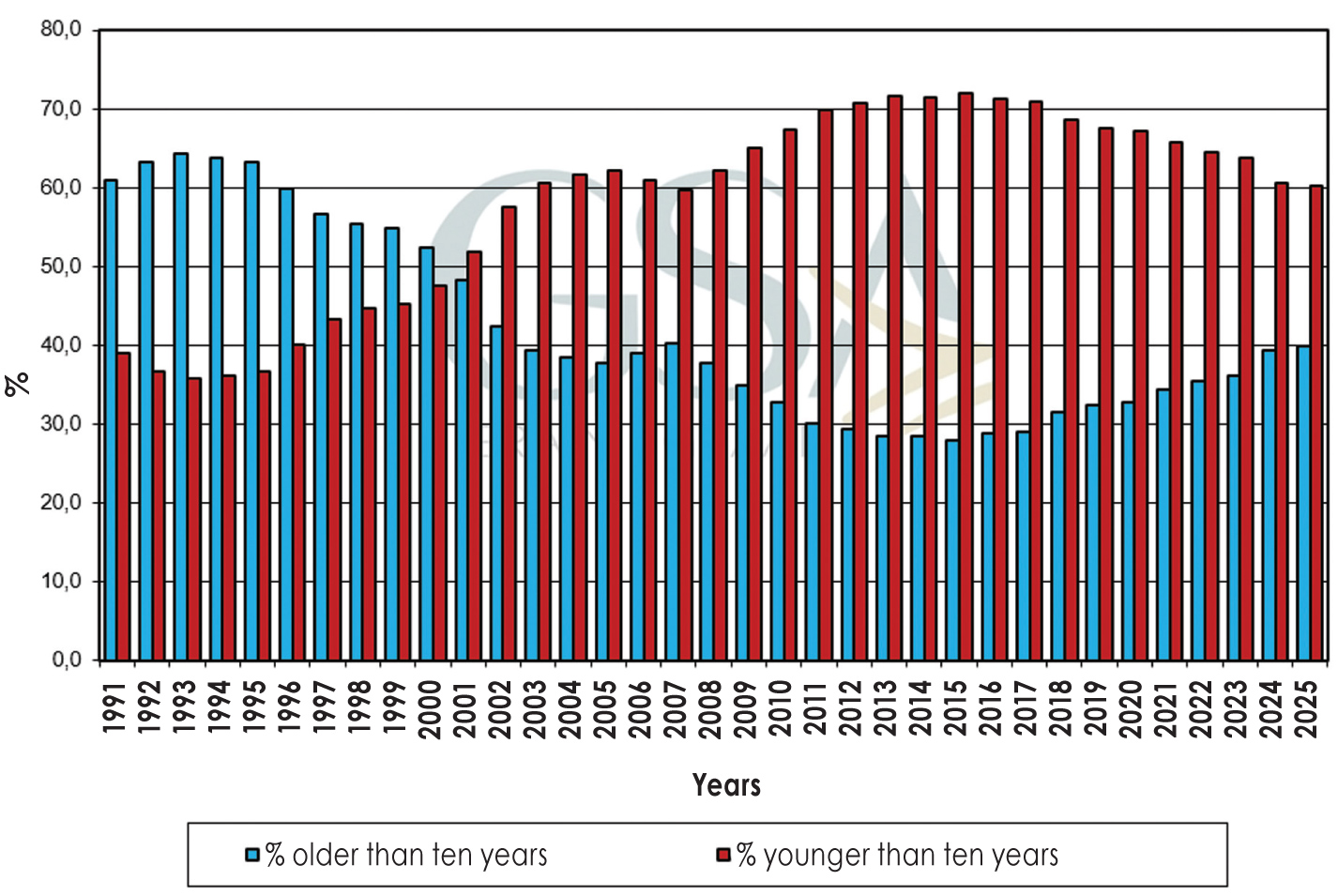
Over time, the share of tractors younger than ten years improved up to 72% in 2015, indicating that the fleet was becoming newer and likely more efficient. Since 2015, that share has slightly declined to 60,2% in 2025, showing that fewer tractors are being replaced with newer models (Graph 3). At the same time, tractors older than ten years have increased to about 40%, the highest level since 2005. This indicates that producers may be holding on to older machinery for longer, likely because of high replacement costs, weaker margins, uncertainty, and rising maintenance costs.
Although there are slightly fewer tractors younger than ten years over the past decade, the overall tractor power has increased.
Combine harvester sales show a sharper decline
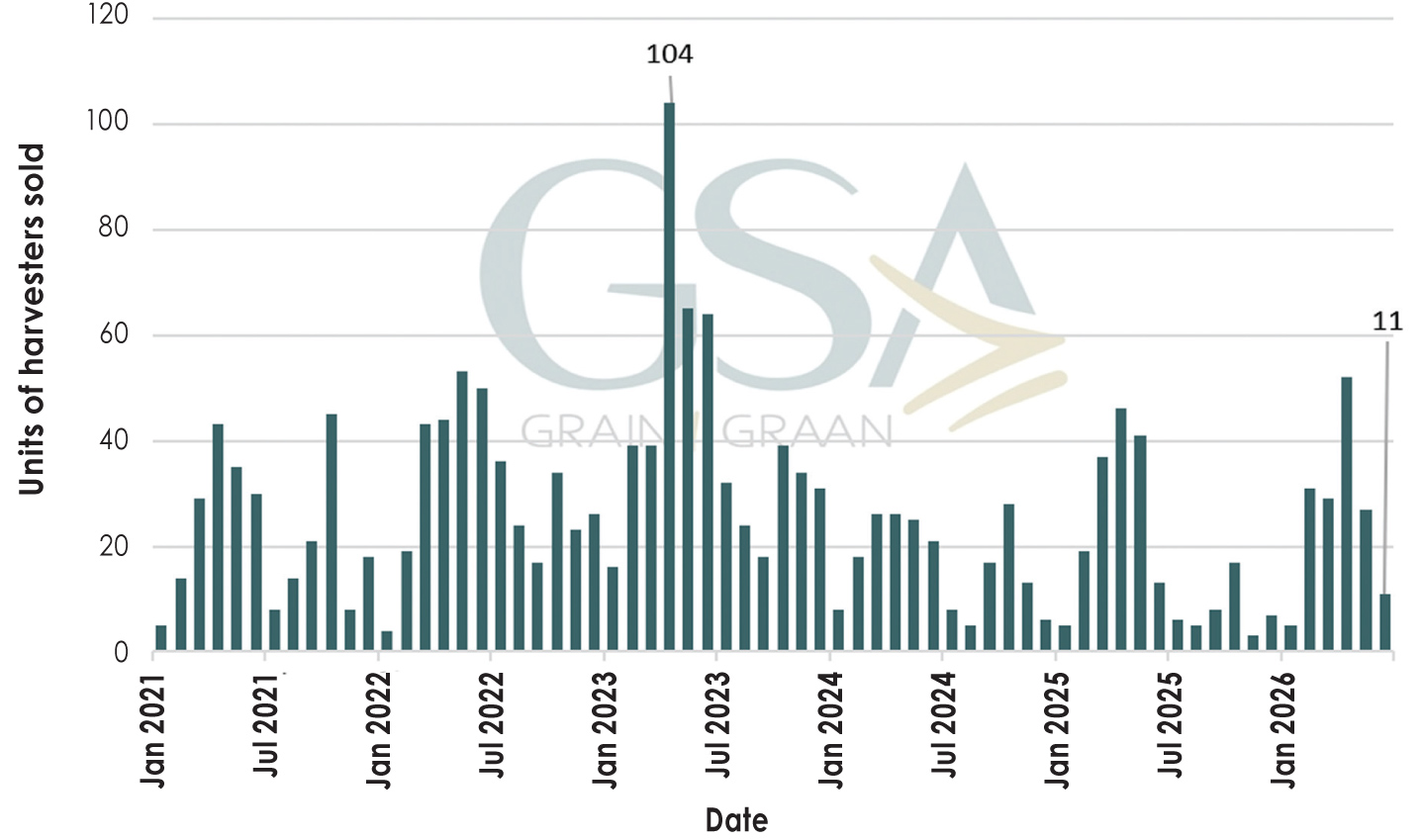
Moving on to combine harvesters, the market has weakened more noticeably than the tractor market. Because the market is much smaller, relatively fewer sales can result in large percentage changes. Sales reached a recent high of 104 units during April 2023 as producers prepared for the winter harvesting season. By comparison, only eleven combine harvesters were sold during June 2026, down from 13 units in June 2025, representing a decline of 15,4%.
Year-to-date sales paint a similar picture. During the first six months of 2026, 155 combine harvesters were sold compared with 161 during the corresponding period in 2025, a decline of almost 4%. The delayed maize harvest has contributed significantly to this slowdown. Producers are understandably reluctant to invest in harvesting equipment before the current season has been completed and final production outcomes are known.
Rising maintenance costs increase financial pressure
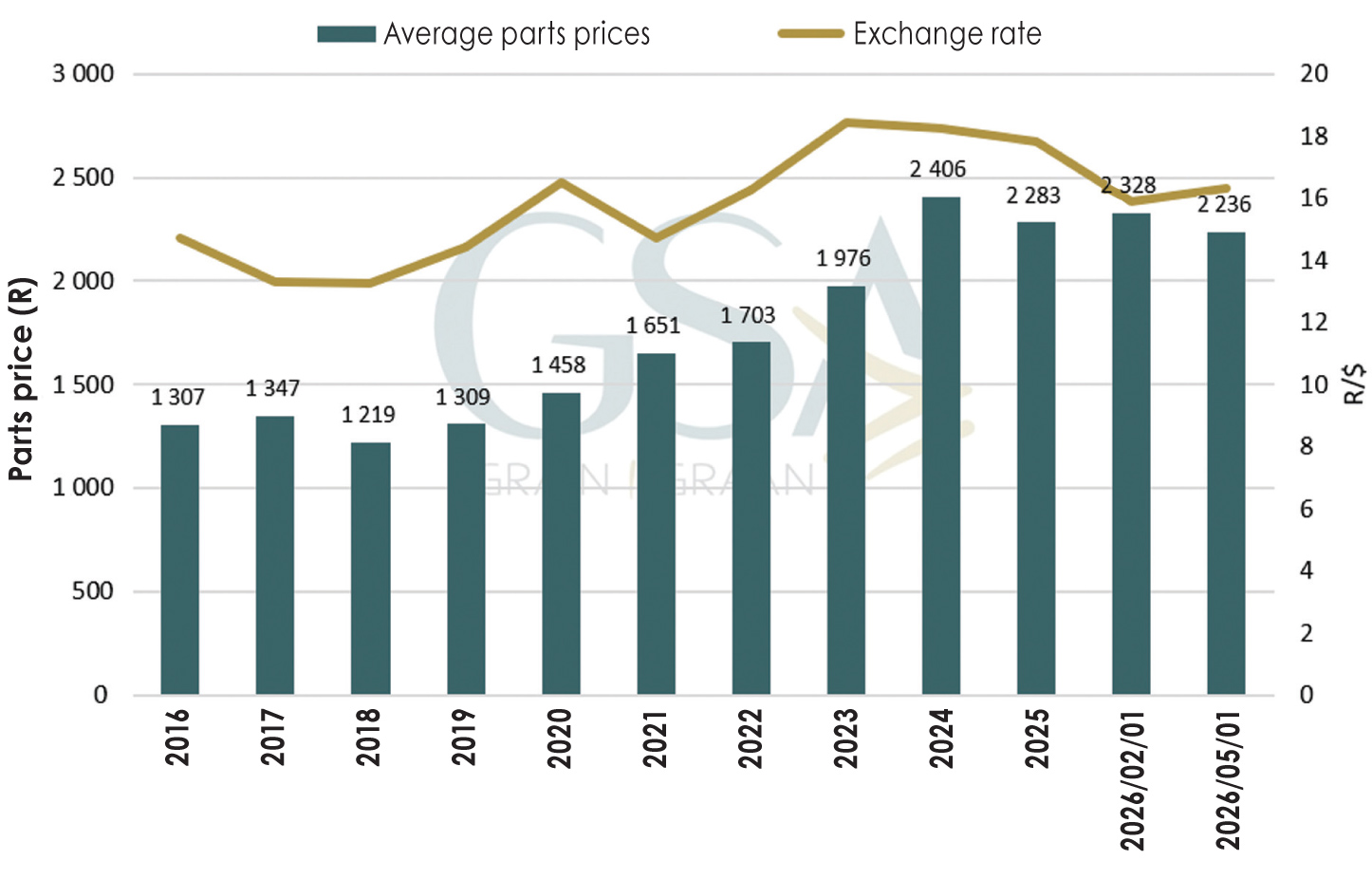
Purchasing new machinery represents only one component of mechanised farming costs. Maintaining existing equipment has become significantly more expensive over the past decade. Grain SA monitors John Deere’s spare-part prices across the major grain-producing provinces three times each year. The results show a steady increase in average spare-part prices since 2016, with the largest annual increase recorded during 2024 (Graph 4).
Source: South African Agricultural Machinery Association (SAAMA)
Several international factors have contributed to these higher costs. Global supply chain disruptions following the COVID-19 pandemic resulted in factory shutdowns, shipping delays, and shortages of machinery components. Many urgently required parts had to be transported by air instead of sea, substantially increasing freight costs. The Russia-Ukraine conflict further disrupted global manufacturing and logistics networks, while the weaker value of the rand had amplified local price increases because most agricultural machinery and replacement parts are imported and priced in dollars.
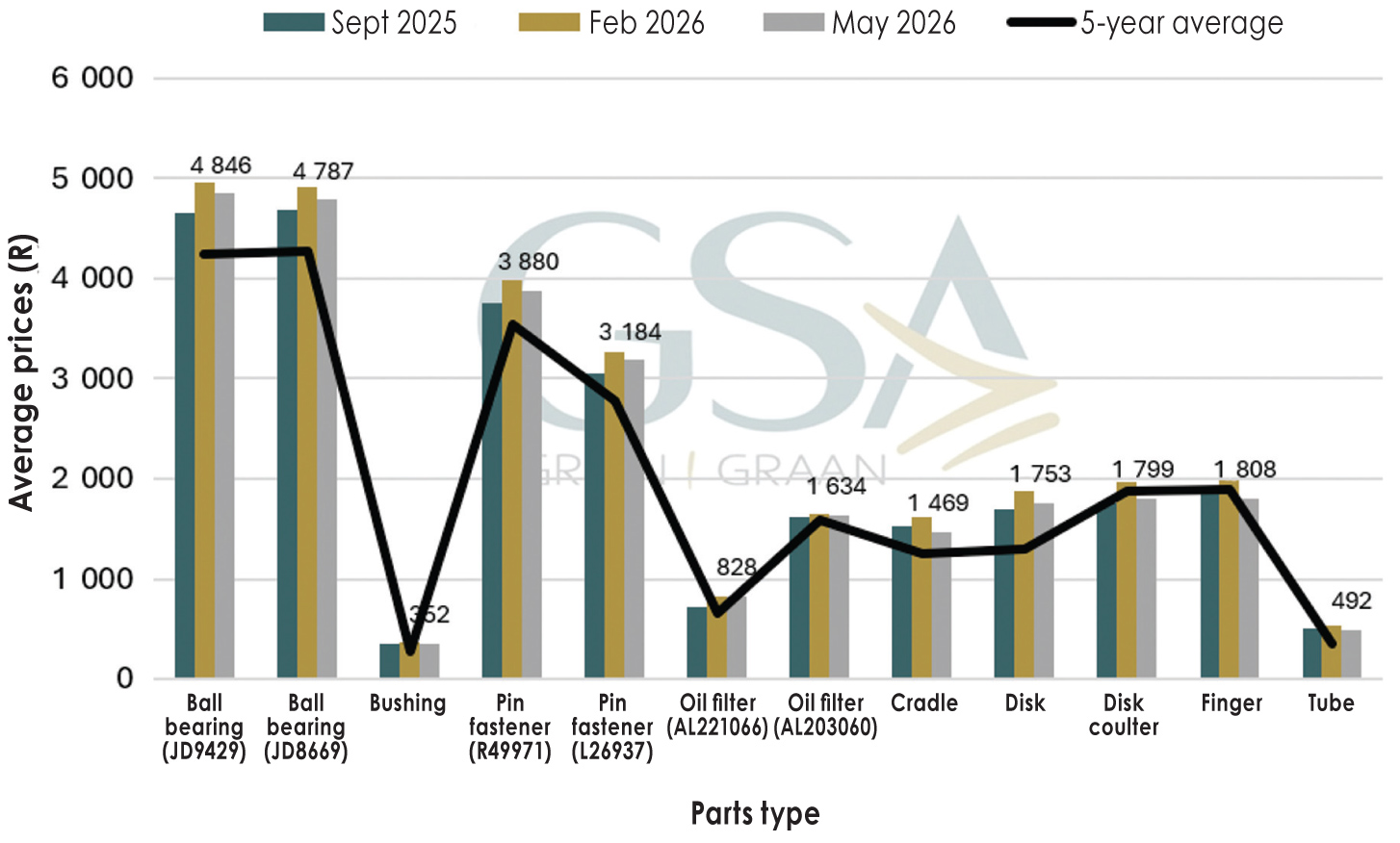
The latest price comparisons in Graph 5 show that ball bearings remain the most expensive replacement components, followed by pin fasteners, disc coulters, and fingers. Prices have decreased from February to May 2026 because the rand strengthened during that time. However, all these components continue to cost well above their respective five-year averages, increasing the overall cost of repairs. These rising maintenance costs create difficult investment decisions. While repairing older machinery has become increasingly expensive, purchasing new equipment has also become more costly. Producers therefore continue balancing repair costs against the affordability of replacing ageing machinery.
Source: John Deere
Source: John Deere
Outlook going forward
Looking ahead, SAAMA expects tractor sales in 2026 to remain similar to or slightly below those recorded in 2025. There are, however, reasons for cautious optimism. Record maize and soybean crops, favourable soil moisture conditions, and lower fuel prices could support machinery demand once harvesting is complete and crop income begins to flow back into farming businesses. Nevertheless, several risks remain. High maintenance costs, high input prices, uncertainty surrounding a possible El Niño event, and pressure on farm profitability are likely to keep producers cautious when making capital investment decisions.
Should the record crop be realised and commodity prices remain supportive,deferred machinery purchases could lead to improved sales later in the year. Until then, the agricultural machinery market is expected to remain characterised by careful spending, with producers focusing on preserving cash flow while navigating an uncertain production environment.
References
- South African Agricultural Machinery Association (SAAMA). 2026. Sales statistics report. Available at: https://www.saama.co.za/SalesStats.aspx (Accessed: 6 July 2026).
- AGFACTS Newsbrief. 2026. Volume XXXXI, Number 2, February 2026.
- AGFACTS Newsbrief. 2026. Volume XXXXI, Number 3, March 2026.
Click on the link https://www.grainsa.co.za/report-documents?cat=2 for Grain SA report documents.