

The Agriculture and Agroprocessing Master Plan (AAMP) was initiated as a collaborative national framework to unlock inclusive growth, drive investment, and improve food security across South Africa’s agricultural sector. It recognises that agriculture is a critical engine for job creation and rural development, but also that its success depends on a unified effort between government, industry, and producers.
Therefore, the AAMP serves as a social compact, bringing all stakeholders together under one vision to expand production, promote transformation, and strengthen competitiveness in both domestic and export markets. It draws on past lessons showing that coordinated and evidence-based collaboration, as seen in the successful Poultry Master Plan, drives measurable growth to avoid a failing industry due to fragmented efforts without clear accountability.
The Grains Value Chain Round Table (GVCRT)
Within the broader AAMP framework, the GVCRT, co-chaired by Dr Tobias Doyer (Grain SA) and Maluta Jonathan Mudzunga (Department of Agriculture [DOA]) provides a focused platform for the grain industry. The GVCRT was established to ensure that the strategic objectives of the AAMP are implemented within the grain industry through coordinated action among producers, traders, processors, government, and research institutions. It functions as a forum where challenges are discussed openly, solutions are co-designed, and progress is tracked to ensure that growth in the grain industry is both inclusive and sustainable. Click on the link for more information.
To achieve this, the GVCRT operates through five specialised working groups, Research and Technology, Trade, Transformation, Infrastructure, and Policy. Each group focuses on key constraints and opportunities within its area, ensuring that collective actions align with the AAMP’s national targets. The below sections will give an overview and update of the focus areas of the five working groups.
Research and Technology
Working Group (RTWG)
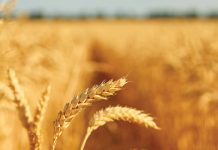
The RTWG, chaired by the author, plays a central role in driving science-based solutions to secure the future of South African grain production. The group aligns its objectives with the AAMP’s ambition to grow the grain industry by 25% and increase black farmer participation by 20% by 2030. This platform brings together expertise from government, research councils, private industry, and universities through the National Grain Research Programme (NGRP).
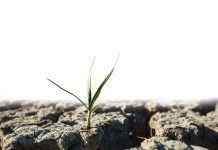
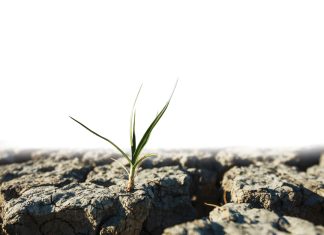
Like an ecological pyramid, the grain industry’s resilience depends on the strength of its foundation, the producers, and their production environments. The value chain of any ecosystem falls away when there are no producers. For example, in the Free State, wheat production has declined due to changing climatic conditions and more profitable rotational crops such as soybean. This dynamic demonstrates how climate and economics together can shift production patterns, and how the same risk could apply across other regions and commodities if adaptive research, policy alignment, and targeted support are not strengthened to anticipate and respond to these shifts. Without proactive interventions, regions could experience reduced crop diversity, weakened local economies, and increased vulnerability to market and climate shocks.
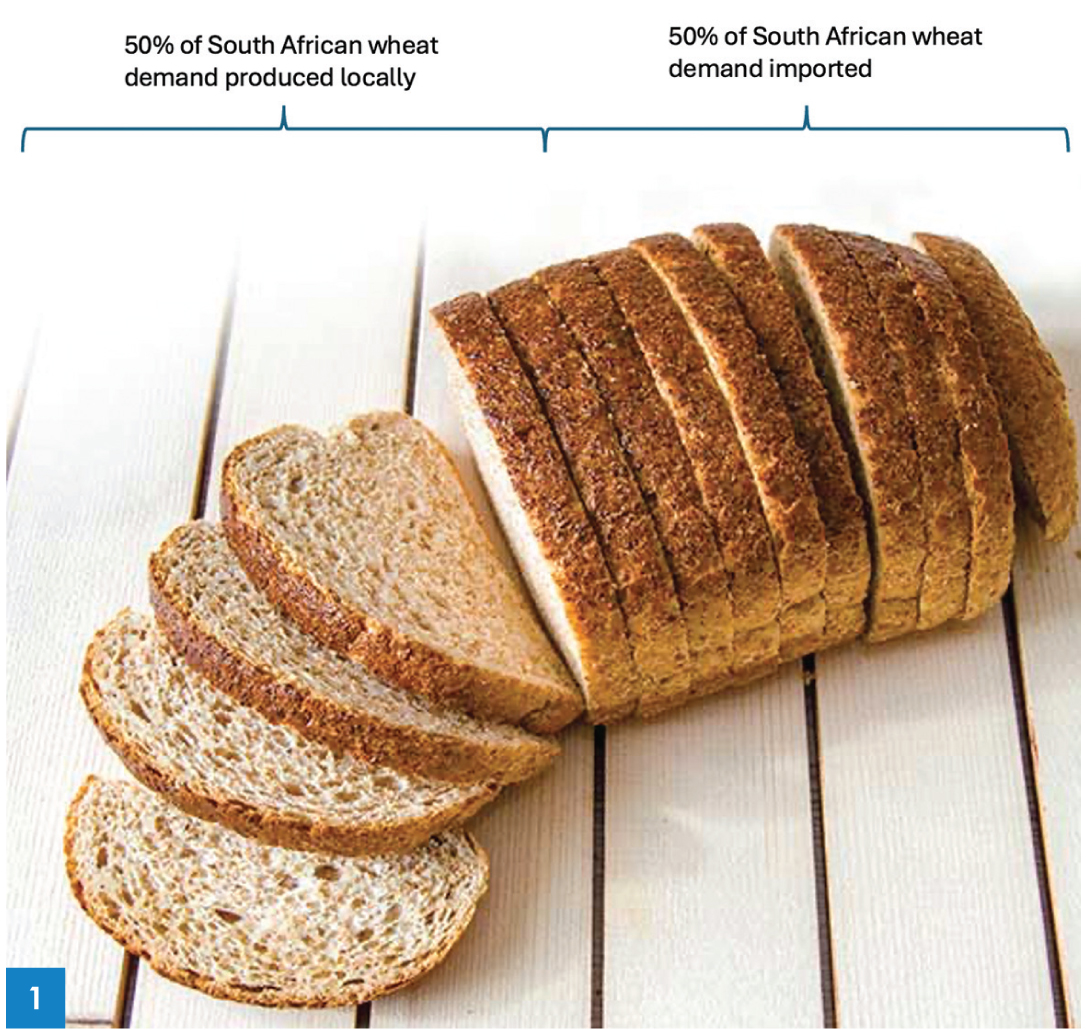
Therefore, building resilience in the grain industry requires continuous investment in climate-smart practices, locally adapted cultivars, and coordinated strategies between producers, researchers, and policymakers to sustain production and ensure national food security. To counter this, strong research support becomes essential, ensuring adaptation strategies, new technologies, and sustainable practices to keep the entire system in balance. The question remains: ‘In ten years from now, in a loaf of bread, how many slices will come from locally produced wheat? Or percentage in a bag of maize meal porridge or animal feed?’
The RTWG has established a five-tier research focus designed to align national priorities with on-the-ground implementation (Figure 2). The first tier centres on existing research support, mapping and consolidating ongoing research initiatives driven by the DOA, agricultural trusts, universities, and public private partnerships (PPPs). This process ensures that duplication is minimised and that resources are directed towards the most pressing needs of the grain industry.
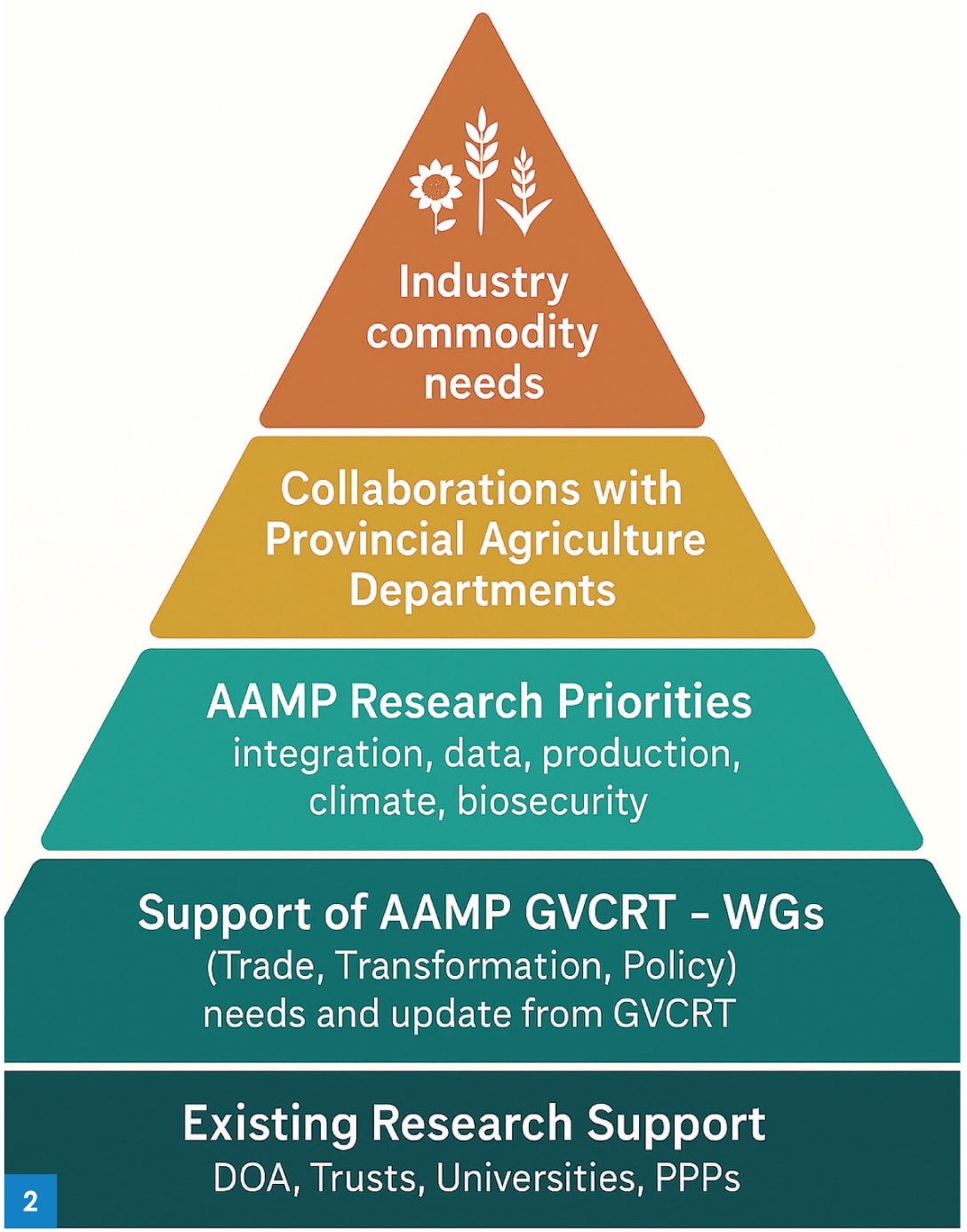
The second tier focuses on supporting the AAMP GVCRT working groups Trade, Transformation, and Policy by identifying where research and technology can offer practical solutions to the issues these groups encounter. The third tier aligns with the AAMP’s overarching research priorities including value chain integration, data and digital systems, production efficiency, climate resilience, and biosecurity, ensuring that the research agenda remains strategic and responsive to both national and global shifts.
Collaboration with provincial departments of agriculture is emphasised by the fourth tier, recognising that much of the practical implementation occurs at the provincial level. These partnerships enable localised research, demonstration trials, and technology transfer tailored to specific production environments.
The fifth tier focuses on industry- and commodity-specific needs for crops such as sunflower, wheat, and sorghum where targeted evaluation and monitoring frameworks will be developed to track progress and measure impact. By linking national objectives to provincial action and commodity level performance, this five-tier model strengthens the base of the agricultural ecological pyramid, ensuring that research investments translate into measurable growth, resilience, and inclusivity across the grain value chain.
The RTWG consists of members from Agbiz, the Agricultural Research Council (ARC), the Council for Scientific and Industrial Research (CSIR), the Department of Science, Technology and Innovation (DSTI), the Technology Innovation Agency (TIA), the Gau-teng Department of Agriculture and Rural Development (GDARD), Grain SA, the National Agricultural Marketing Council (NAMC), the National Chamber of Milling (NCM), the South African National Seed Organisation (SANSOR), the South African Chamber of Baking (SACB), the South African Grain Farmers Association (SAGRA), and the NGRP.
Complementing this, the Science, Technology and Innovation (STI) Roadmap, led by Dr Maneshree Jugmohan Naidu (DSTI) and Lot Mlati (Food and Agriculture Organisation [FAO]), provides strategic alignment. The STI Roadmap ensures that research priorities within the AAMP are guided by broader national innovation objectives, fostering collaboration, avoiding duplication, and linking cutting-edge science to practical on-farm solutions. Together, the STI Roadmap and the RTWG aim to build a knowledge-driven, resilient, and competitive grain economy.
Trade Working Group
The Trade Working Group, chaired by Dr André van der Vyver (South African Cereals and Oilseeds Trade Association [SACOTA]), works to enhance South Africa’s position in both regional and international grain markets. The research and disease diagnostics team recently facilitated the reopening of maize exports to neighbouring countries such as Namibia and Botswana, unlocking more than 500 000 tons of exports.
The group also continues to address complex issues around wheat tariffs, import rebates, and policies on GMOs and new breeding technologies, all vital to ensuring fair competition and growth in the grain trade.
Logistics, Transport and Infrastructure
Working Group
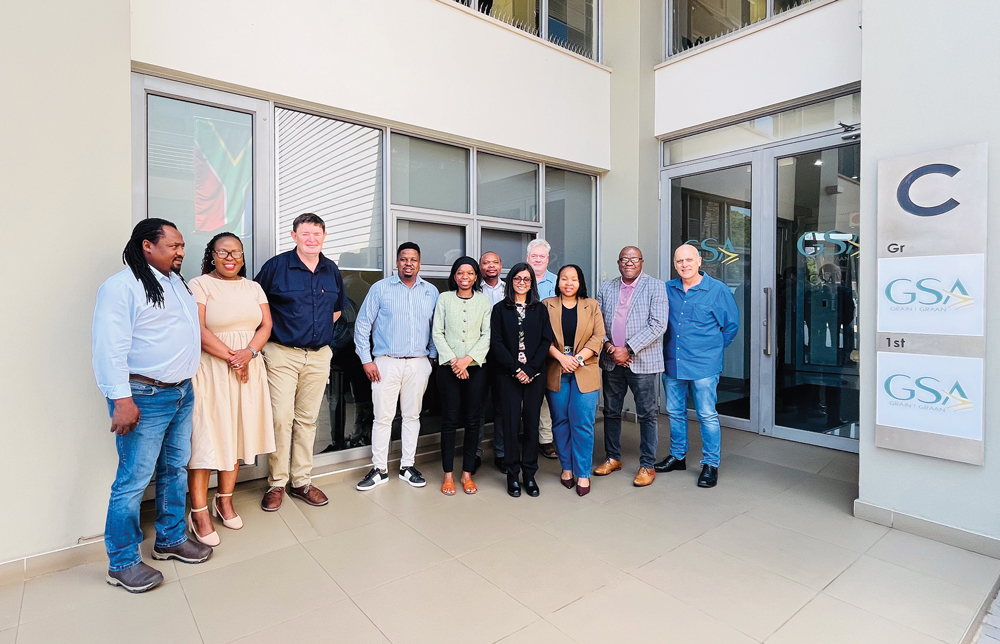
Chaired by Boikanyo Mokgatle (NCM), this group focuses on improving transport efficiency, storage capacity, and port functionality. It collaborates with entities like Transnet Freight Rail, Transnet National Ports Authority, and the Department of Transport to coordinate infrastructure development and streamline logistics. Rural road mapping and storage capacity studies are also underway to enhance accessibility and reduce postharvest losses.
Transformation Working Group
Under the leadership of Praveen Dwarika (AFGRI), this group seeks to drive inclusive transformation by aligning industry efforts, avoiding duplication, and expanding opportunities for black farmers and agripreneurs. The group has finalised its terms of reference and will be hosting a Grains and Oilseeds Transformation Workshop, where all role players will collaborate on practical strategies for sustainable and equitable growth.
Conclusion
The AAMP GVCRT can form a blueprint for partnership-driven agricultural transformation and long-term food security. Through the coordinated efforts of the five working groups, the programme is translating policy into practice, science into solutions, and collaboration into measurable progress.
The RTWG in particular anchors this transformation by ensuring that innovation directly supports producers, improves productivity, and strengthens resilience across all production systems. Its five-tier approach provides a structured yet adaptive model that connects national research priorities to local implementation and commodity level growth.
By reinforcing these linkages, the AAMP is not only shaping a more competitive and inclusive grain industry but also positioning South Africa as a leader in sustainable agricultural innovation across the continent. The collective impact of this framework will be seen in improved yields, better market access, reduced climate risk, and the empowerment of a new generation of producers. Ultimately, the success of the AAMP will be measured in more than percentages; it will be seen in stronger rural economies, stable food prices, and a grain industry capable of feeding both the nation and its future.