

Agriculture remains the backbone of South Africa’s economy. To sustain this and achieve greater growth, investment in agricultural education and bursaries is not only important but necessary. Agricultural bursaries and education play a crucial role in enhancing food security, promoting economic growth, and fostering rural development. It helps develop skilled professionals capable of driving innovation, research, and transformation in the sector.
They build expertise to address challenges such as climate change, food security, and sustainability while also promoting inclusivity by supporting previously disadvantaged groups. By strengthening technical capacity and leadership across the agricultural value chain, bursaries not only foster rural development and job creation but also enhance national competitiveness and ensure long-term food security.
The South African Cultivar and Technology Agency (SACTA) recognises that the future of agriculture lies in cultivating knowledge, innovation, and inclusivity. Through its bursary programme, SACTA opens doors for postgraduate students to pursue advanced studies that contribute to research, innovation, and leadership in the agricultural sector. Funding of these studies is sourced from the statutory breeding and technology levies of self-pollinated grain and oilseed crops, such as soybeans, wheat, barley, oats, and lupins, which are collected by SACTA. These levies are meant to promote food security through the development of new genetics and technology. However, as prescribed in the MAP Act, 20% of the collected funds should be channelled towards transformation for any statutory levy administered. One of the key activities in transformation is skills development and training, with SACTA providing post-graduate bursaries, among other initiatives.
Beyond funding studies, the bursary programme empowers students to become agents of change. It enables them to research critical issues such as plant breeding, climate-smart agriculture, and sustainable production systems, areas that directly impact the SACTA-focused crops. It also builds a pipeline of skilled professionals who will strengthen the entire agricultural value chain, especially with the shortage and ageing of qualified field crop breeders, particularly among previously disadvantaged groups, which continue to present a challenge for the industry. Historical barriers to education and access to research opportunities have contributed to the underrepresentation of black professionals, women, and youth in this specialised discipline. Therefore, the SACTA bursary programme tries to contribute towards changing this picture.
SACTA bursary programme
The purpose of the SACTA bursary programme is to support education, workforce development, and economic growth by creating opportunities for individuals to acquire knowledge, skills, and experience needed in grain and oilseed breeding and technology. By providing financial assistance for tuition, accommodation, and related expenses, the programme alleviates the financial burden on deserving students while enabling them to pursue postgraduate studies. In doing so, SACTA invests in young professionals, particularly from previously disadvantaged groups, who will become the next generation of researchers, innovators, and leaders shaping the future of South Africa’s agricultural sector.
Eligibility and application process
The bursary programme is aimed at supporting previously disadvantaged individuals pursuing postgraduate studies in agriculture. Eligible candidates must be enrolled in an honours, master’s, or doctoral degree at any South African university, with a focus on research related to one of the following SACTA priority crops: soybeans, wheat, barley, oats, or lupins.
The bursary offers financial support for:
- Honours: 1 year
- Master’s: 2 years
- Doctorate: 3 years
Qualifying applicants must be full-time registered students at a South African university. Applications open annually on 1 September and close on 1 October. Applications are submitted online through the SACTA website (www.sactalevy.co.za), which redirects to the Agri-Manage Solutions platform for bursary-specific submissions.
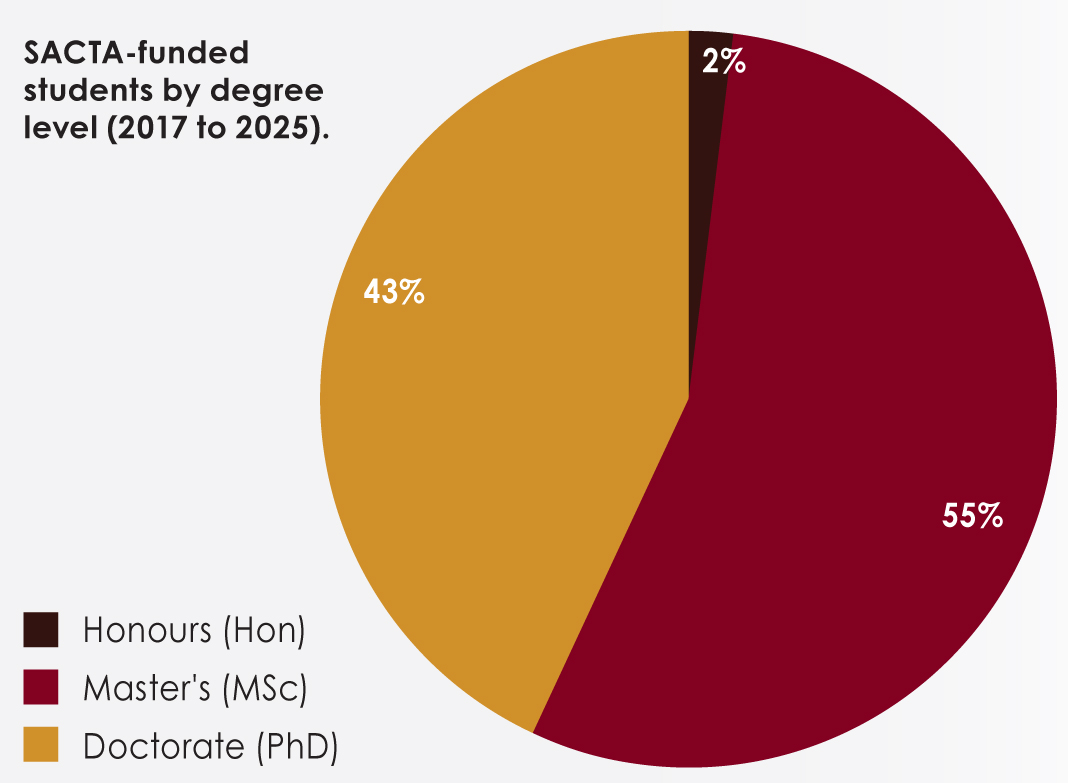
Over the years, numerous students across South Africa have been funded through the SACTA bursary programme, with a wide range of research focuses. About 42 students have been funded since 2017, which has produced 18 doctorates and 23 master’s degrees. Upon graduation, these students play a pivotal role in advancing the agricultural sector, contributing their knowledge and expertise to drive growth and innovation.
Conclusion
The long-term impact of the SACTA bursary programme is not simply about education but about cultivating futures. By investing in the next generation of agricultural leaders, SACTA contributes to a more resilient, innovative, and inclusive sector that will feed the nation and secure opportunities for generations to come.