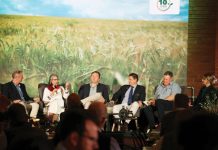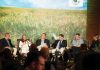


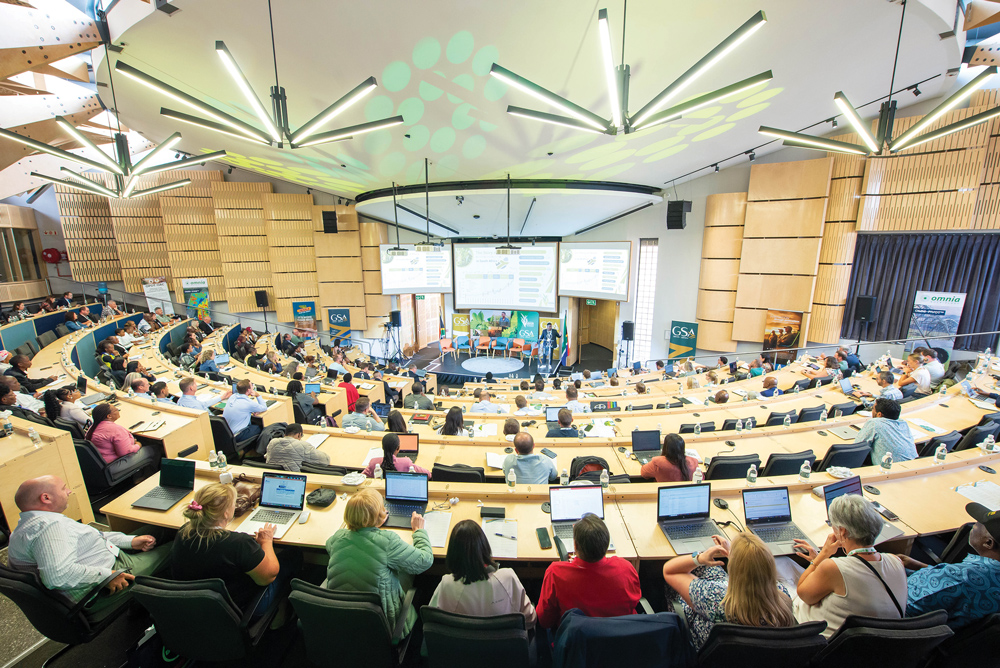
The 2026 annual meeting of the National Grain Research Platform (NGRP), hosted by Grain SA from 1 to 3 March at Future Africa, University of Pretoria, once again brought together the full spectrum of the grain value chain – from producers and researchers to policymakers and industry leaders. More than a conference, the NGRP continues to position itself as a working platform where priorities are aligned and direction is shaped.
From the outset, the message was clear: the future of South Africa’s grain industry will depend not on excellence within individual spheres, but on how effectively research, industry, and policy are integrated.
‘NGRP is the strategic engine for our industry.’
– Richard Krige
Opening the platform, Grain SA chairperson, Richard Krige, challenged delegates to move beyond discussion towards coordination and implementation. In an industry defined by complexity, he reminded attendees that every decision – whether scientific or policy-driven – ultimately lands at the farm gate.
Producer reality: pressure and productivity
Grain SA CEO, Dr Tobias Doyer, grounded the conversation in the realities facing producers. He highlighted the persistent decline in the terms of trade, where input costs continue to rise faster than output prices. The result is an industry under pressure, where producers must produce more just to remain viable.
Research, in this context, is not theoretical, it is essential.
He emphasised the need for integrated solutions across disciplines, from genetics and soil science to crop protection and precision agriculture. At the same time, he pointed to a critical gap: while knowledge and technology exist, adoption remains uneven.
‘We cannot assume that all farmers are applying the science available.’
The challenge is therefore not only to generate innovation, but to ensure that it is translated into practical, farm-level outcomes.
Economic realities: the margin squeeze
Providing a broader perspective, Prof Ferdi Meyer from the Bureau for Food and Agricultural Policy (BFAP) unpacked the economic forces shaping the grain industry. He highlighted the long-term trend of declining real commodity prices – a global reality driven by productivity gains and technological advancement.
While South Africa has made significant strides in improving yields and closing the gap with international competitors, this prog-ress has also intensified pressure on margins.
‘As production expands, margins are squeezed – and the next wave of innovation
becomes critical.’
Meyer described this dynamic as the ‘technology treadmill’, where continuous innovation is required simply to stay competitive. In this environment, the role of research becomes even more critical – not only to increase productivity, but to sustain profitability.
From science to impact
The Department of Science, Technology and Innovation (DSTI) reinforced the importance of moving from research outputs to real-world impact. Through strategic partnerships and co-investment models, the department highlighted how collaboration is already delivering progress in areas such as crop improvement, climate resilience, and biosecurity.
However, a central challenge remains access and adoption.
‘The issue is no longer the availability of technology, but its adoption and sustained use.’
– Dr Kenny Tenza, DSTI
The future of innovation, delegates heard, lies in ensuring that technologies are accessible, affordable, and practical – particularly for smallholder and developing farmers – while leveraging digital tools to scale impact across the industry.
Policy, regulation, and competitiveness
From a policy perspective, the Department of Agriculture emphasised the need for alignment between research, innovation, and implementation. While South Africa’s agricultural sector has shown resilience and export growth, future success will depend on how effectively technology is harnessed and localised.
This includes strengthening biosecurity, improving regulatory frameworks, and expanding participation across the value chain.
The Minister of Agriculture, John Steenhuisen, echoed these priorities, highlighting the increasing complexity of the operating environment – from climate variability and pest pressures to volatile markets and global competition.
‘Integration is no longer a buzzword – it is a strategic imperative.’
– Minister John Steenhuisen
A key focus area was the governance of new breeding technologies, where science-based, enabling regulation is critical to maintaining competitiveness and attracting investment.
Bridging the gap between innovation and perception
In discussion, attention turned to the role of communication and public understanding. Concerns were raised around the pace of technology adoption, as well as the growing influence of misinformation in debates around biotechnology and crop protection.
The minister stressed the importance of stronger engagement from the scientific community, noting that credible, evidence-based communication is essential to building trust and supporting innovation and policy guidance. Researchers need to assist policy makers in public on scientific and public platforms to ensure efficiency.
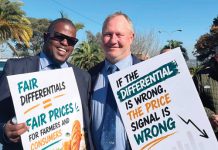
At the same time, the issue of fairness within the value chain was raised, particularly the imbalance between risk carried by producers and the returns realised across the system.
A platform for coordination
In closing, Prof Danie Vermeulen highlighted the evolving role of the NGRP as a coordinating platform – one that brings together expertise and priorities in a more structured way.
The goal, he noted, is not only to collaborate, but to do so more effectively – reducing duplication, aligning resources, and focusing on areas of greatest impact.
‘Success lies in coordinated effort – not isolated excellence.’
Looking ahead
Across all sessions, one message stood out: South Africa’s grain industry has the knowledge, capacity, and innovation required to succeed. The challenge now is integration, ensuring that research, policy, and industry are aligned in ways that deliver measurable outcomes.
NGRP 2026 made it clear that the next phase of progress will not be defined by new ideas alone, but by how effectively those ideas are implemented where it matters most: on the farm.