


Sandra Hull, research agronomist, SAB, and Department of Agronomy, Stellenbosch University

Lungisa Joko, agronomy manager: Rainfed, SAB

Prof Pieter Swanepoel, head of department: Agronomy, Stellenbosch University

Johannes Potgieter, agronomist: Overberg East, SAB

Qiniso Ndlovu, agronomist: Overberg West and Swartland, SAB

Ryan Marks, field officer, SAB

Dr Manfred Venter, agronomy manager, SAB
Barley yields are shaped not only by genetics and the environment but also by the key management decisions made before planting begins. One of the most important of these is seeding rate, a decision that affects both variable input costs and economic yield. Determining the correct seeding density is essential, as it influences how barley plants will compete with one another for light, nutrients, and water throughout the season. It also affects tillering, plant strength, and ultimately, how much grain is harvested.
Although higher seeding densities can assist with weed suppression, potentially reducing the need for herbicide applications, rates that are too high can introduce problems of their own. Overcrowded plants may experience greater stress, reduced grain size, and lower overall grain quality. Furthermore, excessively high biomass production can exacerbate water stress during the grain-filling period, particularly in Mediterranean environments such as the Overberg region. These regions often have sufficient water during the vegetative growth phase, encouraging lush biomass development. However, the grain-filling stages typically coincide with drier conditions, and the high water demand of dense crops can use up all available soil moisture, leading to compromised grain development and yield.
To help refine agronomic recommendations for South African growers, the South African Breweries (SAB) agronomy team conducted field trials in 2023 and 2024 in Caledon and Heidelberg to investigate how different seeding rates affect yield, quality, and profitability in barley. The study evaluated five seeding rate treatments (30, 60, 90, 120, and 150 seeds/m2) across four commercially available barley varieties (Bitou, Kadie, Malgas, and Jackhammer) to identify an optimal seeding rate that delivers both strong yields and quality without compromising practicality or farm-level profitability.
Key findings from Caledon
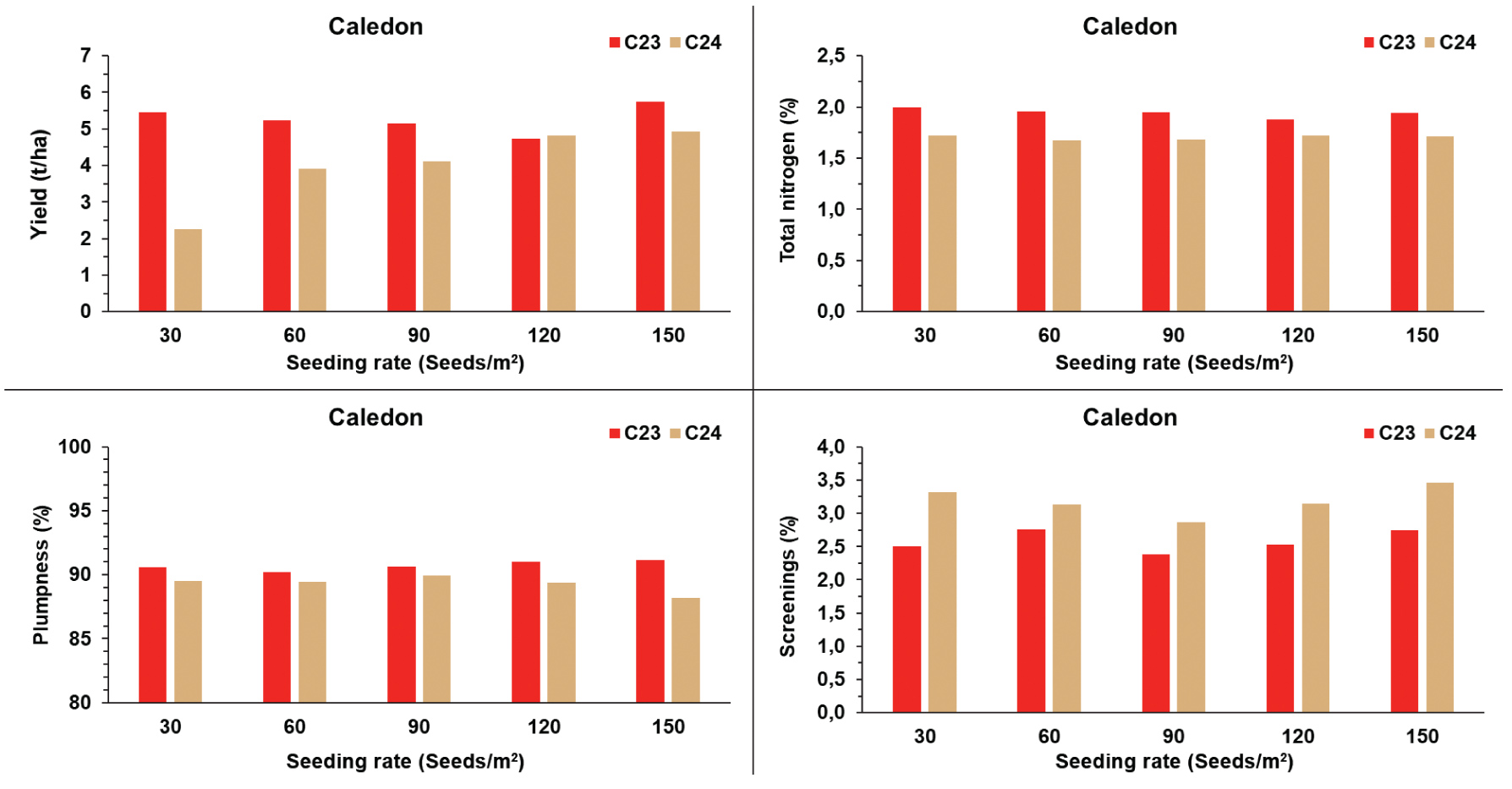
In Caledon, the effect of seeding rate on grain yield varied between seasons (Graph 1). During the 2023 season, no significant yield differences were observed across the seeding rate treatments. Yields ranged from 4,73 to 5,73 t/ha, indicating that under these seasonal conditions, all seeding densities performed relatively similarly. However, in 2024, the lowest seeding rate of 30 seeds/m2 led to a sharp reduction in yield, averaging 2,27 t/ha. In contrast, the highest seeding rates of 120 and 150 seeds/m2 achieved the best yields, 4,82 and 4,93 t/ha, respectively. Yields at intermediate seeding rates of 60 and 90 seeds/m2 were comparable to the highest rates with yields of 3,91 and 4,11 t/ha, respectively. This suggests that while increasing plant density can help boost yield under certain conditions, there is a threshold beyond which little additional benefit is gained.
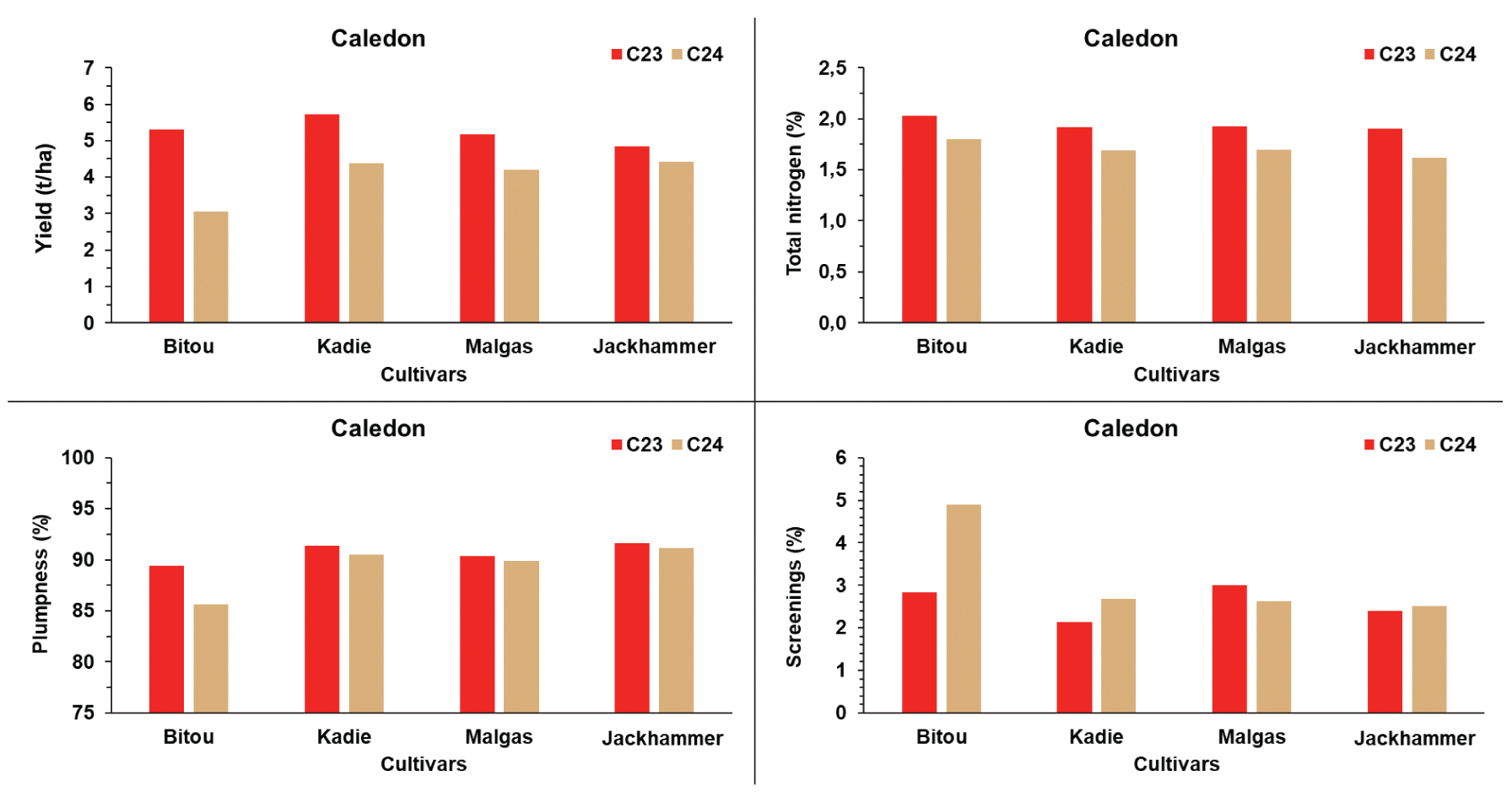
Varietal performance in Caledon also differed by season
(Graph 2). In 2023, all four tested varieties performed similarly in terms of yield and grain quality. However, in 2024, Bitou yielded significantly lower than the other three varieties, averaging 3,05 t/ha, while Kadie, Malgas, and Jackhammer all exceeded 4,0 t/ha. This result indicates that Bitou may be less suited to the environmental conditions experienced during the 2024 season in Caledon.
Grain quality parameters remained within acceptable ranges across all seeding rates. Total nitrogen content was not significantly influenced by seeding rate. However, a slight increase in nitrogen concentration was observed at the lowest planting density, likely due to reduced competition and improved individual plant nutrient uptake.
Plumpness was relatively stable across treatments but declined for Bitou in 2024, reaching a low of 86%. Screenings were low and remained below the required 3% in 2023 and 2024 across all seeding rates. In 2024, all seeding rates had screenings below 5%. All treatments achieved malting barley specification in both 2023 and 2024.
Key findings from Heidelberg
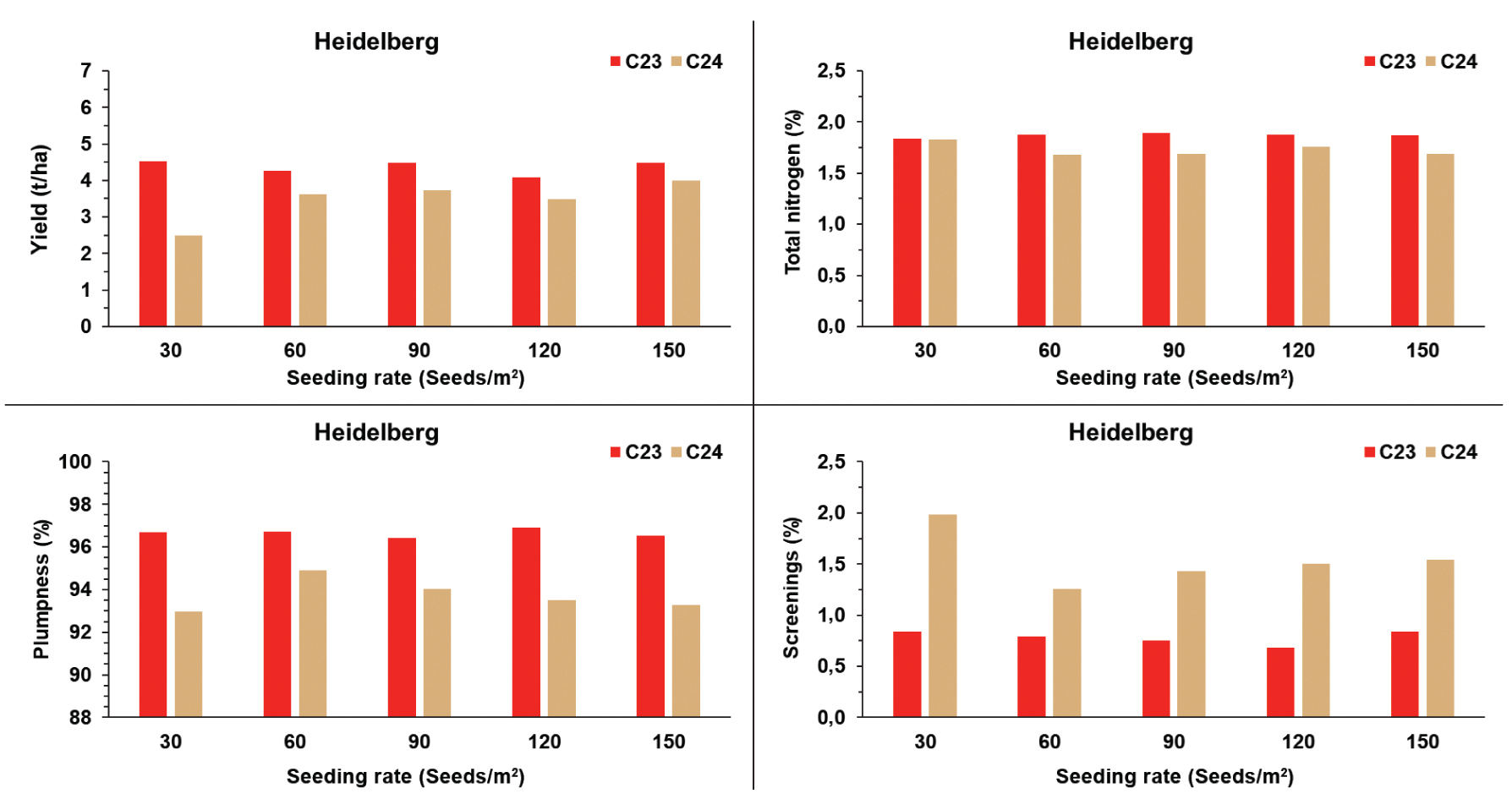
In Heidelberg, grain yield response to seeding rate was season dependent (Graph 3). During the 2023 season, no significant yield effects were found across the various seeding rates, with yields ranging from 4,08 to 4,52 t/ha. This suggests that in the 2023 season, environmental conditions did not strongly favour one seeding density over another. However, in 2024, a clear yield penalty was associated with the lowest seeding rate of 30 seeds/m2, which produced only 2,44 t/ha. All higher seeding rates, from 60 to 150 seeds/m2, gave similar results, indicating that ultra-low plant densities limit yield potential under the conditions experienced during that season.
Varietal trends in Heidelberg largely reflected those observed in Caledon (Graph 4). In 2023, all four varieties performed similarly with no yield effects. But in 2024, Bitou recorded the lowest yield at 2,67 t/ha. In comparison, Kadie, Malgas, and Jackhammer yielded consistently between 3,5 and 4,0 t/ha. These repeated results across two sites suggest that Bitou may lack the resilience or adaptability needed for reliable performance under fluctuating rainfed conditions.
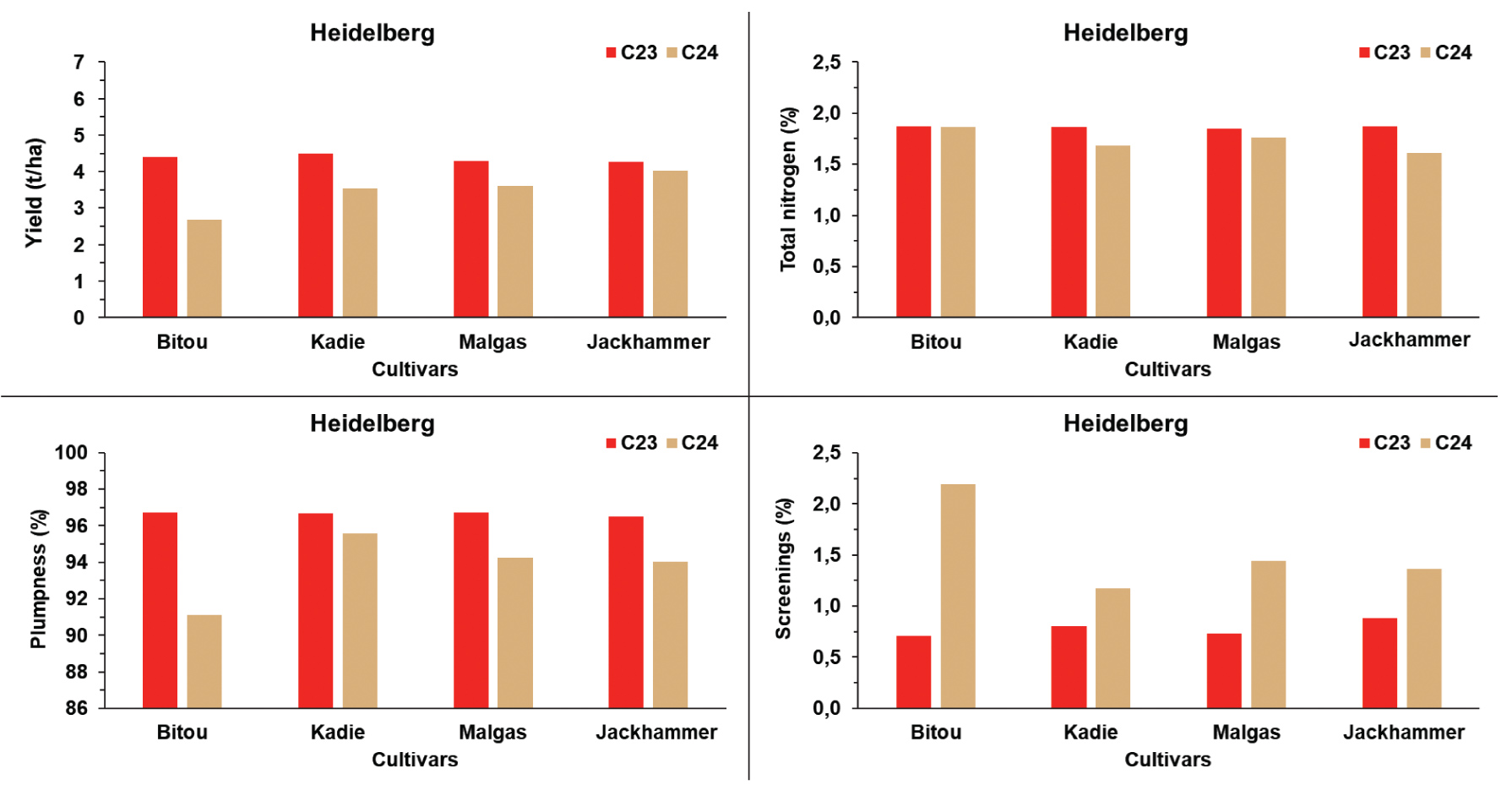
Grain quality parameters in Heidelberg were only minimally affected by seeding rate. Nitrogen content showed a modest increase at the lowest planting density, consistent with the trend observed in Caledon. Bitou also exhibited the highest nitrogen values among the varieties, likely due to its lower yield and concentration effect. Plumpness remained generally high across all treatments, except for Bitou, which again recorded the lowest levels. Screenings were low across all treatments and varieties, remaining below the required 3%. All treatments achieved malting barley specification in both the seasons.
Economic returns associated with seed density
In addition to yield and quality, seeding rate decisions must also be economically feasible. Seed represents a significant variable input cost; therefore, the ideal seeding rate must not only maximise yield but also ensure a positive return on investment. An economic analysis of the trial data highlights how different seeding rates affected overall profitability under South African conditions.
In Caledon, the lowest seeding rate of 30 seeds/m2 had the lowest total variable cost (R168,75/ha) but also the lowest yield and net profit (R8 615/ha; 50% margin) (Table 1). Seeding rates of 60 to 90 seeds/m2 offered improved profitability with profit margins of 56 to 57%, while 120 and 150 seeds/m2 delivered the highest returns. The 150 seeds/m2 rate led in net profit (R14 561/ha) with a 61% margin, but the difference between 120 and 150 seeds/m2 was modest, suggesting a diminishing return above a certain threshold.
In Heidelberg, the most efficient rate was 90 seeds/m2, which achieved the highest rank in profitability (R9 343,75/ha; 51% margin) (Table 2). The 150 seeds/m2 had the highest gross margin but only a marginally higher net profit (R9 658,75/ha) due to higher seed costs. The 20 and 120 seeds/m2 rate performed the lowest in terms of profit at R7 003,75 and R7 735,00 respectively.
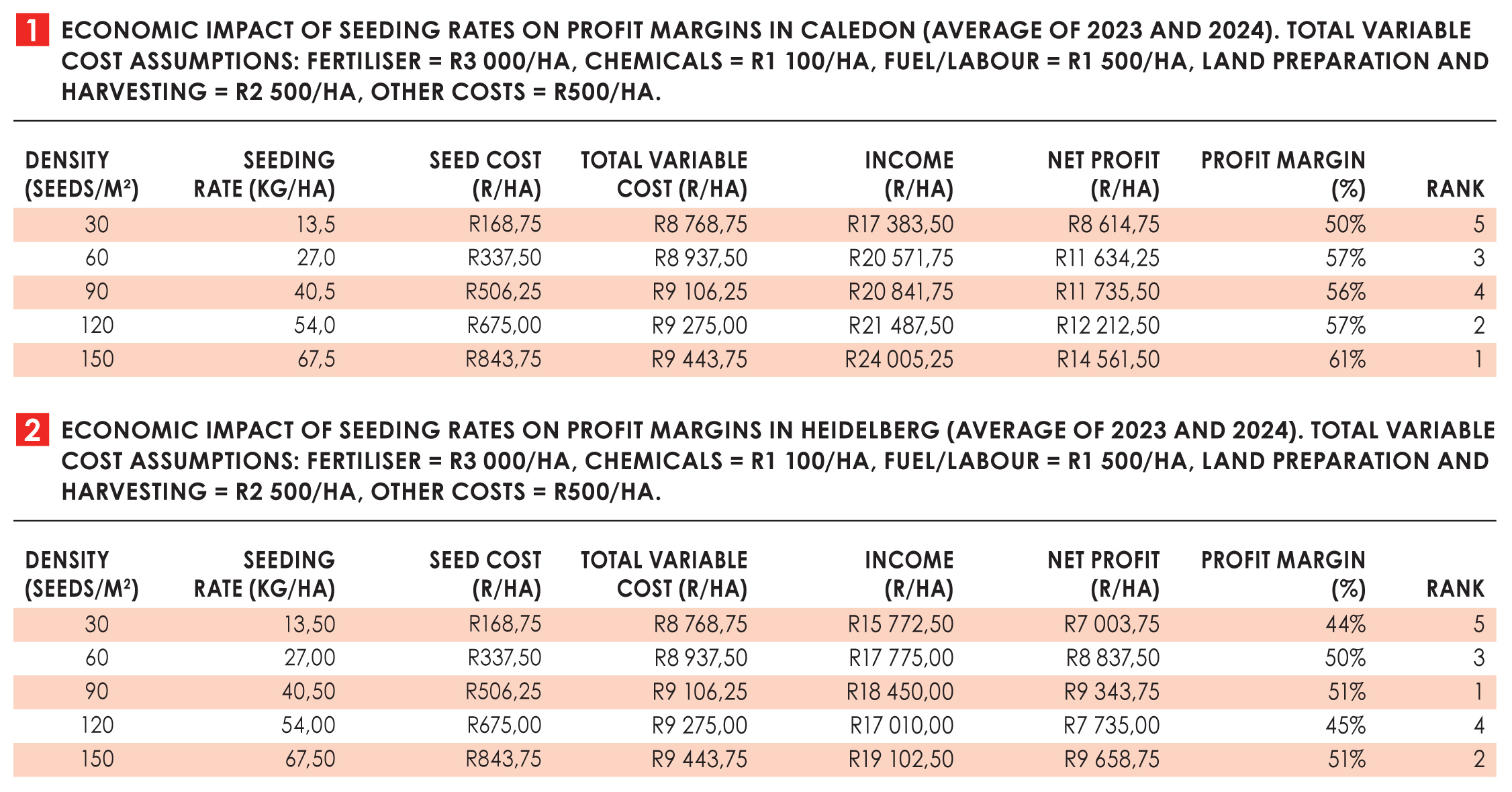 Overall, these results indicate that under Caledon conditions, higher seeding rates (120 to 150 seeds/m²) maximised profitability, whereas in Heidelberg, a moderate rate of 90 seeds/m² offered the most reliable balance between profitability, variable costs, and yield stability. This highlights the importance of tailoring seeding rate decisions to specific production environments rather than adopting a uniform strategy across regions.
Key learnings for future decision making
This trial highlights the importance of selecting an appropriate seeding rate to ensure consistent barley yields under rainfed conditions. While increasing seeding rates above 90 seeds/m2 did not offer significant yield advantages, planting below 60 seeds/m2, particularly at 30 seeds/m2, led to substantial yield losses. Among the varieties tested, Kadie, Malgas, and Jackhammer showed stronger adaptability to local conditions than Bitou.
Interestingly, seeding rate had little impact on total nitrogen. However, lower seeding densities resulted in higher screenings. These early findings suggest that keeping seeding rates at or above 60 seeds/m2 is advisable to maintain stable yields and quality.
While this study has highlighted the risks of under-seeding, it also underscores the need to critically evaluate the cost-effectiveness of higher seeding rates, particularly in seasons or regions where moisture availability is limited. Understanding the tipping point between crop physiology and economic return is key to optimising both yield and profitability under rainfed conditions.
Acknowledgments
The SAB agronomy trial team is sincerely thanked for their dedicated management and execution of the field trials. Appreciation is also extended to the participating producers in Caledon and Heidelberg for providing trial sites and supporting the successful research on their farms.