


South Africa’s barley industry is entering a new phase of growth as Soufflet Malt and HEINEKEN Beverages invest in a localised brewing and malting value chain that links local producers more directly to long-term demand. Behind every bottle of beer is a value chain that starts long before the brewery – with the producer and grain production.
Member of the French agri group InVivo, Soufflet Malt is the world’s largest maltster with 40 operations situated across Europe, Asia, Africa, Australia, and the Americas. Together, these facilities have an annual production capacity of approximately 3,7 million tons.
Building a modern malthouse for South Africa’s barley future
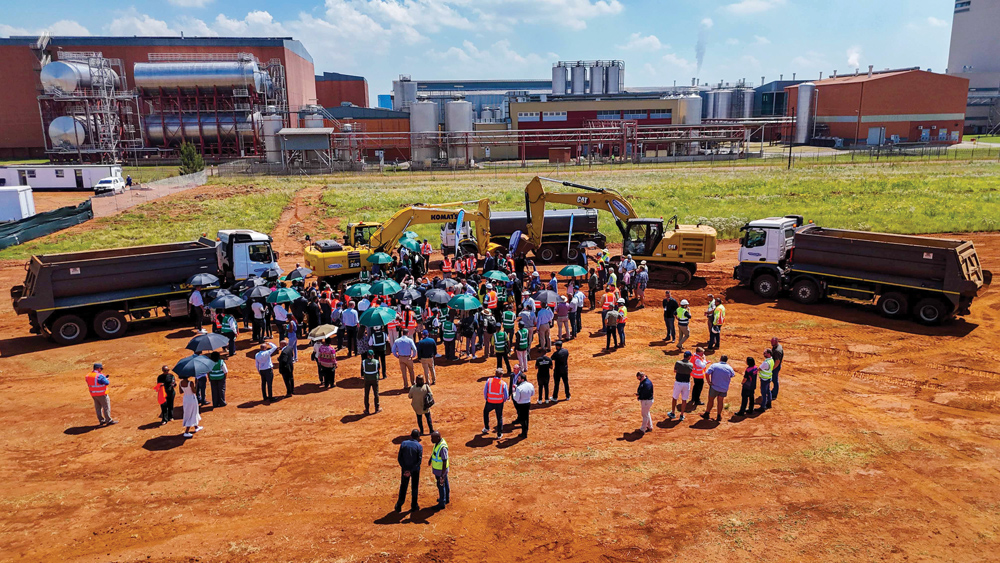
In February, the company officially broke ground on its newest malting facility in Midvaal, south of Johannesburg. This is a significant milestone for the country’s barley and brewing value chain.
The plant is being constructed alongside HEINEKEN Beverages’ Sedibeng brewery, which produces some of the country’s most recognisable beer brands, including Heineken®, Amstel Lager, Sol, and Windhoek. Set to be commissioned mid next year, it forms part of a €100 million (R2 billion) investment aimed at strengthening local malt production capacity, which will expand opportunities for local grain producers.
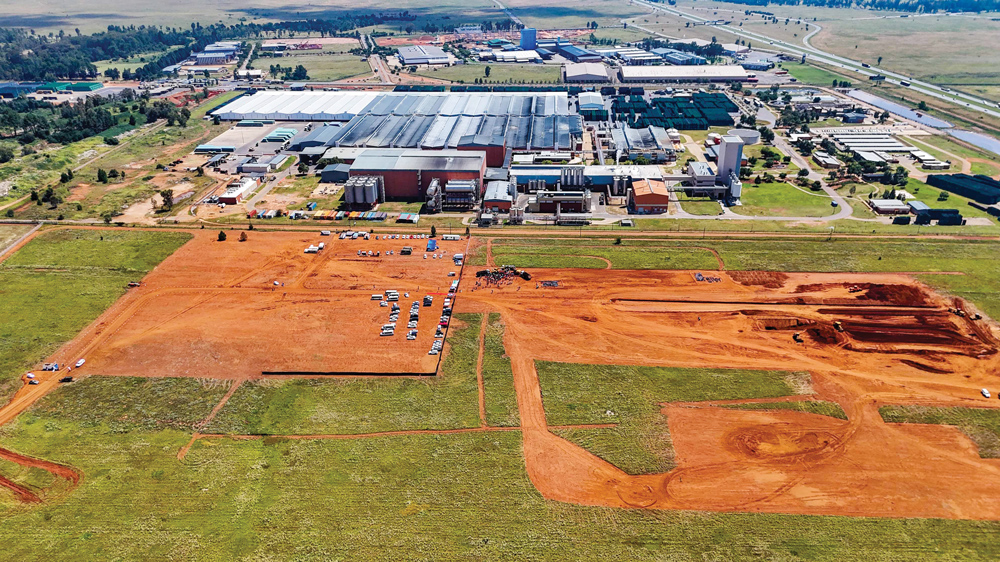
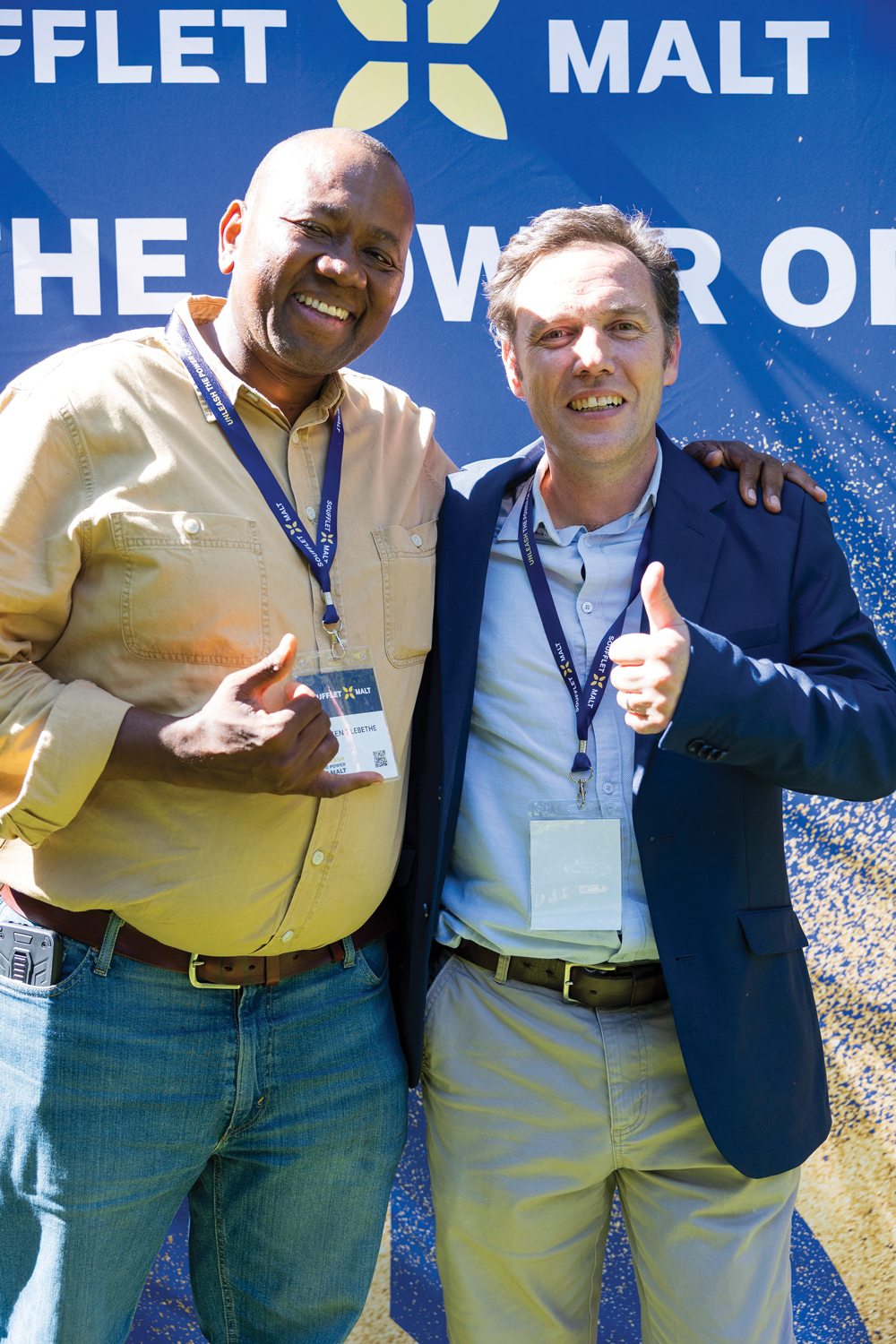
Jeremy Antier, managing director of Soufflet Malt, South Africa, explains how the development represents an important shift towards greater localisation within the brewing value chain. ‘Although HEINEKEN has brewed beer locally for many years, raw inputs will now be grown, malted, and processed entirely in South Africa, replacing an estimated 4 500 imported containers with local supply every year.’
The facility will have the capacity to produce approximately 100 000 tons of malt annually, and is being developed as a modern, efficient malthouse for the South African market. Its design incorporates technologies aimed at improving energy performance, reducing emissions intensity, and supporting responsible water use.
Creating a new market for South African barley
Once operating at full capacity, the plant will require around 125 000 tons of barley a year. ‘Based on a mixed strategy across dryland and irrigated production areas, and an expected average yield of around 4,5 t/ha, this represents approximately 25 000 ha of malting barley production,’ says Antier.
Historically, the Western Cape has been South Africa’s primary malting barley region and is expected to contribute around 40% of supply, with a further 40% anticipated from the Northern Cape and the remaining 20% sourced from other production areas across the country.
While the facility itself is expected to create 55 permanent local jobs, what is particularly exciting for producers is the broader impact it will have across the agricultural value chain. The project is expected to significantly support grain producers while generating between 200 and 300 indirect jobs across agriculture, logistics, and related services.
The project only succeeds if producers succeed
Although construction of the Midvaal facility started in February 2026, the agricultural groundwork behind the project has been under way since 2018, with Soufflet Malt working with commercial and emerging producers to strengthen South Africa’s local malting barley supply base.
‘South Africa already has a well-established barley industry with high-quality production,’ says Antier. ‘Our work with producers has therefore been focused on understanding local farming dynamics, regional conditions, and existing practices so that we can adapt our sourcing and development strategy to the realities and needs of the South African market.
‘At the same time, we are also working to support more sustainable, traceable, and inclusive farming practices across the supply chain, in line with the long-term development of the local barley industry.
‘For almost a decade, in partnership with HEINEKEN Beverages, we have been on the ground and increasingly visible in the sector, working to build relationships with producers, assess agronomic conditions, conduct variety trials, and better understand storage, logistics, and quality requirements ahead of commissioning.
‘That groundwork has helped shape a locally adapted growth strategy for barley production in South Africa. It now gives us both a clear ambition and the means to achieve it, with key stakeholders integrated into the strategy and a long-term plan designed to create shared value for producers, industry partners, and the local malt value chain.’
Producers are also guided on the cultivars best suited to local growing conditions and malting performance. These varieties are assessed for yield, disease resistance, climate suitability, and malting quality, while keeping the number of cultivars manageable to simplify harvest, segregation, storage, transport, and processing.
For emerging producers, support is being structured around three main pillars. The first is access to offtake, seasonal funding, and technical advice. The second is equipment improvement through a blended finance model, supported by 60% grant funding from the Industrial Development Corporation and 40% zero-interest loan funding from HEINEKEN Beverages. The third, still to be implemented, will focus on supporting emerging producers in accessing farming operations with the scale and conditions required for long-term commercial sustainability.
Over time, Soufflet Malt’s ambition is to support a broader and more inclusive barley value chain, where emerging producers can progressively play a stronger role alongside established commercial producers. This approach is not only about increasing the number of emerging producers participating in the supply base, but also about supporting their ability to grow sustainably, access suitable farming opportunities, improve yields, and increase their contribution to total barley volumes over time.
This is a long-term journey that will require collaboration across the agricultural value chain, including producers, industry partners, financiers, and public-sector stakeholders. The objective is to contribute to a more inclusive and resilient barley industry while maintaining the quality, consistency, and reliability required for malting production.
While long-term offtake agreements are not yet in place, the company has indicated that medium-term contracts may be explored once the malthouse is operational and production volumes begin to ramp up.
‘The biggest opportunity is the creation of a larger, more stable, and higher-value local market for malting barley,’ says Antier. ‘For producers, this means a clearer pathway into a structured value chain linked to long-term local industrial demand, provided the required malting quality standards can be achieved and maintained.’
Malt at every moment of the day
While this investment is firmly focused on malt for beer production, Soufflet Malt’s broader ‘malt at every moment of the day’ strategy is helping to position malt and malt ingredients within a wider food and beverage market.
‘Malt has shaped some of the world’s most iconic beers and spirits for centuries. Today, a new malt revolution is emerging, one driven by changing consumer expectations, sustainability, and innovation. Through our “malt at every moment of the day” strategy, we are expanding the role of malt far beyond brewing and distilling, unleashing its potential in food, nutrition, and beverage applications for a new generation of consumers,’ says CEO Jorge Solis.
In 2025 Soufflet Malt patented a range of malt flavour innovations including a malt-based concentrate for low- and no-alcohol drinks, a malt-based cocoa replacer, and malt for hot beverages, designed to replace or complement coffee.
For South Africa’s grain industry, this points to a longer-term opportunity. As consumer markets continue to shift towards natural, traceable, and sustainably produced ingredients, barley producers may increasingly find themselves connected not only to the brewing industry, but to a more diverse and evolving agri-food value chain.
‘As these markets continue to expand, new opportunities are also emerging for grain producers to become part of a more diverse and evolving value chain,’ Antier concludes.
Fast facts
- Barley required annually: approximately 125 000 tons
- Estimated hectares needed: around 30 000 ha under barley cultivation
- Farms expected to be supported: 200 to 250
- Local sourcing ambition: 100% South African barley
- Initial sourcing regions: Western Cape, Northern Cape, North West, and Gauteng
- Estimated agricultural GDP contribution: approximately R750 million
- Producer support includes agronomic guidance, variety testing, technical advice, equipment support, and potential medium-term offtake arrangements
- Market opportunity: a larger, structured local market for malting barley