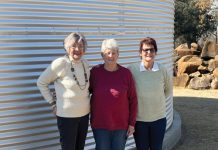


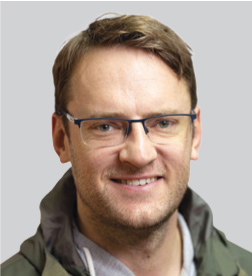
Prof Gerhard du Preez, associate professor: Subject Group for Agriculture, School of Geo- and Spatial Sciences, Faculty of Natural and Agricultural Sciences, NWU
Prof Francois van der Westhuizen, executive dean: Faculty of Natural and Agricultural Sciences, NWU
Prof Stuart Piketh, deputy dean: Research and Innovation, Community Engagement and Internationalisation, Faculty of Natural and Agricultural Sciences, NWU
Prof Carlos Bezuidenhout, director: Unit for Environ-mental Sciences and Management, Faculty of Natural and Agricultural Sciences, NWU
Agriculture is entering a new era as climate variability, rising input costs, soil degradation, and increasing pressure on natural resources force producers to rethink grain production systems. At the same time, advances in precision agriculture, climate monitoring, ecological science, and digital technologies are creating new opportunities to improve productivity and sustainability. In response, the Living Lab for Sustainable Agriculture of the North-West University (NWU) near Potchefstroom is rapidly developing into a collaborative research platform where science, innovation, and practical farming intersect.
The Living Lab supports multidisciplinary grain-related research under both dryland and irrigated conditions while creating opportunities for producer collaboration, student training, and industry-driven innovation. Central to the platform is a long-term agricultural systems trial comparing conventional, conservation, and regenerative grain production systems under local conditions. The trial focuses strongly on soil health, including nutrient cycling, biodiversity, and cover crops, with the aim of generating locally relevant data to support resilient and climate-smart grain production systems for South African agriculture.
Several new infrastructure and technology developments are strengthening the Living Lab’s research capacity. Precision irrigation systems are being expanded, while precision agriculture technologies are increasingly integrated into research activities. Construction is also nearing completion on a climate-controlled greenhouse facility that will support controlled-environment experimentation before technologies, cultivars, and management systems are validated under field conditions.
Recent developments include electromagnetic induction mapping and soil spectroscopy research led by Prof George van Zijl. These technologies aim to improve soil survey accuracy and fertiliser recommendation systems through high-resolution digital soil mapping and rapid soil analysis techniques.
The Living Lab also plays an important role in the recently launched Kgodiso-PepsiCo-NWU partnership, an integrated research-driven initiative aimed at strengthening climate-resilient and commercially viable farming systems in the North West Province. Led by Prof Stuart Piketh and Prof Gerhard du Preez, the project focuses on high-value crops such as dry beans and groundnuts while integrating farmer capacity development and value-chain innovation into a scalable production framework. The initiative also supports the training of postgraduate students, postdoctoral fellows, and technicians.
Crop-specific research is also expanding. A recent sunflower project led by Prof Nomali Ngobese and Donald Motene, in collaboration with Limagrain, investigated how different planting densities influence sunflower performance under dryland conditions in North West.
Entomological research is further contributing to sustainable grain production systems. Dr Sandiso Mnguni and his postgraduate students are investigating insect pest ecology in maize and sunflower systems. Their work focuses on insect diversity, feeding behaviour, seasonal dynamics, and pest adaptation under different cropping systems, including crop rotation and no-tillage systems.
Climate-smart agriculture and precision-monitoring research are another major focus area. A collaborative cosmic-ray neutron-sensing project led by Dr Katlego Moloto, Prof Du Toit Strauss, and Dr Henno Havenga investigates soil moisture at field scale by converting neutron counts into estimates of soil water content. The system is supported by soil moisture probes, rainfall measurements, and weather monitoring equipment to test the technology under real farming conditions.
Drone- and satellite-based crop monitoring research is also being integrated into the Living Lab. Prof Alwyn Hoffman and Dr Henno Havenga are using drone-based RGB and multispectral imagery to monitor crop performance, evaluate spray application strategies, and develop vegetation and crop-condition maps. Dr Willie Cloete is evaluating satellite-based biomass estimations under South African field conditions by comparing satellite observations with field measurements.
In addition, Dr Jerry Dlamini is leading research into greenhouse gas emissions under different crop production systems. Using a semi-static chamber system, he and two PhD students are measuring emissions of nitrous oxide, methane, and carbon dioxide from contrasting agroecosystems within the long-term trial. The research aims to support the development of more resilient and climate-smart production systems that can reduce emissions while maintaining sustainable crop yields.
An important feature of the Living Lab is its collaborative nature. Producers, agribusinesses, researchers, students, and technology partners work together to address practical agricultural challenges. Industry collaborators, including Syngenta, Villa Crop, and AGT, are already using the platform for product evaluations, demonstration trials, and technology validation under real production conditions.
Ultimately, the goal of the NWU Living Lab for Sustainable Agriculture is to generate credible, locally relevant data that supports informed decision making across the grain value chain while contributing towards more resilient, profitable, and sustainable grain production systems for South Africa’s future.