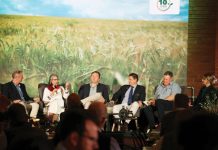



Dr Tara Southey, CEO, TerraClim, and affiliated researcher, Stellenbosch University

Mila Toth, climate & environmental data professional, TerraClim

Caley Higgs, lead: Data Operations & Research, TerraClim

Johan van den Berg, independent
agrometeorologist
Weather and climate outlooks are becoming increasingly important for the grain industry, not because it provides perfect predictions, but because it helps producers, advisers, and agribusinesses to manage risk. For summer grain producers, seasonal information influences planting windows, cultivar choice, input decisions, soil-water management, insurance exposure, and financial planning.
There are different timescales of forecasts used for different purposes in agriculture. Short-term weather forecasts cover the next few hours to a few days and are useful for immediate operational decisions. Medium-term forecasts extend from a few days to a few weeks and support planning around planting, spraying, fertiliser application, and harvest activities.
Monthly to seasonal forecasts often use historical information and relationships. One example is ENSO, the El Niño Southern Oscillation, and especially the Southern Oscillation Index (SOI). The SOI is useful because records extend back to 1876, allowing historical rainfall and temperature data to be correlated with different SOI phases and rainfall patterns in subsequent months. Other models take a more mechanistic approach, using short-term weather as initial conditions and updating the forecast as new input data become available.
A much longer-term timescale extends over years and decades to determine climate change trends. For the grain industry, this is becoming increasingly important because long-term shifts in temperature, rainfall distribution, and heat stress may influence where crops remain viable, which cultivars are best suited to specific regions, and how production risk is priced.
The accuracy of weather and climate models depends on two key factors: the quality of the model – meaning how accurately it represents atmospheric processes and whether as many relevant variables as possible are included – and the quality of the data inputs that drive it. Major improvements have occurred over recent decades through remote sensing, improved spatial coverage, and advances in information processing. However, many elements remain poorly accounted for.
These include varying solar energy levels and other external influences on the earth’s climate system. Within the atmosphere, greenhouse gases and other chemical elements influence heat retention and electromagnetic radiation. On the earth’s surface, changed albedo – the reflection of energy back into the atmosphere – results from deforestation, changed land-use patterns, and large cities that form heat domes.
It is clear that forecast accuracy still falls short, but this does not make forecasts useless. It means it must be used correctly: as risk-management tools rather than guarantees.
One of the greatest shortcomings of seasonal outlooks is that rainfall distribution within the season is poorly predicted. Seasonal rainfall totals may be predicted within reasonable limits, but the actual timing of rainfall can differ by weeks or even months. For maize and other summer grains, this is critical. A difference of one or two weeks in planting dates can make the difference between major drought damage and record yields.
Forecasts that extend over multiple seasons often have a cyclical nature, linked to the succession of El Niño and La Niña events. Since 2020 there have been five La Niña-leaning seasons and only one El Niño, in 2023/2024. Climate change also plays a role, with indications that annual total rainfall is increasing over the central parts of the country while decreasing over the western, southern and south-eastern parts. For grain production, however, total rainfall is only one part of the story. Rainfall timing, heat exposure, soil-water storage, and crop stage determine whether rainfall is converted into yield.
How can climate outlooks be used most effectively?
There will never be a 100% accurate forecast because too many unknown factors determine the final outcome. The challenge is that producers and agribusinesses must often turn a probability into a practical yes or no decision.
A 60% probability of below-average rainfall does not automatically mean a producer should not plant. Other factors must be considered: stored soil water, clay content, soil depth, production potential, cultivar choice, planting date, input affordability, and the financial resilience of the farming unit.
During a series of good or above-average rainfall years, increasingly marginal soils are often cultivated, and good yields are regarded as the new norm. Adjustments are then made, with larger and more expensive implements, higher input exposure, and poorer soils becoming part of the normal production system. This is not sustainable over the longer term if the climate cycle shifts back towards drier or hotter conditions. Forecasts and outlooks should therefore be used as risk-management tools. It is most valuable when combined with knowledge of soil, crop, climate, and management capacity.
What can be expected for the 2026/2027 summer grain season?
All indications show that a very strong El Niño is developing. It is relatively early in the season, and it could already reach super El Niño status by September. A super El Niño occurs when sea surface temperatures in the Central Pacific Ocean are more than 2 °C above the long-term average for several months. Previous super El Niño events occurred in 1982/1983, 1997/1998 and 2015/2016.
Interestingly, the previous three super El Niño events were not necessarily the driest seasons and did not always cause the lowest yields, although yields were still far below average. Several factors explain why even a weak El Niño can result in very poor yields: the timing of El Niño development, soil-water conditions at planting, and the influence of the Indian Ocean. If El Niño strengthens into January, this is a strong indicator of poor rainfall during the critical second part of the season.
Current soil-water conditions are favourable in many areas. Good soil-water reserves can store up to 200 mm or more, which, when converted into effective rainfall, may already represent half a season’s requirement. The opposite was true in 2015/2016, which followed the weak to moderate El Niño of 2014/2015.
Record maximum temperatures may occur from December to March, as El Niño events have historically caused additional warming above the global trend. This can cause heat damage, increase crop water demand, and reduce yield potential.
The most probable scenario for 2026/2027 is a good start, with favourable soil-water conditions and an above-average probability of further rain in the last part of winter and spring. However, mid- to late summer – particularly January to March – is most likely to be dry and extremely hot. Global warming raises the baseline temperature, and El Niño events have historically caused additional increases above this warming trend, meaning record maximum temperatures are possible. For grain producers, this means early-season conditions should not create a false sense of security. The key risk period may arrive later, when maize and other summer grains are in highly sensitive growth stages.
Practical implications for grain producers and agribusinesses
The 2026/2027 outlook should support more cautious and region-specific planning. Producers should avoid assuming that good early soil moisture guarantees a low-risk season. Stored soil water should be measured and considered before committing to planting decisions, especially on marginal soils.
Planting date decisions should be made carefully, as the distribution of rainfall may matter more than the seasonal total. Cultivar choice should account for the possibility of a dry and hot January to March period. In higher-risk areas, shorter-season cultivars, staggered planting windows, or reduced input exposure on marginal lands may need to be considered.
Input decisions should be aligned with realistic yield potential and repayment capacity. A favourable start to the season should not automatically justify maximum input expenditure if mid- to late-season risk remains high. Agribusinesses, financiers, and insurers should also consider region-specific risk rather than relying on national seasonal outlooks alone.
New developments: moving from broad outlooks to grain-risk intelligence
New research offers promising prospects to integrate climate, soil, crop, and production information more effectively. TerraClim, in partnership with Grain SA and research collaborators, is piloting a project linking high-resolution climate intelligence with historic production data, cultivar performance, and producer knowledge.
The project focuses on building climate profiles for key maize production regions and integrating these with production data and local agronomic knowledge to better understand how climate variability is shaping grain production outcomes across different areas.
Early analysis across 795 district-year observations, 128 districts, and eight provinces shows that maize yield responses are highly region-specific. Higher atmospheric moisture during the October to April growing season was positively associated with maize yield, while sustained heat exposure – particularly hours above 30 °C – showed a negative relationship. Solar radiation, rainfall, and diurnal temperature also emerged as important yield drivers. The strongest regional warning signal was in the North West Province, where higher mean temperatures were strongly associated with lower maize yields, supporting concerns about long-term maize viability under continued warming.
These findings highlight the value of moving beyond broad seasonal forecasts towards spatially explicit, crop-specific risk intelligence. For the grain industry, the future value of climate outlooks lies not in predicting the season perfectly, but in helping producers and agribusinesses make earlier, more localised, and better-informed decisions on planting, cultivar choice, inputs, finance, and long-term adaptation.