

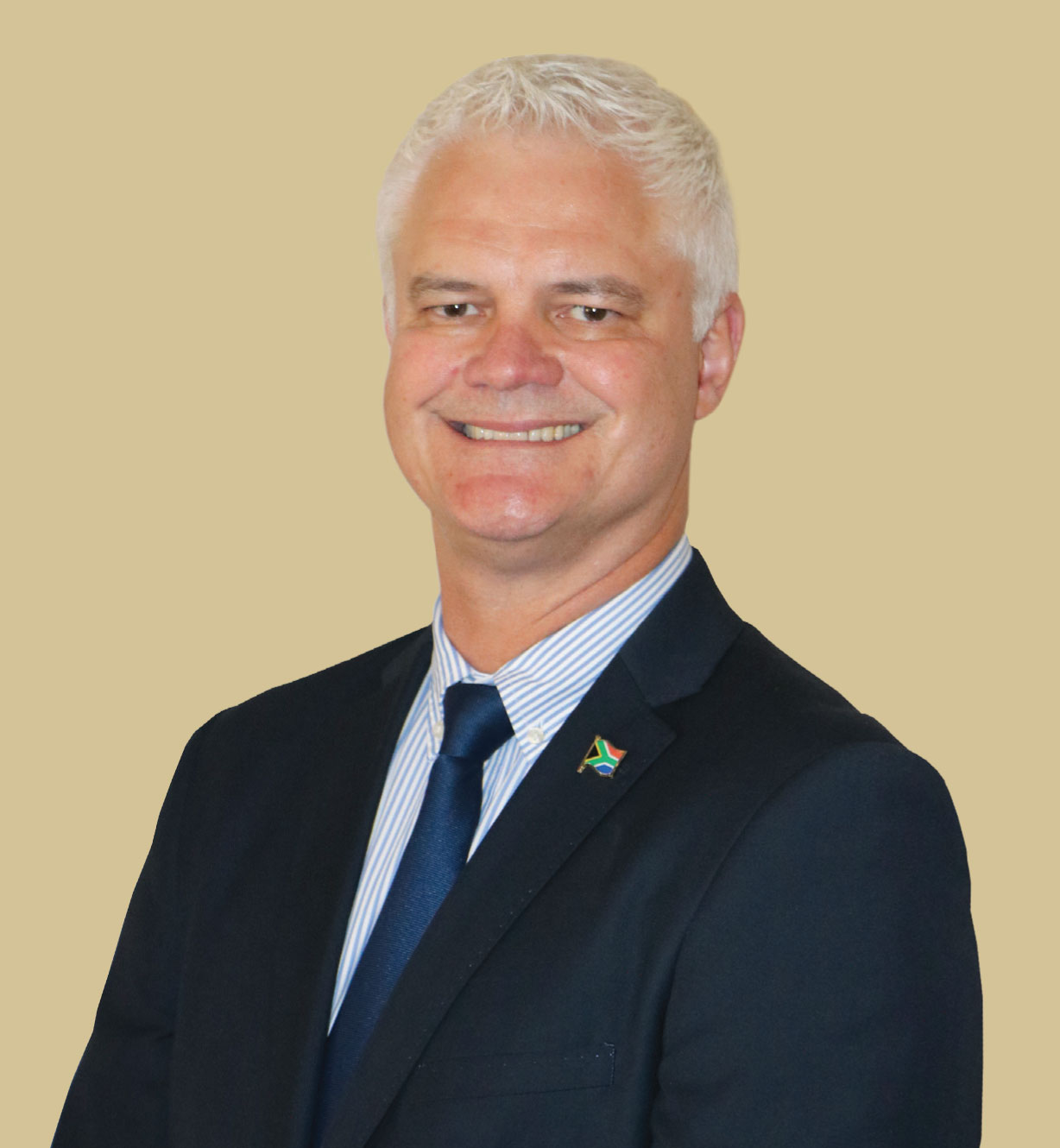
CEO, Grain SA
THE THEME FOR THIS YEAR’S GRAIN SA CONGRESS, ‘OPENING THE GAP’, IS SIMPLE YET DEEPLY SIGNIFICANT GIVEN CURRENT GRAIN MARKET REALITIES. THIS REFERS TO THE WIDENING DISTANCE BETWEEN INPUT COSTS AND FARM INCOME AT FACE VALUE.
However, as conversations unfolded, it became clear that this gap extends far beyond an economic reality. It represents the defining space in which the future of grain farming will be constructed. In the words of Marcus Aurelius: ‘The impediment to action advances action. What stands in the way becomes the way.’
Immediately before Congress, the global environment reinforced this reality. The Iranian conflict sent shockwaves through world energy and fertiliser markets. Within days, oil prices surged and fertiliser markets tightened, with direct implications for input costs. For producers the impact was immediate and all too familiar as cost structures shifted within days while output prices remained unchanged. This volatile environment in which we operate is no longer occasional but structural. Global events far removed from the farm are shaping the economics of production with increasing speed and intensity.
The data presented at Congress point to an industry under sustained pressure. 60% of producers – a substantial majority – reported that they were less profitable than the previous season and even more did not feel confident to make additional investments. This is because producers continue to face persistently high input costs, weakening commodity prices, infrastructure constraints, and greater exposure to global shocks. In effect, many are carrying a high-cost crop into a lower-priced market. This is not a temporary squeeze but a sustained compression of margins that calls for a different kind of response.
One of the most important shifts emerging from Congress is a change in mindset. For many years, success in grain production was closely associated with expansion, yield maximisation, and scale. Today that paradigm is changing, as the dominant message from producers themselves was clear: the future will not be determined by who produces the most, but by who produces the most efficiently.
This represents a fundamental shift away from a singular focus on yield and scale towards emphasis on margins, precision, and optimisation. In a constrained environment where margins are tight and costs continue to rise, every decision carries significantly greater consequence. Choices around input application, crop selection, timing, financing, and marketing have moved beyond routine operational matters and now stand as strategic levers that directly determine profitability, operational efficiency, and long-term sustainability.
To view the gap purely as a threat is understandable. Yet it is an alternative that creates an opportunity where efficiency is developed, innovation is applied, and competitiveness is strengthened. In stable times, inefficiencies can persist, but in a turbulent environment they are revealed and can be corrected. This is why the current period we are experiencing tends to accelerate differentiation within the industry. The most disciplined, well-informed, and adaptable producers will not only endure, but emerge well positioned for the next cycle.
Congress also made it clear that the gap extends beyond the farm as it is equally shaped by the broader operating environment. Producers are not seeking protection from the market but rather predictability and consistency in policy, infrastructure, and the systems that underpin agricultural production. Policy uncertainty, delays in administration, and failing infrastructure widen the gap unnecessarily, while an effective operating environment strengthens competitiveness. Grain SA therefore remains firmly focused on ensuring that these conditions enable rather than constrain grain production.
Perhaps the most striking feature of Congress was not the pressure itself, but the response from producers, as tightening margins and rising uncertainty were met not with retreat but with clear resolve. There is a strong recognition that volatility is inherent in the system and that cycles will shift, yet discipline must remain constant. Opening the gap is not about waiting for conditions to improve but about strengthening decision-making, reinforcing the fundamentals, improving efficiency, and sustaining a long-term perspective. While global conflicts, oil prices, and international market volatility remain beyond the control of producers, their response remains firmly within their control.
The key question is not whether the gap exists but whether producers are prepared to meet the challenge in an environment that continually changes. It is a space where leadership is tested and the future of the industry is shaped. Based on what was observed at Congress, there is every reason to believe that South African grain producers are ready to face the challenge head on.
Stay the course.