


ARC-Grain Crops, Potchefstroom
Sunflower is one of South Africa’s top oilseed crops, valued for both its yield and oil quality. However, climate change associated with hotter summers, more frequent droughts, and unpredictable rainfall poses new challenges. Recent trials conducted at Bethlehem (Free State) and Potchefstroom (North West Province) provided valuable information for producers that seek to optimise sunflower performance.
Research overview
Six sunflower hybrids were tested at two sites, over two consecutive growing seasons (2022/2023 and 2023/2024) and across multiple planting dates. Seed and oil yield and content as well as the influence of climate, soil, and hybrid genetics were recorded. Data collected were subjected to statistical analysis (ANOVA).
Research results
Effects of the growing season, site, and planting date and their interactions on seed yield, oil content and oil yield were highly significant (p≤0,001). The growing season had the largest influence on seed yield (21,45%) and oil yield (22,86%), while season x site and season x planting date interactions showed substantial contributions. Oil content was predominantly determined by the hybrid planted (50,6%), while season x planting date (8,86%) and season (7,79%) showed a lesser effect. Oil content showed significant genotype x environment interaction.
Year-to-year climate: the biggest difference
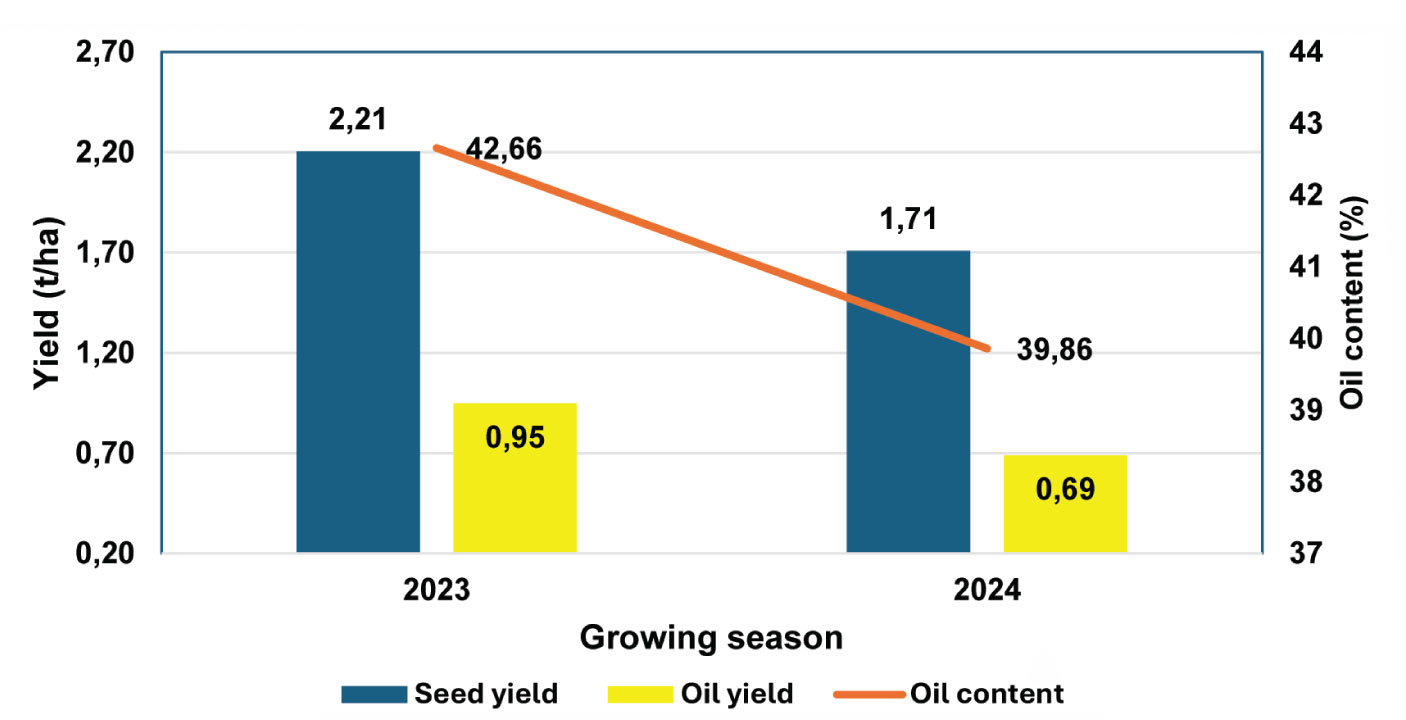
Rainfall and temperature variation between seasons had the strongest effect on seed and oil yields. During the 2022/2023 growing season rainfall measured was 942 mm at Bethlehem and 891 mm at Potchefstroom, while during the 2023/2024 growing season, 455 mm and 553 mm were measured at Bethlehem and Potchefstroom, respectively. The mean maximum air temperatures were 3 °C higher compared to that of the long-term average at both sites. In the 2023/2024 growing season, which was considered a dry season, yield dropped sharply with a 22,62% decrease in seed yields, 27,37% in oil yields, and 6,56% in oil content (Graph 1).
Key findings
- Dry seasons resulted in sharp declines in yield, indicating the crop’s sensitivity to water and heat stress.
- Moderate, well-timed rainfall resulted in higher yields and consistent oil content.
These results highlight the importance of keeping year-to-year climate variability in mind when planning sunflower planting date and hybrid selection.
Timing is everything: the influence of planting dates
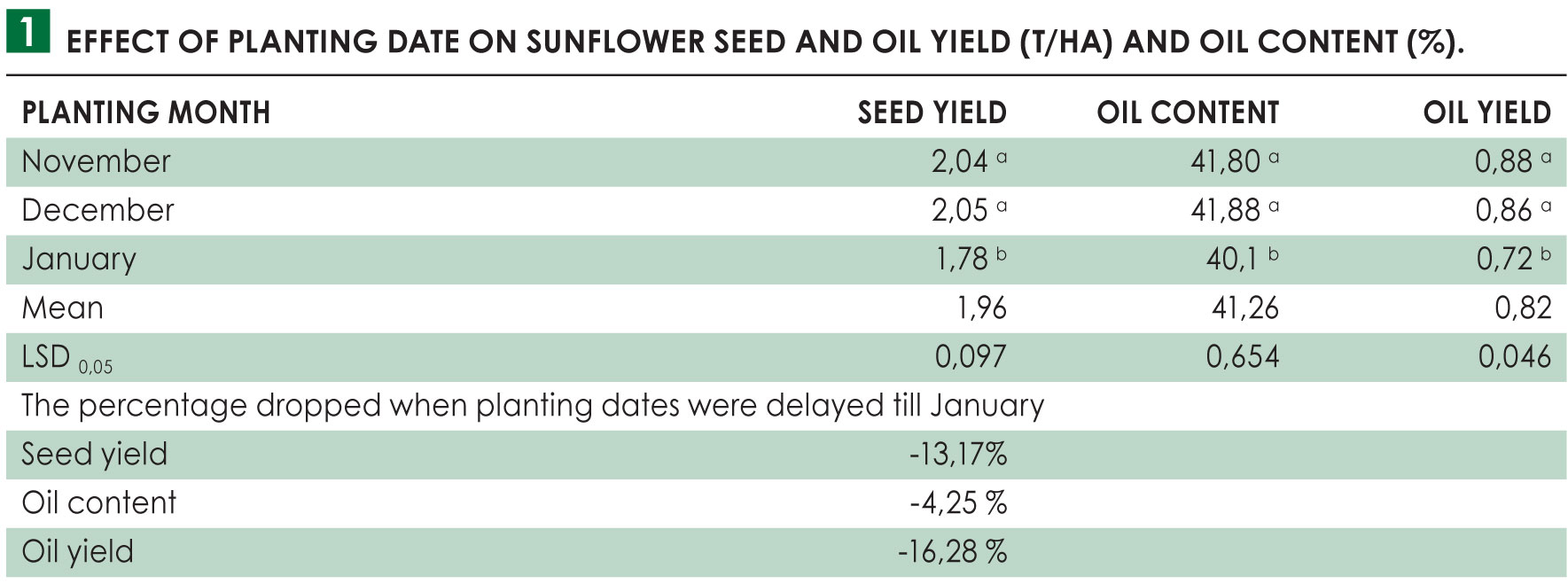
Planting date proved to be a critical factor for sunflower performance. Late plantings cause crops to be exposed to extreme heat or drought during the flowering stage of the plant, which can dramatically reduce yields. Plantings delayed until January reduced seed and oil yield and oil content by 13%, 16%, and 4%, respectively (Table 1).
 Late planting increases the risk of plants reaching its flowering stage during peak summer heat or drought, reducing both seed set and oil content.
An optimum planting date consistently offered the best balance between yield and resilience, especially under variable rainfall.
Producers can use this information to adjust planting schedules for optimal crop performance.
Hybrid choice: genetics drive oil content
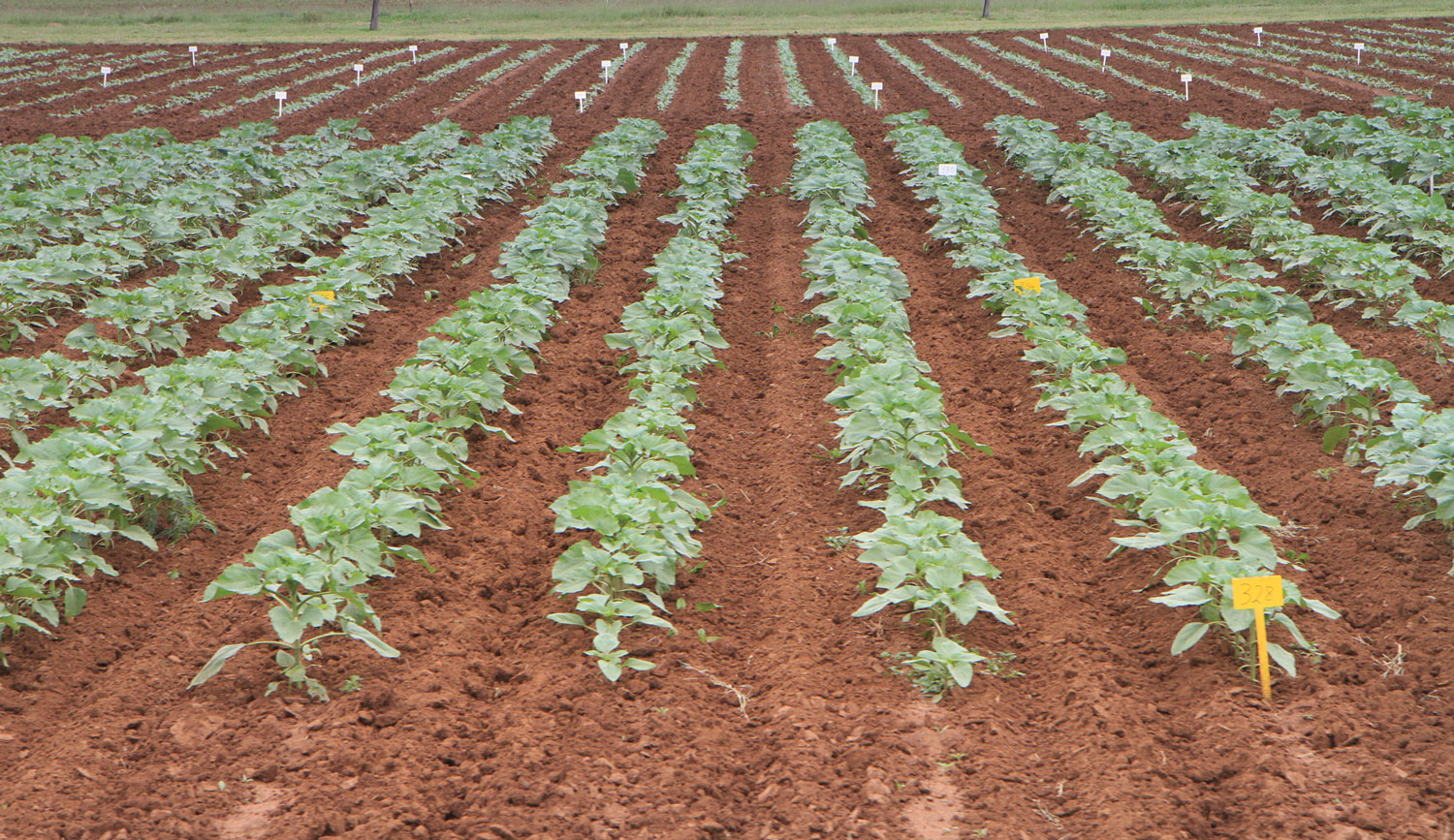
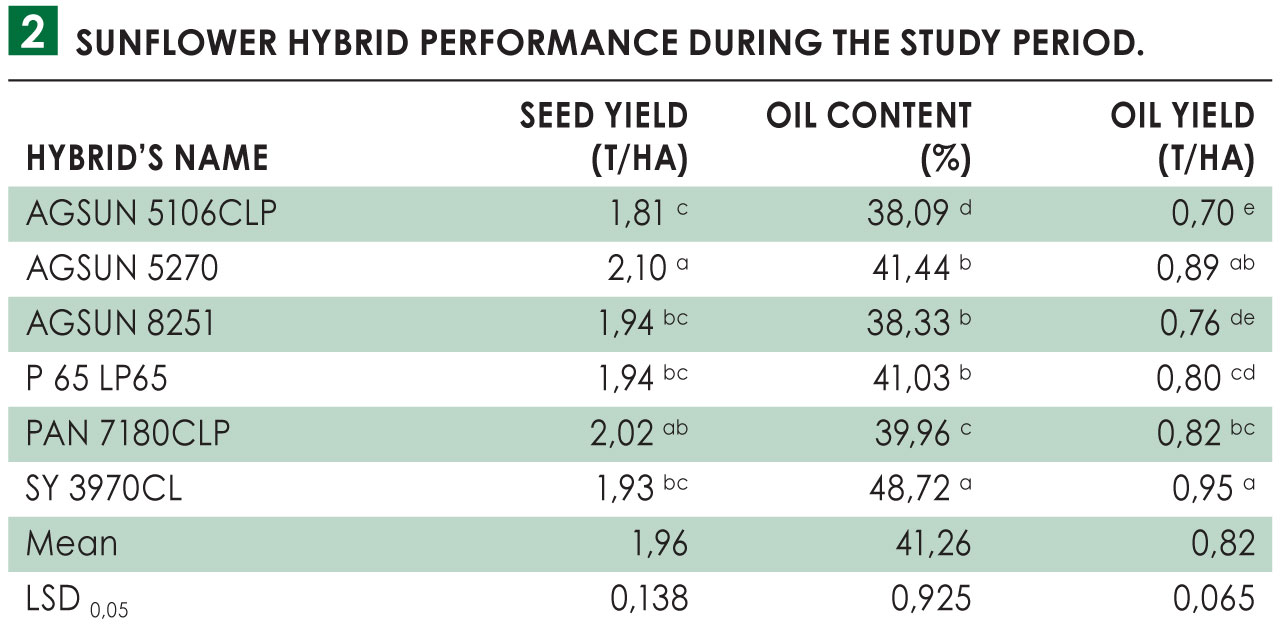
While overall yield was strongly influenced by climatic conditions, oil content depended largely on hybrid genetics. Some hybrids consistently produced higher oil percentages across different sites and seasons, offering producers an opportunity to prioritise quality as well as quantity. Table 2 presents the sunflower hybrids’ performance during the study. AGSUN 5270 produced the highest seed yield (2,10 t/ha), followed by PAN 7180CLP (2,02 t/ha) while SY 3970CL produced the highest oil content (48,72%) and oil yield (0,95 t/ha).
 Hybrids that are suited to local conditions will perform better under stress. Some hybrids, however, consistently produced higher oil, irrespective of the site planted.
Seed suppliers can provide recommendations based on past performance and regional adaptability.
Interactions among factors: the real key to success
No single decision determines sunflower performance. Performance is determined by the interaction of climate, planting date, hybrid, and site, which ultimately drives yield and oil content.
Climate x planting date
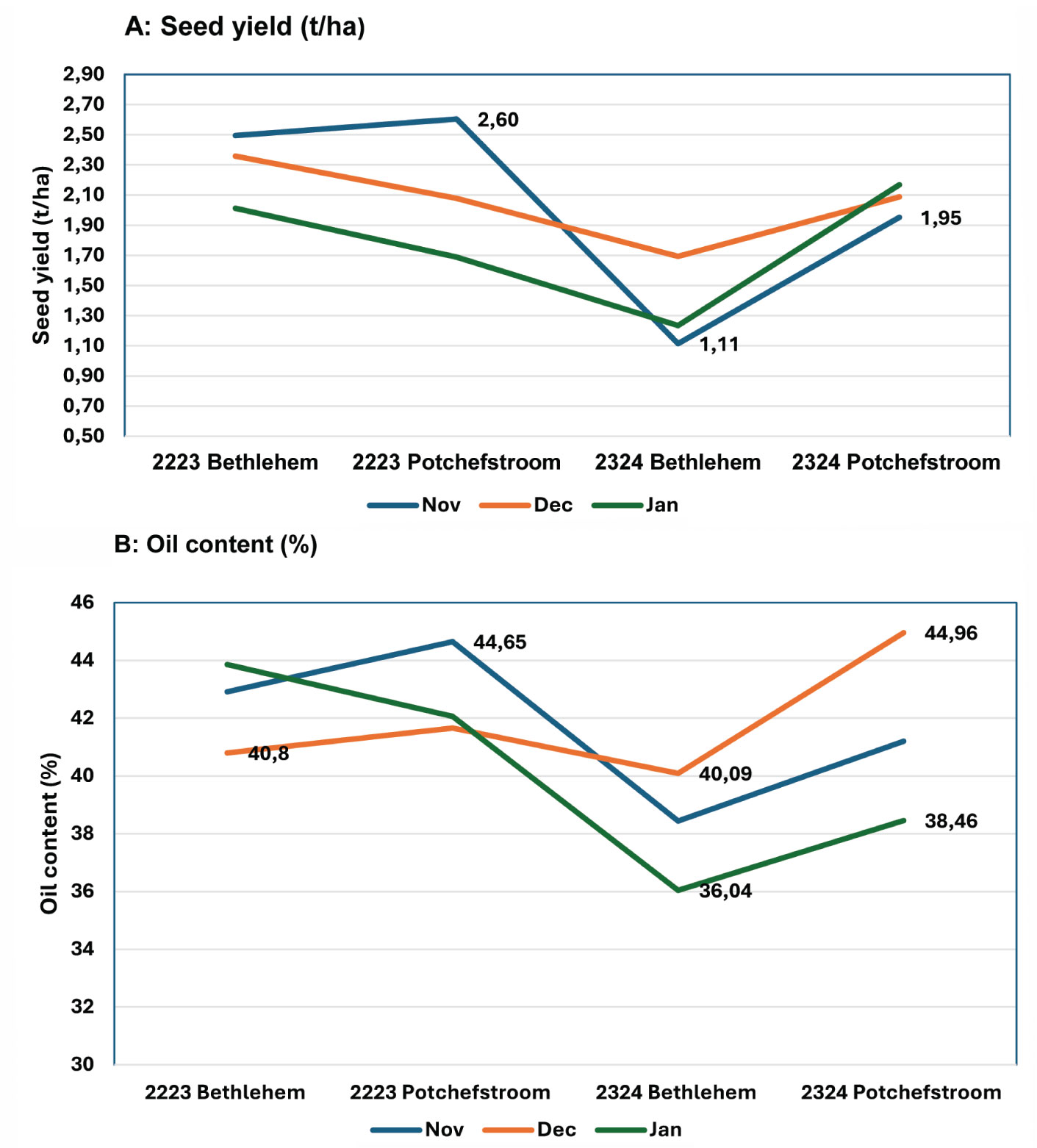
Results showed that in dry years November plantings at both sites did not perform well. This could be attributed to the fact that flowering coincided with peak heat and extreme drought conditions. In wetter years, November and December plantings performed best. Delayed plantings (January) showed a sharp decline in seed yield. At the Bethlehem site seed yield dropped 19% and at Potchefstroom it dropped 35% (Graph 2A). A similar trend was recorded for oil yield. The best oil percentage achieved was from a November planting at Potchefstroom during a wet growing season. The December planting of the dry season produced the highest oil content at both sites, while the January planting reduced the oil content dramatically at both Bethlehem (10%) and Potchefstroom (14%) (Graph 2B).
Interactions among factors (explained by AMMI)
Hybrid x planting date x climate
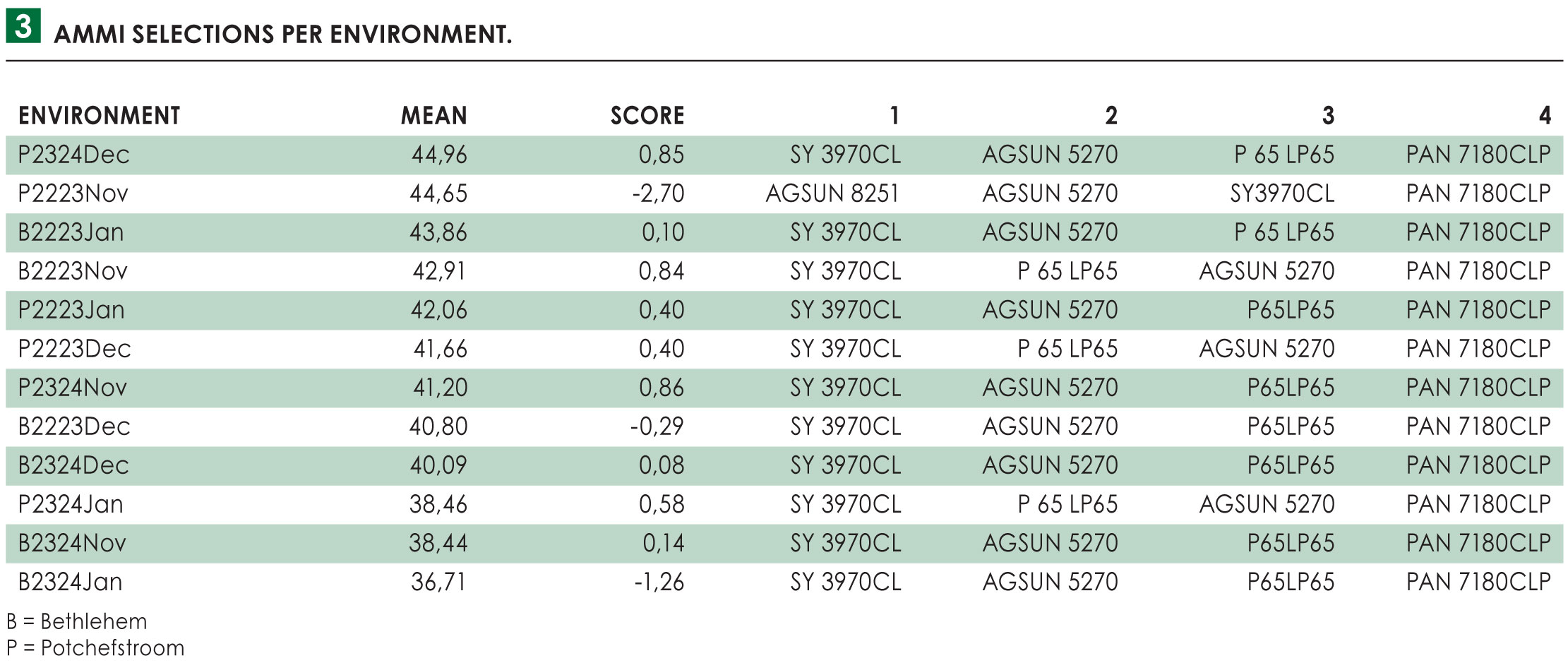
Of all the traits studied, oil content was the only parameter that showed a significant genotype x environment interaction. An AMMI model (additive main effects and multiplicative interaction) was applied to understand the response of the hybrids to the different environments better. With this approach, main effects are separated from interactions so that it is easier to identify hybrids that perform consistently across seasons and sites. Table 3 provides the AMMI selections per environment. Looking at the top four entries, the following can be concluded:
- The highest oil content (44,96%) was recorded at Potchefstroom from the December 2023/2024 planting, with SY 3970CL identified as the top (and relatively stable) hybrid.
- At Potchefstroom, oil content was also high (44,65%) in the November 2022/2023 planting. However, the large negative IPCA score indicated strong interaction. Some hybrids excelled while others performed poorly. Here, AGSUN 8251 ranked best.
- SY 3970CL consistently appeared in the top one to two positions across almost all environments, which identifies it as the most stable hybrid.
- AGSUN 5270 frequently appeared in the top two to three positions, indicating its broad adaptability.
- P65LP65 performed well in specific environments, especially in November and January plantings.
 Best planting windows for satisfactory oil content
- In Potchefstroom, the December 2023/2024 planting produced a stable high oil.
- In Bethlehem, the January 2022/2023 planting performed well under favourable conditions.
Worst environment
- In Bethlehem, the January 2023/2024 late planting coincided with heat stress, which lead to the production of the lowest oil percentages.
Practical takeaway for producers
- SY 3970CL will offer stability and reliable oil quality.
- For broad adaptability, AGSUN 5270 is a safe bet.
- Use P 65 LP65 only in the recommended planting windows.
- Avoid late January plantings.
Conclusion
Sunflower success in South Africa does not rely on a single decision but rather on the management of the interaction of planting time, hybrid selection, and climate conditions. The AMMI analysis showed that stable hybrids such as SY 3970CL consistently deliver reliable oil content across environments, while others like AGSUN 5270 and P 65 LP65 excel in specific planting windows. Aligning hybrid choice with the right planting date and location allows producers to safeguard both yield and oil content even under the uncertainties of climate change. With careful planning and adaptive management, sunflower will remain a profitable and resilient oilseed crop for the future.
 Acknowledgements
The author thanks the Oil and Protein Seeds Development Trust (OPDT) and the Agricultural Research Council (ARC) for funding this study, and the sunflower team at ARC-Grain Crops Potchefstroom for their technical assistance.
For enquiries, email Safiah Ma’ali at maalis@arc.agric.za.