


In South Africa, the Marketing of Agricultural Products Act (Act 47 of 1996) provides for the application of a statutory levy on certain crops. A non-profit company, the South African Cultivar and Technology Agency (SACTA), was created as the legitimate central institution to collect, manage, and administer statutory levies on certain self-pollinating crops with the aim of opening up opportunities for South African producers to have access to new germplasm and other seed technologies.
Without the latest technology, it is difficult for South African producers to compete against their international counterparts. It thus remains vital that producers have access to the latest agricultural technologies and germplasm to increase productivity and profitability.
Speaking at the SACTA stakeholder engagement and information event held recently in Pretoria, Ryk Pretorius, chairperson of SACTA, reiterated that the agency was committed to ensure continuous access to a pipeline of cutting-edge genetics and technology for all South African grain producers.
‘SACTA remains focused on the task given to the agency with the ultimate aim of enhancing the financial sustainability and competitiveness of grain producers in South Africa. Our mission is to manage, collect, and distribute levies to support ongoing innovation in open-pollinated crops.’
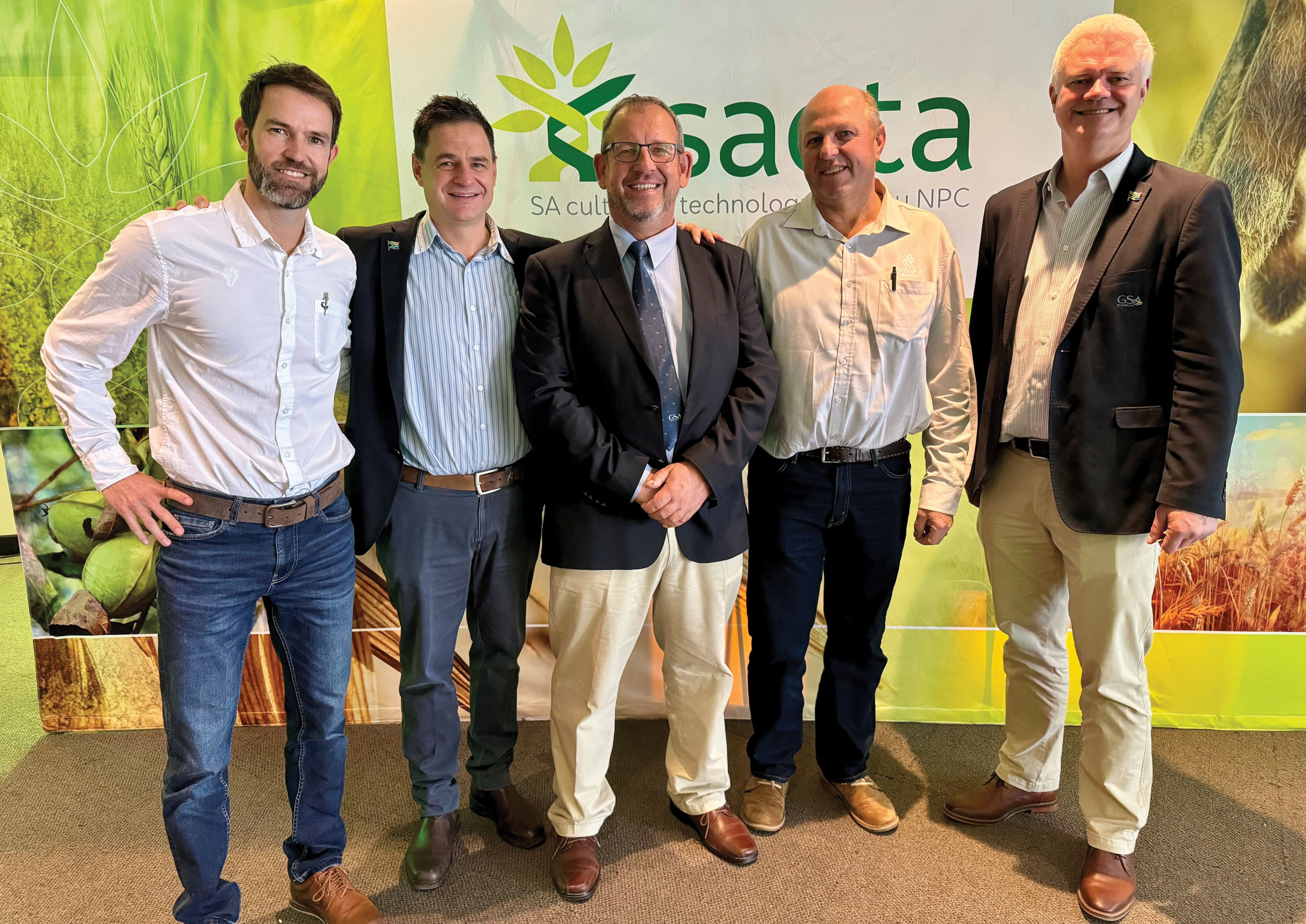
Photo: Magda du Toit
According to him the levies are used primarily to support ongoing innovation in plant breeding and technology development in open-pollinated crops, so that the industry can move forward and the entire South African market can benefit.
In addition, a portion of the funds is also used for enterprise development, including internships, bursaries, and training as well as to support infrastructure at some rural schools.
Pretorius stated that both producers and companies doing breeding or holding the technology, benefit from the SACTA system. ‘This means that better genetics and technologies that give higher yields and better quality are available to enable
producers to be more profitable. This is sustainability in practice. We see better remuneration for breeders and technology holders while everybody shares the risk. If the crop fails, everybody shares the risk but if the crop is successful, all will share in the benefit.’
He added that SACTA will continue to execute the mandate received from all the stakeholders and work with the industry to find common solutions for food on the one hand and promote profitability for producers on the other hand. He invited the stakeholders to continue participating in this process.
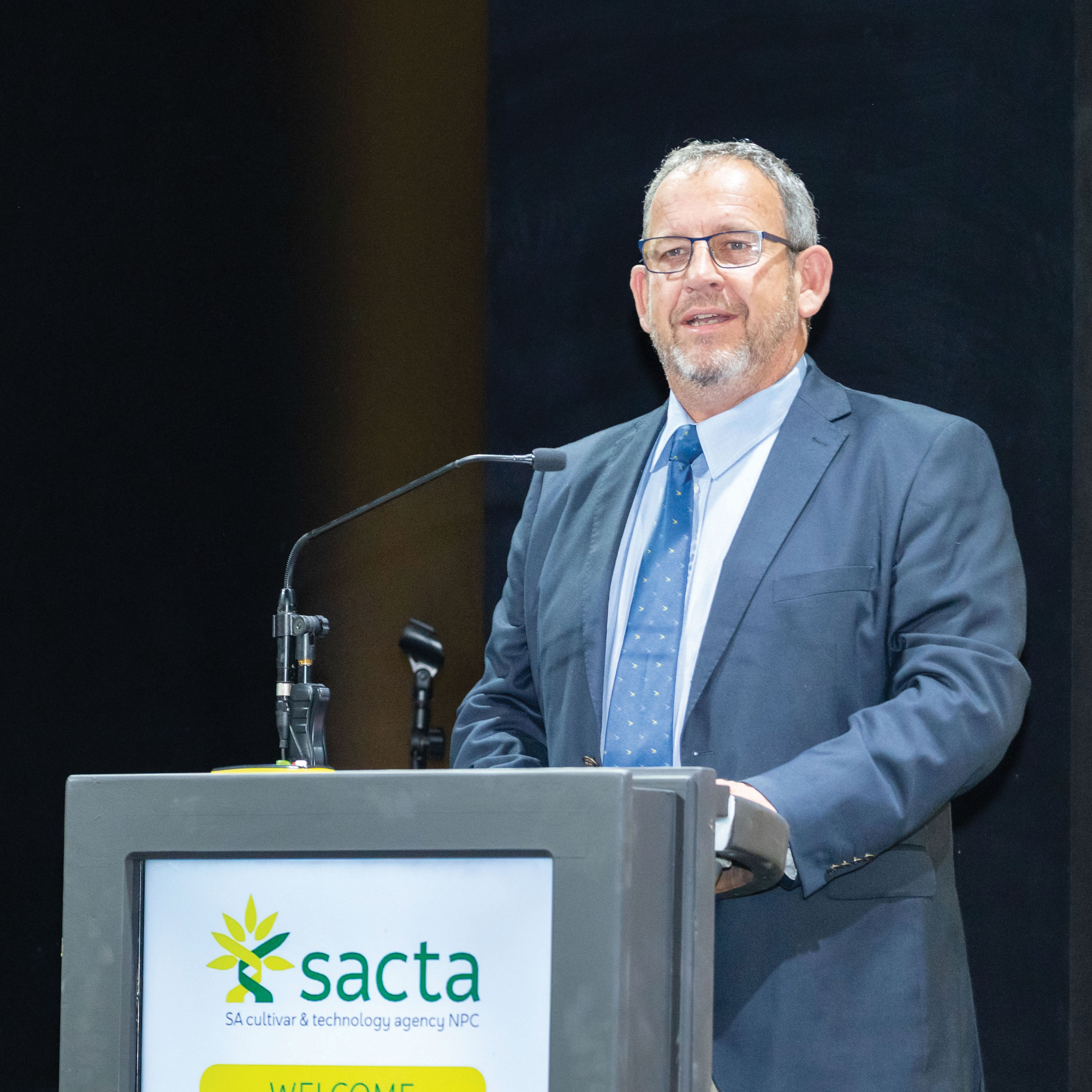
Photo: Brand Republic
Pretorius pointed out that over the past ten years since SACTA came into existence, 73 new wheat cultivars have been released, and over the past seven years, 130 new soybean cultivars became available for commercial use, enabling the soybean industry to grow and expand.
SACTA CEO Andrew Bennet confirmed that SACTA’s aim is to ensure access for all South African producers to an ongoing pipeline of cutting-edge genetics and technology, with the ultimate goal of enhancing their financial sustainability and competitiveness.
Bennett said that South Africa has one of the fastest rates of agricultural yield improvement in the world. ‘The benefit of having new technology and germplasm available for planting resulted in more and better adapted soybean varieties. Where the eastern Highveld had the biggest soybean production in the past, today the Free State is producing the biggest part of the crop. This was made possible by new varieties on the market suited for production in these areas. The added benefit is the introduction of a legume crop in crop rotation systems, improving overall farm production systems.’
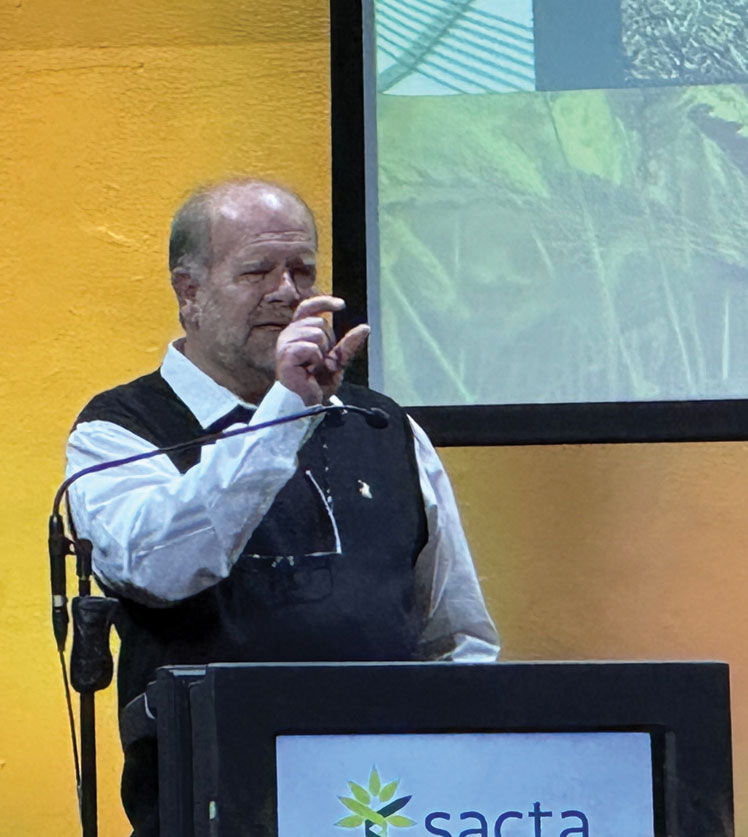
Photo: Magda du Toit
He mentioned that the SACTA board comprises ten members with inter alia two members each from Grain SA and the South African National Seed Organisation (SANSOR).
Bennet also explained how the collected levies are utilised. For every R100 of levies collected, the distribution is as follows:
- Commissions to collectors: R2,50
- Administration: R3,00
- Social economic development: R0,98
- Transformation: R3,32
- Skills development: R3,51
- Enterprise development: R11,70
- Distribution to seed and technology companies: R74,99
He stressed that all SACTA’s funds and payouts are audited before fund distribution.