

The South African winter cereal industry is entering a new era. After relying on voluntary levies through the South African Winter Cereal Industry Trust (SAWCIT), the industry is now transitioning to a statutory levy model under the newly formed South African Winter Cereal Industry Agency (SAWCIA). This move, effective from 1 October 2024, is set to secure the long-term sustainability and competitiveness of the wheat, barley, and oats value chains.
Why the change?
SAWCIT has played a vital role in funding critical services such as quality testing, market information, and research. However, as a voluntary system, participation has been inconsistent, placing these services at risk. With statutory levies now approved, the industry can look forward to stable and predictable funding, enabling broader reach and better planning.
What is the levy?
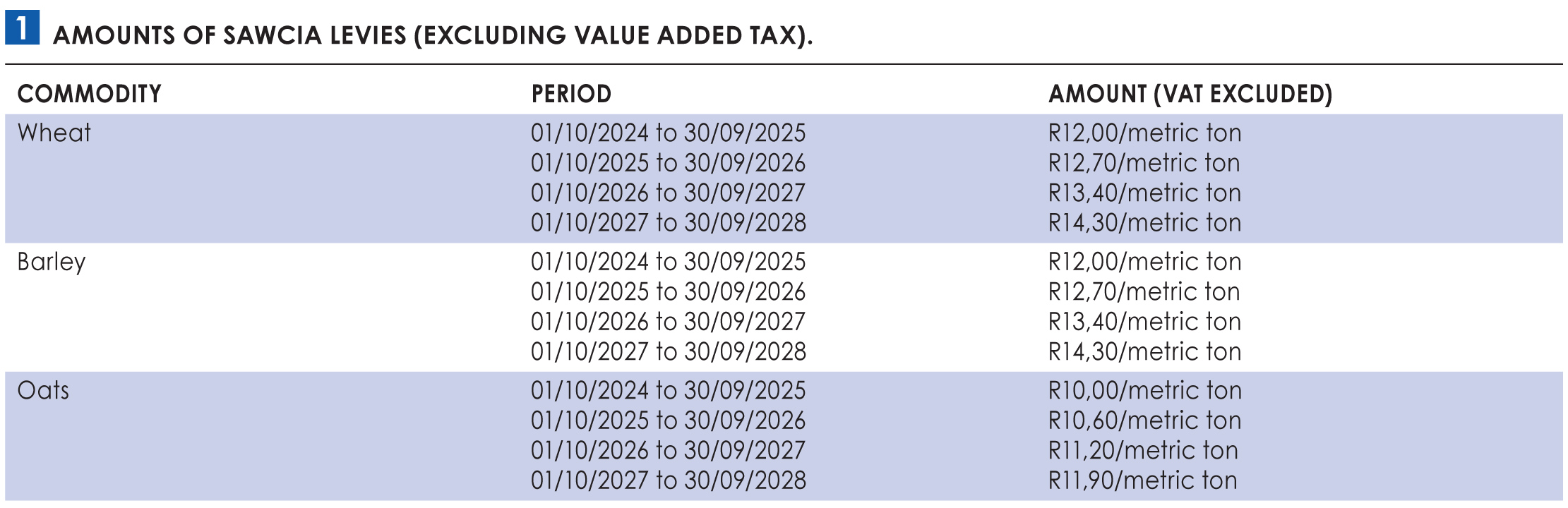
The statutory levy is calculated per metric ton based on a guideline price set by government (see Table 1).
The levy structure will replace SAWCIT’s voluntary rates of R14,50/ton for wheat and barley, and R6,00/ton for oats.
 What will the levy fund?
- SAWCIA has a clear, transparent budget plan for the first year:
- 40% for research – supporting cutting-edge scientific, technical, and economic studies to address industry challenges
- 28% for information services – managed by SAGIS, providing accurate and timely market data to all role players
- 20% for transformation – focused on supporting emerging farmers and improving access, skills, and equity across the sector
- 9,5% for administration – ensuring efficient governance
- 2,5% for commission to levy collectors
- Importantly, funds will be ring-fenced by commodity, so wheat levies support wheat-specific initiatives, and so on.
SAWCIA’s core objectives
SAWCIA is not just an administrator. It’s a strategic industry partner focused on the following:
- Supporting research and development in key areas like pest control, breeding, and crop resilience
- Maintaining critical infrastructure like SAGL (Southern African Grain Laboratories) and SAGIS (South African Grain Information Service)
- Driving market access and transformation
- Strengthening emerging farmer development
- Facilitating industry coordination via platforms like the Wheat Forum
SAGL and SAGIS: staying the course
Both SAGL and SAGIS will continue their indispensable roles under SAWCIA. SAGL ensures that South African winter cereals meet international quality standards which are vital for exports and consumer confidence. SAGIS provides market transparency, gathering and distributing of data that underpin everything from policy to price negotiations. Their continued funding secures the industry’s ability to compete locally and globally.
What happens to the research funding?
SAWCIA will now manage a larger and more stable pool of research funding. Applications for funding have surged, and this levy will help meet demand.
From 1 October 2025, SAWCIA will fund both new research initiatives and continuation projects that were previously approved under SAWCIT. This ensures continuity in critical areas while allowing space for innovation and new priorities to be addressed.
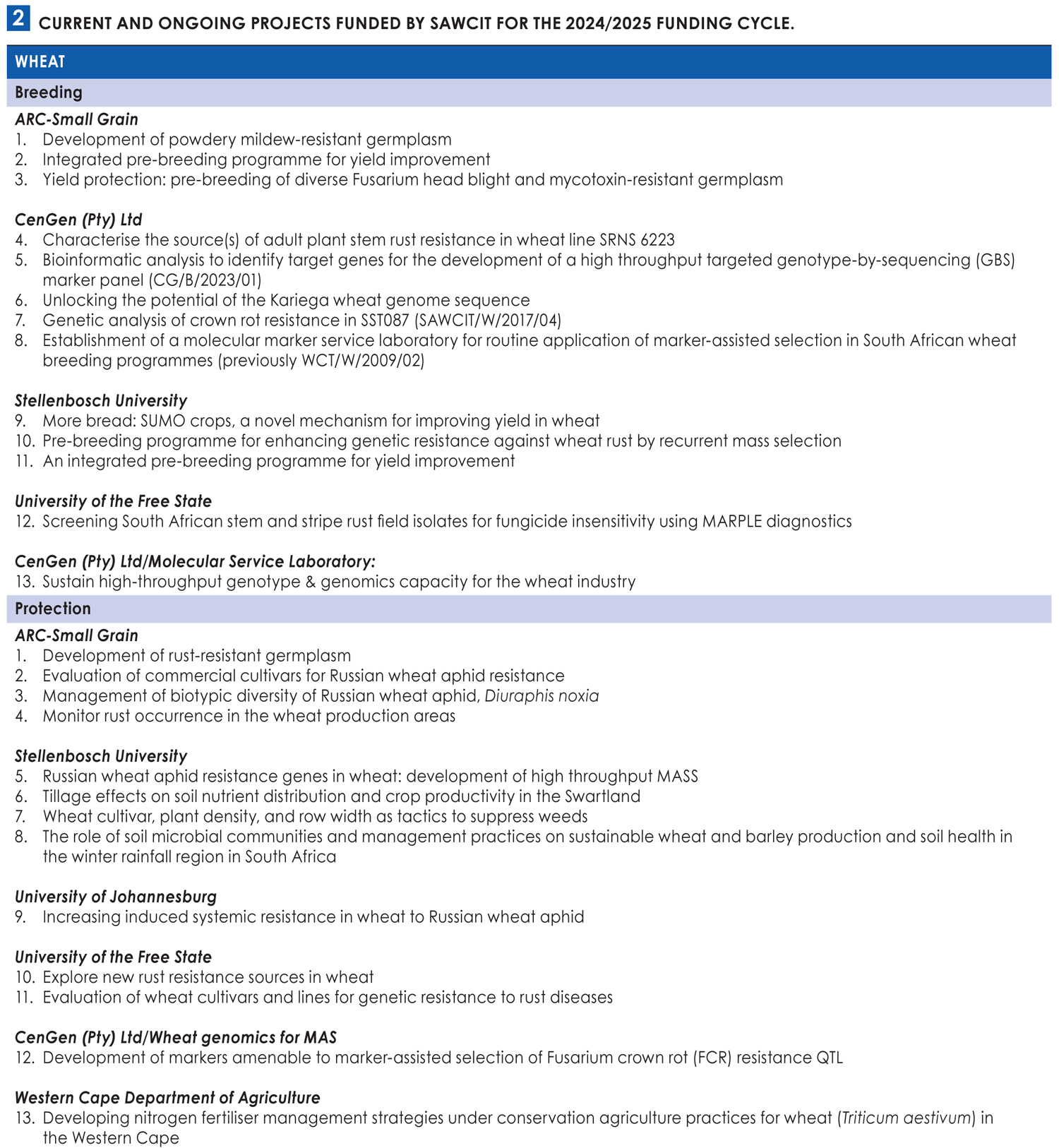
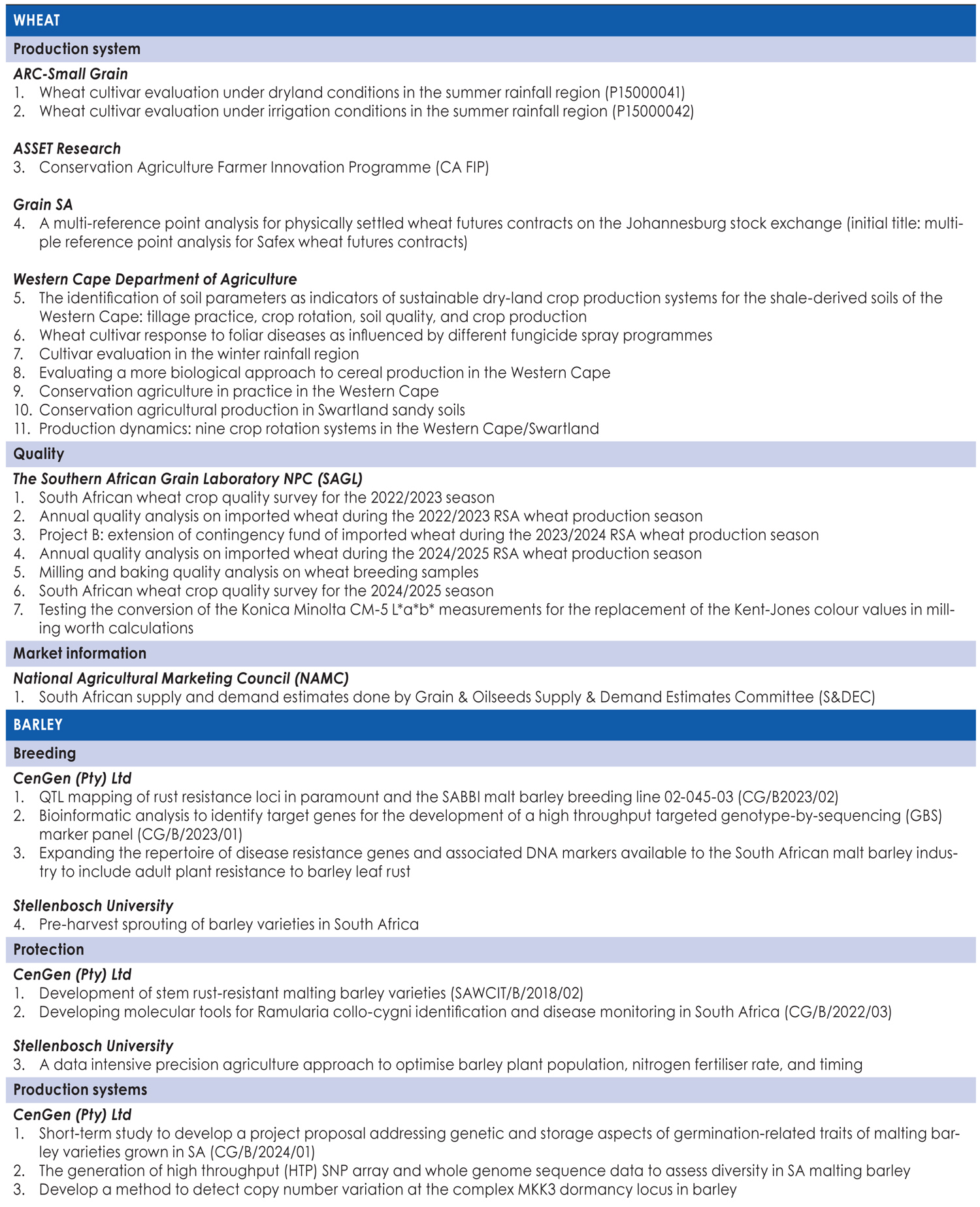
Table 2 shows the projects SAWCIT is currently funding, and which may continue under SAWCIA.
These projects are aligned with industry needs such as:
- Climate-resilient cultivar development
- Disease and pest resistance
- Improved grain quality
- Enhanced farming practices for producers
These projects aim to secure not just higher yields, but smarter, more inclusive farming systems.
The move from SAWCIT to SAWCIA represents more than an administrative shift. It’s a strategic investment in the future of winter cereals in South Africa. With statutory levies in place, the industry gains the stability needed to plan ahead, invest in research, and ensure consistent support across the value chain.
For more information on levy breakdowns or how to get involved in SAWCIA’s research initiatives, visit https://sawcia.co.za.