


Seed is where every season begins. Before fertiliser rates are adjusted, before machinery enters the lands, and long before yield monitors tell their story, the genetic potential of the crop has already been set. Producers know this instinctively. Yet seed improvement remains one of the least visible investments in agriculture – quietly shaping outcomes over decades rather than seasons.
The South African Cultivar and Technology Agency (SACTA) levy exists to support that long view. It is not a short-term intervention, and it does not promise quick wins. Its value lies in consistency: maintaining the systems, skills and infrastructure that allow seed improvement to continue year after year, regardless of market cycles or weather conditions.
Seed improvement: a long, disciplined process
‘Continuity in seed improvement is the quiet engine of agricultural progress.’
Plant breeding is not seasonal work. From the first cross to a commercially released variety typically takes ten to twelve years, often longer. During that time, thousands of potential lines are evaluated, most are discarded, and only a handful progress to advanced trials. Each step requires land, labour, technical skill, and time.
Crucially, this work must be continuous. When funding becomes erratic, breeding pipelines stall, trial sites are lost, and skilled breeders move elsewhere. Once that capacity disappears, rebuilding it is costly and slow – if it can be rebuilt at all.
For open-pollinated crops such as soybeans, wheat, barley, oats and lupins, the SACTA levy provides stability in that part of the system that cannot afford stop-start investment. It ensures that seed improvement does not depend solely on good seasons or shifting commercial priorities, but on a steady reinvestment by the industry itself.
Supporting crops where the market alone fails
‘Open-pollinated crops need system support because the market alone under-invests.’
Not all crops attract the same level of private-sector investment. In open-pollinated crops, many producers save seed from one season to the next. While this practice makes sense at farm level, it also means that the commercial return on seed development is limited. For seed companies, the incentive to invest heavily in long-term breeding programmes for these crops is low.
This is precisely where the SACTA levy plays a critical role. By providing a collective funding mechanism, the levy ensures continuity of breeding, testing, and maintenance of improved varieties especially where seed sales alone cannot sustain the work. Without this support, genetic progress in open-pollinated crops would slow or stop altogether, leaving producers with ageing varieties that are less competitive, less resilient, and more vulnerable to disease and climate stress. This is exactly where the soybean industry was a few years ago.
What the levy supports in practice
‘For many producers, levies feel distant from day-to-day operations.’
For producers, levies may feel like just another burden which increases operational costs. It is therefore worth being clear about what the SACTA levy actually supports:
- Plant breeding and pre-commercial research
- Multi-location trial networks across different production regions
- Confined field trials and regulatory processes, including biotechnology-related work
- Retention of critical technical skills such as breeders, technicians, and trial managers
- Maintaining South Africa’s credibility as a destination for seed research and development
The levy does not replace commercial investment by seed companies. Instead, it strengthens the foundation on which commercial breeding is built, reducing risk and improving relevance for South African conditions.
‘Supporting developing farmers in a commercially responsible way’
The SACTA levy also supports developing farmers through interest-free loan facilities. These are not grants or hand-outs. They are structured financial instruments designed to lower the cost of entry and enable participation where access to affordable finance is limited.
From a commercial standpoint, interest-free loans reduce early-stage pressure without undermining discipline. Loans are repaid, systems are maintained, and productive capacity is built. This strengthens the broader seed and production system rather than distorting it.
Returns that show in the fields
‘Grow for Gold shows genetics in action – wheat over 13 t/ha and soybeans approaching 8 t/ha.’
Unlike fertiliser or chemicals, the returns from seed improvement do not show up on an invoice. They appear slowly, season by season, in the form of better stability and incremental gains.
These returns include the following:
- Improved yield potential over time
- Better disease resistance, reducing yield losses and input reliance
- Greater tolerance to heat and moisture stress
- Varieties better suited to local planting windows and harvest systems
- New, advanced biotechnology products
Often the greatest benefit is not higher top-end yield, but reduced downside risk. Newer genetics tend to hold yield better in difficult seasons, which matters more in an increasingly variable climate.
Wheat: steady genetic gains under pressure
Wheat producers operate under tight margins and increasing climatic pressure. Diseases such as rusts remain a constant threat, while heat stress during grain fill has become more frequent in several regions.
Levy-supported breeding and testing have contributed to the following:
- Improved rust resistance packages
- Yield stability across diverse production areas
- Maintenance of high baking and milling quality, with increased yield potential
Local testing is particularly important. Varieties that perform well in overseas trials do not always handle South African disease pressure or climatic variability. A strong local trial system ensures that unsuitable material is identified early, saving producers costly mistakes.
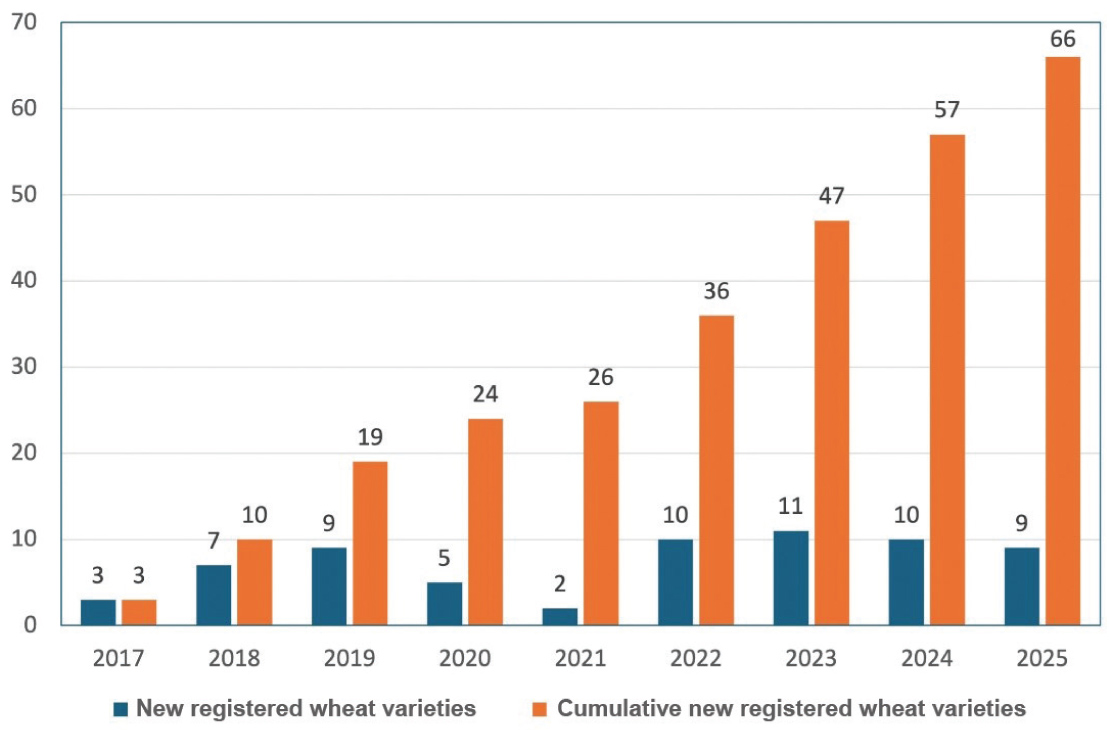
The 2025 Grow for Gold national yield competition demonstrates these benefits: wheat producers broke national yield records, with top performers exceeding 13,9 t/ha under irrigation and 11 t/ha in other zones, showing the tangible commercial impact of sustained investment in genetics. Since SACTA’s inception and the first distribution of funds to wheat seed companies in 2017, some 66 new wheat varieties have been registered in South Africa (Graph 1, 2 and 3).
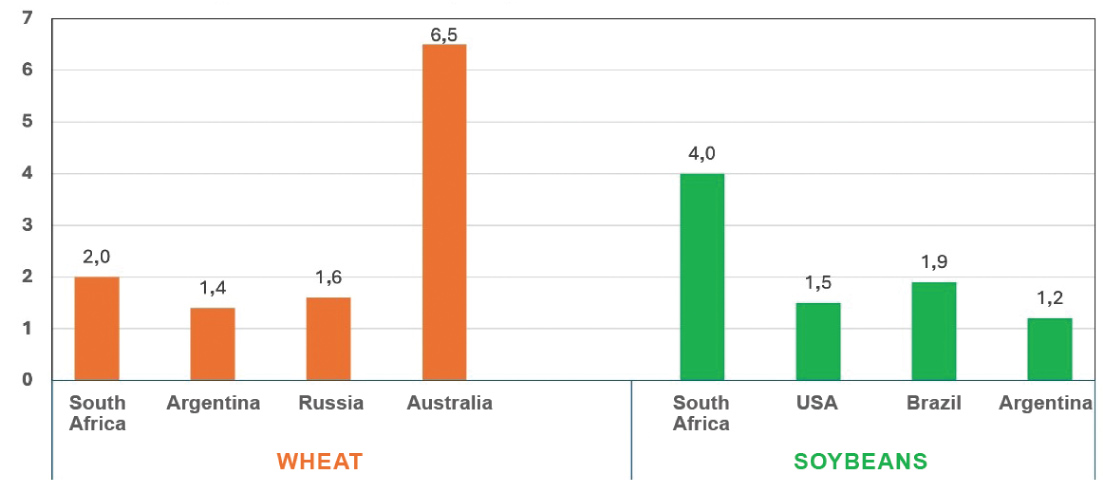
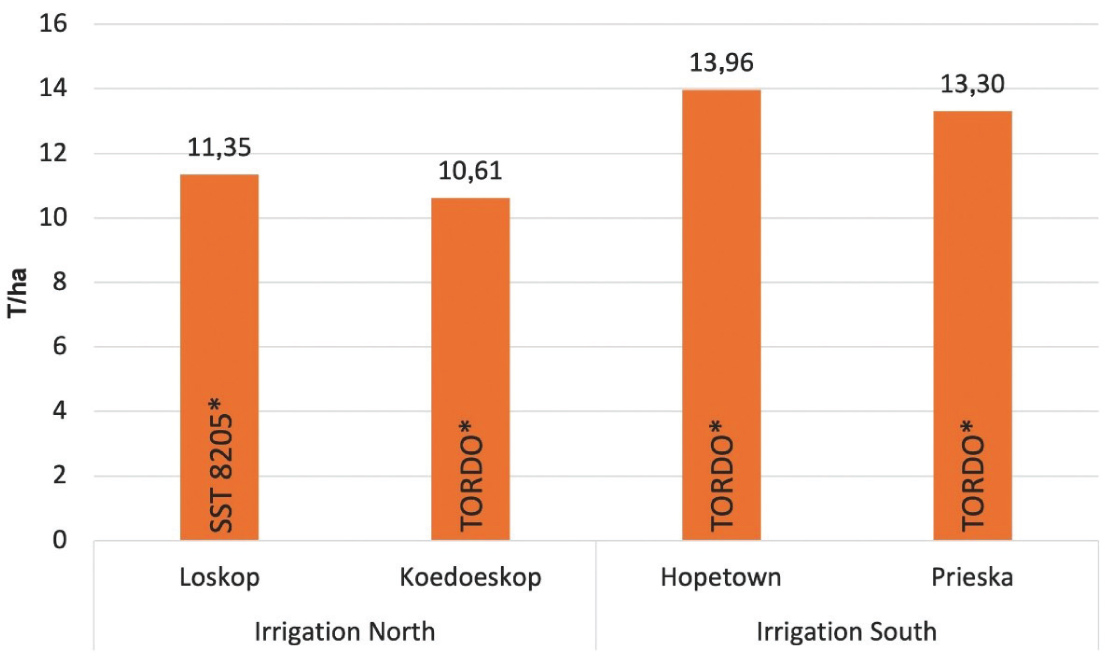
(Variety name in the bar, * indicates variety registered after the inception of SACTA)
Soybeans: reliability beyond yield
Soybean production in South Africa has expanded rapidly, bringing new challenges. Regional differences in day length, temperature, and disease and pest pressure mean that a one-size-fits-all approach does not work.
Levy-supported work ensures the following:
- Maturity group placement is properly evaluated.
- Varieties and technologies are tested across a range of production environments.
- Disease tolerance, insect resistance, and standability are assessed under local conditions.
For soybean producers, the benefit lies not only in yield, but in reliability – varieties that emerge evenly, mature predictably, and perform consistently across seasons.
In the 2025 Grow for Gold results, soybean records were broken in multiple categories, with top yields of 7 t/ha on dryland and nearly 8 t/ha under irrigation, highlighting how well-adapted genetics and new technologies supported by strong local testing translate into real, commercial gains. Since SACTA’s inception, some 130 new soybean varieties have been registered in South Africa (Graphs 1 and 4).
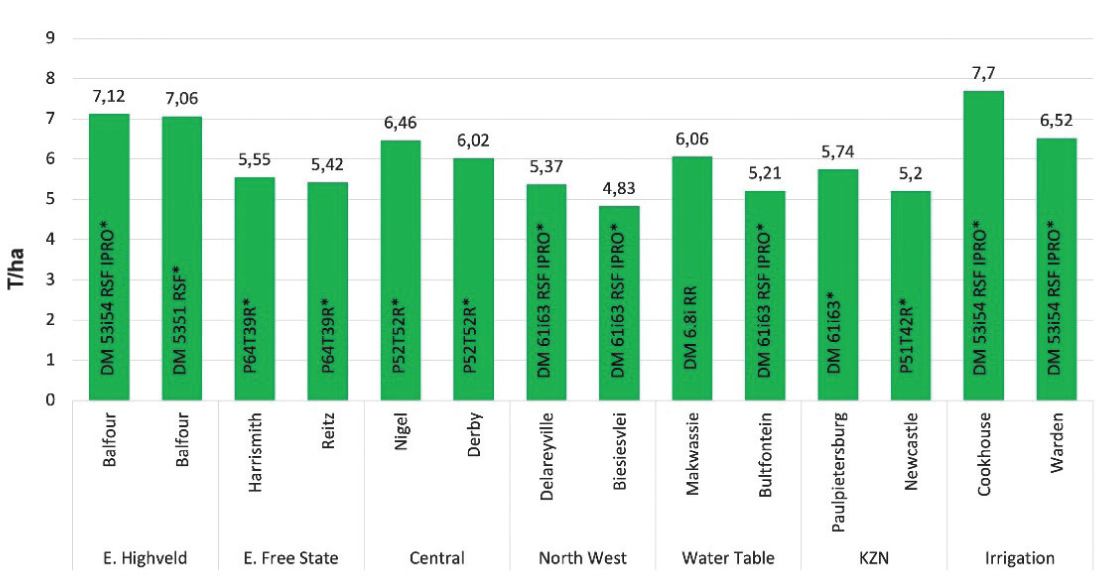
(Variety name in the bar, * indicates variety registered after inception of SACTA)
Why local testing cannot be compromised
Global seed companies invest heavily in breeding, and South African producers benefit from access to world-class genetics. However, imported material is only as good as its local evaluation.
South Africa’s production environments are demanding and diverse. Without strong local trial capacity, producers would be forced to rely on limited data or overseas performance claims that may not translate under local conditions.
The SACTA levy maintains trial networks that ensure the following:
- New varieties are properly tested before wide release.
- Performance claims are grounded in local data.
- Poorly adapted genetics are filtered out early.
This protects producers and maintains confidence in the seed system.
Seed sovereignty: retaining local capability
One of the less visible successes of the SACTA levy is its contribution to seed sovereignty.
Countries that lose breeding and testing capabilities become dependent on foreign genetics, pricing structures, and priorities. In times of global consolidation, smaller markets are often deprioritised.
By supporting local breeding programmes and technical infrastructure, the levy ensures South African producers retain access to genetics and technologies developed and tested for their on-farm environments. Once lost, this capacity is extremely difficult to rebuild.
Regulatory credibility underpins access to innovation
Modern seed systems operate in a complex, global regulatory environment. Confined field trials, compliance processes, and approvals require technical expertise and consistent funding.
The SACTA levy helps South Africa maintain its credibility as a jurisdiction for seed research and trials. Countries that lose regulatory credibility quickly lose access to new technologies – often before producers notice the impact.
Governance and accountability
Producers expect discipline and transparency. The SACTA levy operates under ringfenced funds, independent audits, and statutory reporting. Funds are purpose-bound and cannot be diverted.
The system is not perfect, but it is structured, monitored, and continually improved. It further incentivises continuous improvement and competition as companies are rewarded according to their market share. This accountability maintains producer confidence and long-term support.
Why the levy matters more now
Agriculture faces tighter margins and higher risk. Climate variability, rising input costs, and global consolidation in the seed industry all increase the value of reliable, locally relevant genetics.
In this environment, seed improvement is one of the few tools that continues to deliver long-term returns. The SACTA levy ensures that this process remains steady, deliberate, and commercially viable.
Quiet systems that keep agriculture moving
‘The SACTA levy keeps breeding pipelines moving, even when short-term returns are tight.’
Seed systems only function when every part remains investable over time. Breeding, testing, regulation, and skills retention are not activities that can be switched on and off without consequence. Once a programme is interrupted, momentum is lost, costs rise, and confidence drains from the system.
The SACTA levy plays a stabilising role by spreading risk across the industry and maintaining confidence that long-term programmes will not be abandoned when short-term commercial returns are under pressure. This matters particularly in crops and production regions where margins are tight, and private investment alone cannot carry the full load.
Continuity is the real dividend. It ensures ongoing access to improved genetics and technologies. It allows breeders to plan beyond the next season, trial networks to remain intact, and producers to benefit from steady, incremental gains rather than occasional breakthroughs followed by long gaps.
Seed improvement is slow, expensive and largely invisible – until it stops. When breeding pipelines collapse, the consequences only become apparent later when producers are left with fewer choices, older varieties, and rising production risk. Rebuilding that capacity is far more costly than maintaining it.
The true success of the SACTA levy does not lie in any single variety or headline yield figure. It lies in continuity and progress that is compounded over time: keeping breeding pipelines moving; retaining technical skills in the system; and continuing to keep South African producers supplied with seed that performs under local conditions.
Producers understand the value of maintaining systems that work, even when they operate quietly in the background. The SACTA levy is one of those mechanisms: practical, disciplined, and commercially necessary – and essential to the long-term resilience and competitiveness of South African agriculture.