


Henja Glas,
data scientist, BFAP

Marion Delport, manager: Data Science and Systems Integration, BFAP; research fellow: Agricultural Economics, Stellenbosch University

Andries le Roux,
SU-BFAP chair: Precision Agriculture, Stellenbosch University
Roger Blewett,
head: Growth, OneSoil
The grain industry in South Africa is faced with several complex issues that threaten both profitability and production. Traditional farming methods are becoming less profitable due to rising input prices, erratic weather patterns, and growing demand to embrace sustainable practices. In an environment where commodity prices are volatile and a climate that is becoming more and more unpredictable, producers are under increasing pressure to maximise resource utilisation while preserving yields. These challenges highlight the pressing need for creative solutions that can support them in maintaining their resilience and competitiveness.
One promising approach is precision agriculture, which leverages data-driven technologies to tailor farming practices to specific field conditions. Precision agriculture allows producers to modify inputs according to soil variability, crop performance, and productivity zones instead of applying equal rates of seed and fertiliser across whole fields. In addition to increasing productivity, this focused approach aims to save expenses, minimise waste, and promote environmental sustainability. However, strong proof of these technologies’ economic advantages is necessary for their adoption, especially given the varied and unpredictable South African environment.
The Scaling On-Farm Precision Experimentation (OFPE) project was developed by Stellenbosch University (SU), the Bureau for Food and Agricultural Policy (BFAP), OneSoil, and Grain SA to meet this demand. By directly evaluating variable input techniques on commercial fields, OFPE seeks to produce practical insights for producers. In order to create and carry out experiments that mirror actual practices, the project integrates producer engagement with state-of-the-art digital technologies like the OneSoil platform.
The 2024/2025 trials focused on maize production in the summer grain area of South Africa, involving eleven experiments conducted with ten producers. Historical Normalised Difference Vegetation Index (NDVI) data from satellite images were used to identify productivity zones – areas of the field that typically perform better or worse than others. Based on these productivity zones, seeding and fertiliser rates were adjusted from the producers’ usual practices. The initiative aimed to address key questions by comparing the outcomes of variable rate application (VRA) with traditional uniform practices: Can precision farming methods increase yields? Do they enhance revenue? Additionally, how should producers adjust their fertiliser and seeding rates to optimise profits?
This report summarises the findings from these trials, which provide information on how precision agriculture could change crop management in South Africa. The research highlights the significance of zone-specific strategies and producer-led innovation in creating the future of sustainable grain production, emphasising profit optimisation as the primary criterion for assessing success beyond yield gains.
Methodology
The OneSoil platform was used to develop eleven maize experiments for the 2024/2025 season. The platform analyses eight years of satellite data to create productivity zones that predict the yield distribution.
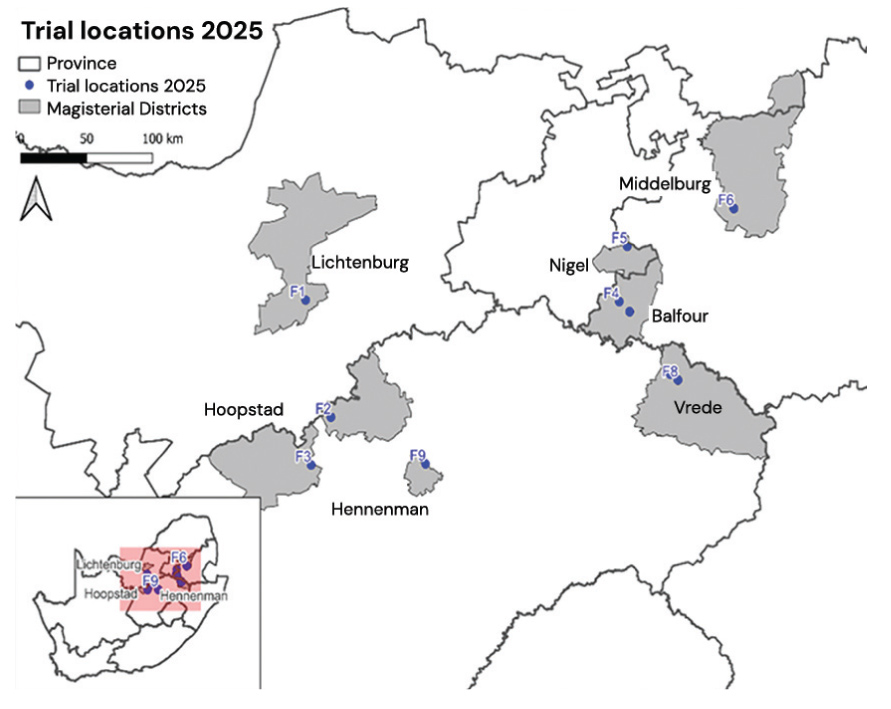
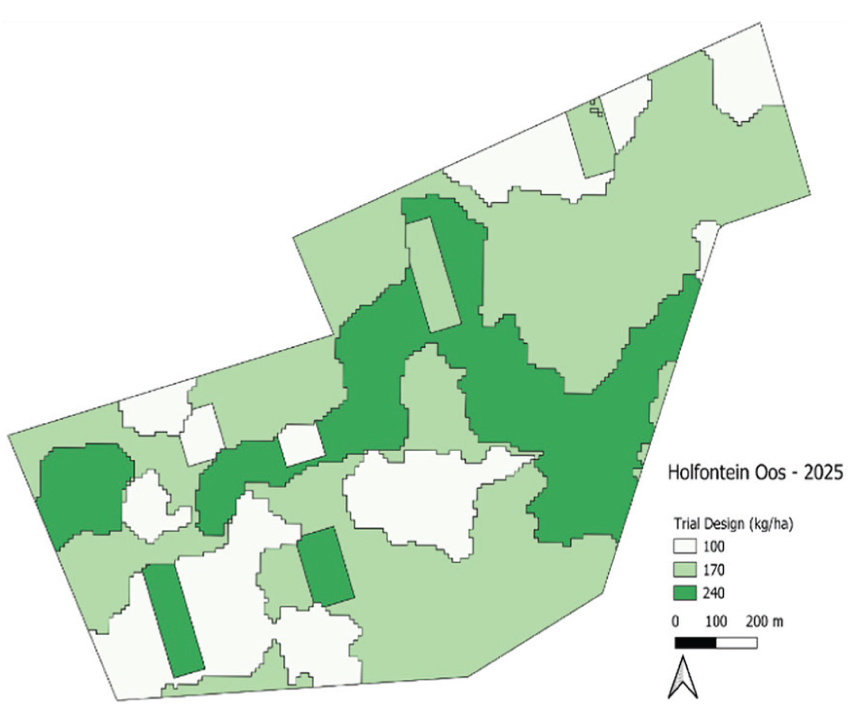
To facilitate focused experimentation, these maps separate fields into high, medium, and low productivity zones. Ten of the eleven trials were successfully planted, and nine were analysed for this report. Figure 1 is a graphical representation of the towns included in the trials. The towns included Ottosdal, Bothaville, Hoopstad, Balfour, Delmas, Middelburg, Vrede, Kroonstad, and Greylingstad, which were dispersed throughout the summer grain-producing region of South Africa. Figure 2 represents an example of a trial design of one of the fields in the trial.
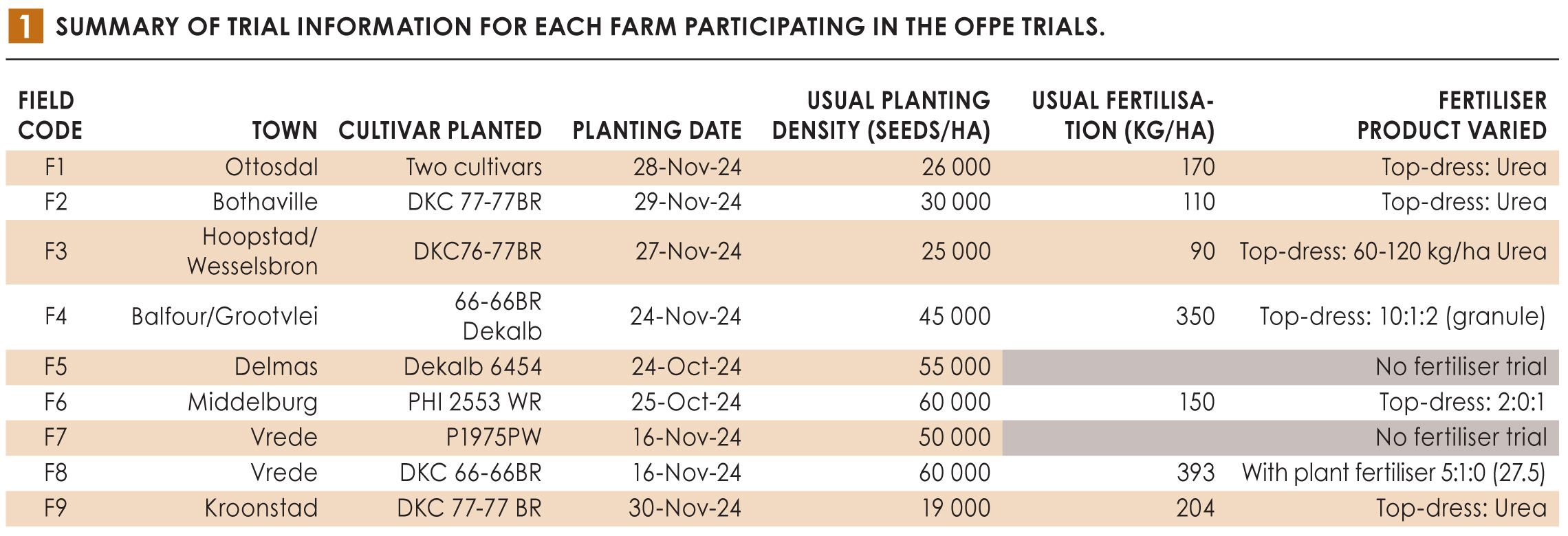
Cultivars, planting densities, and fertiliser varied since each experiment was tailored to the producer’s current methods and available inputs. As seen in Table 1, fertiliser treatments varied from 50 kg/ha in Greylingstad to 393 kg/ha in Vrede, and planting densities ranged from 19 000 seeds/ha in Kroonstad to 60 000 seeds/ha in Middelburg. This variation highlights the significance of site-specific recommendations and reflects the true complexity of South African grain cultivation.
 The study compared yield and profitability between VRA and non-VRA treatments, calculating profitability by subtracting variable input costs from returns. The methodology prioritised profitability over yield, acknowledging that achieving higher yields does not always result in greater profits due to rising input costs. The project offers practical recommendations for producers based on profit differences across zones and scenarios, aligning with economic realities.
Results and analysis
The 2024/2025 OFPE trials offer a detailed picture of how yield and profitability in South Africa’s maize production systems are affected by VRA in conjunction with zone-specific planting and fertiliser methods. Although it is frequently anticipated that precision agriculture will result in notable production increases, the results of these studies highlight a more nuanced reality: decision making should be based on economics rather than yield alone.
Table 2 shows that the average yield achieved under VRA was generally higher than the estimated average yield without VRA, with differences ranging from 0,06 to 0,16 t/ha, as seen in fields F2 and F3. This was not a general tendency, though. Yields under the producer’s usual uniform practice (without VRA) exceed those obtained with VRA in three instances (F4, F6, and F10), with variations ranging from 0,01 t/ha to a significant 1,52 t/ha at Greylingstad (F10). These differences demonstrate the impact of site-specific variables such as management techniques, weather, and soil characteristics.
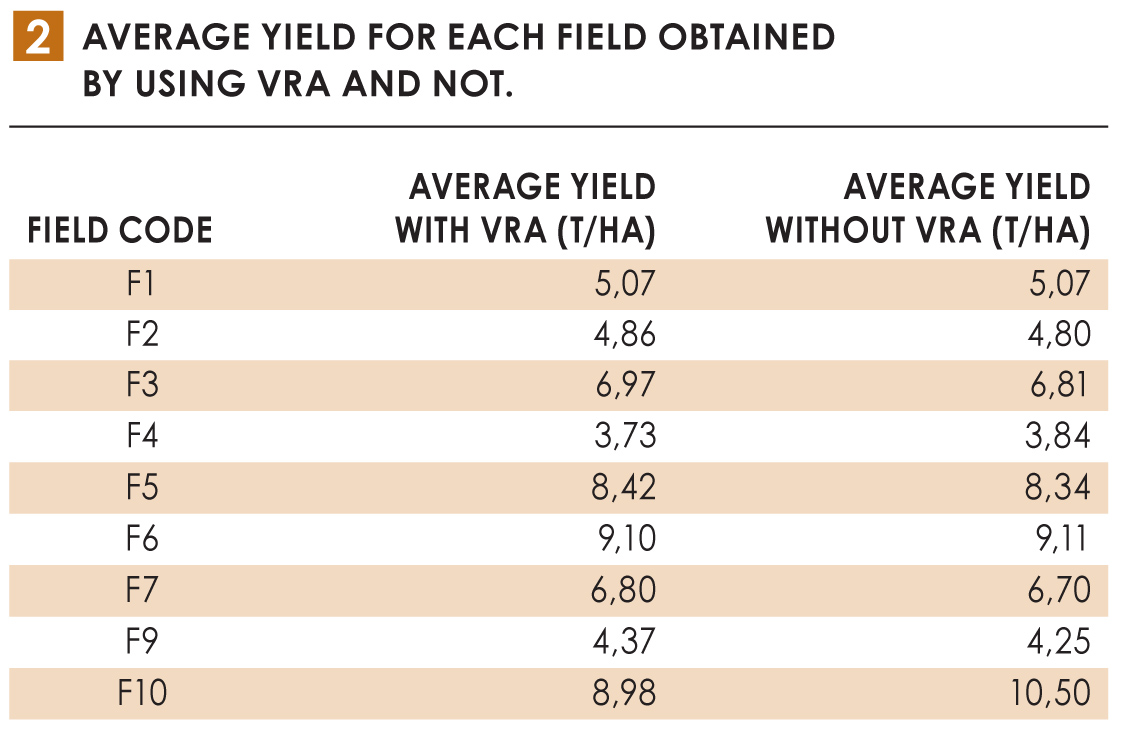 The yield increases linked to VRA were often small and uneven, indicating that yield is not a reliable indicator of precision strategy effectiveness. Instead, as VRA can lower input costs even in cases when yield benefits are negligible, the economic effects of input modifications must be considered. For each of the three productivity zones – low, medium, and high – the trials determined the economic optimum seeding rate (EOSR) and economic optimum fertiliser rate (EOFR) to reflect the economic dimension. These measures give producers a more useful foundation for decision making by identifying the input levels that maximise profit rather than yield.
The EOSR analysis (Table 3) reveals the significant variability across the zones and trials. Only three experiments showed no change in the suggested planting rates in low productivity zones, which were typically between 9% and 36% higher than producers’ typical rates. Hoopstad/Wesselsbron (F3), for example, demonstrated the biggest gain and suggested a 36% higher seeding rate to maximise profitability. Trials in Delmas (F5) and Vrede (F7), on the other hand, revealed no modifications for low zones. Recommendations in medium production zones varied: two suggested decreases of 8 to 9%, three suggested increases of 17 to 36%, and two suggested no change. The intricate relationship between seed prices and yield responses under intermediate conditions is illustrated by this variability. In the high productivity zones, three trials suggested reductions in seeding rate of 9 to 20%, whereas five experiments suggested increases of 9 to 29%.
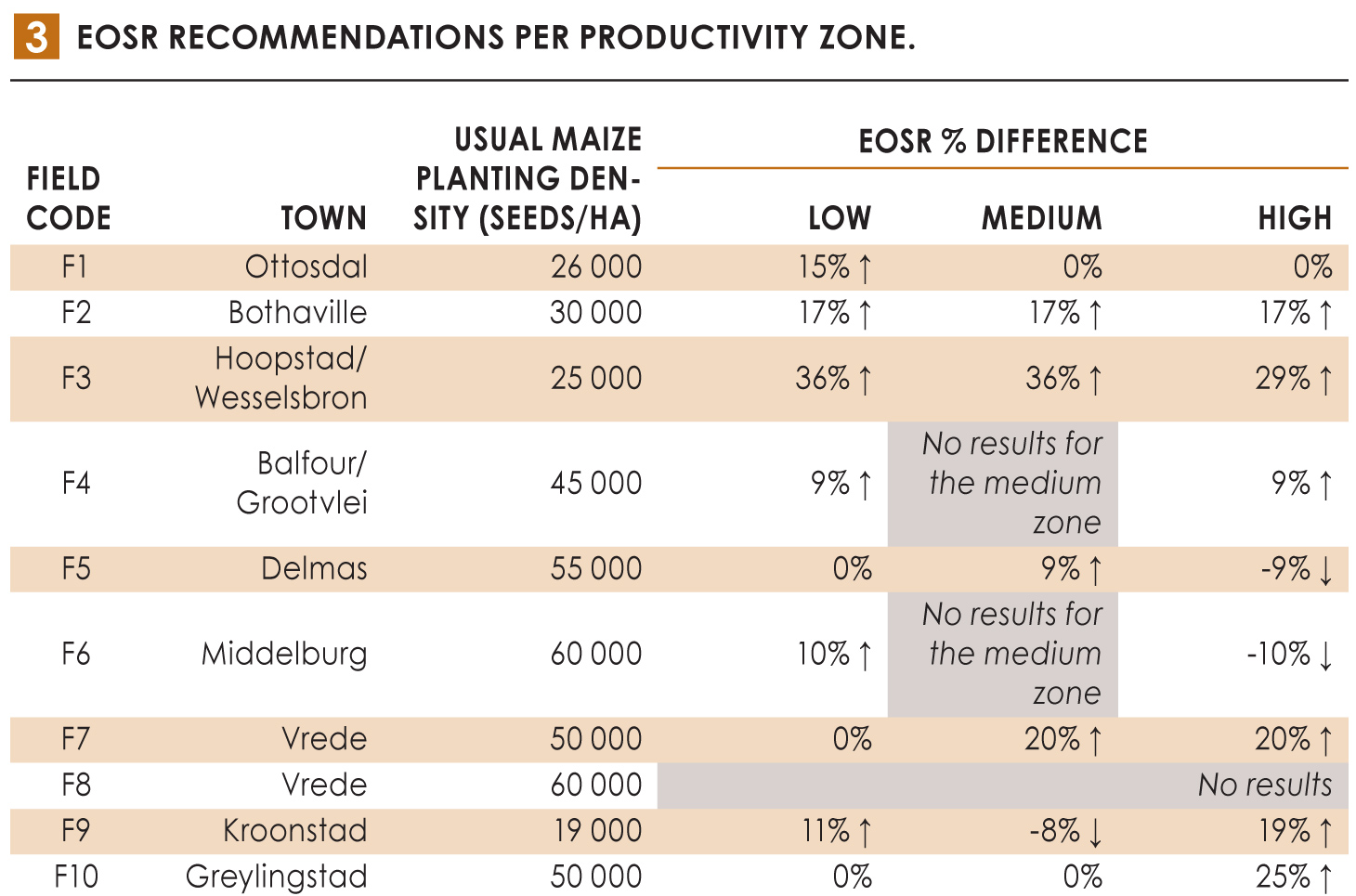 These results highlight the fact that improved productivity does not necessarily translate into higher seeding rates; in certain situations, lowering plant density might increase profitability by cutting input costs without compromising yield. Adopting EOSR has significant financial benefits in several areas. Even when yield increases are small, precise techniques can increase economic returns, as evidenced by estimated benefits of up to R4 740/ha in low zones and R9 220/ha in high zones.
The distribution of yield and profit under EOSR for each zone is shown in Figures 3
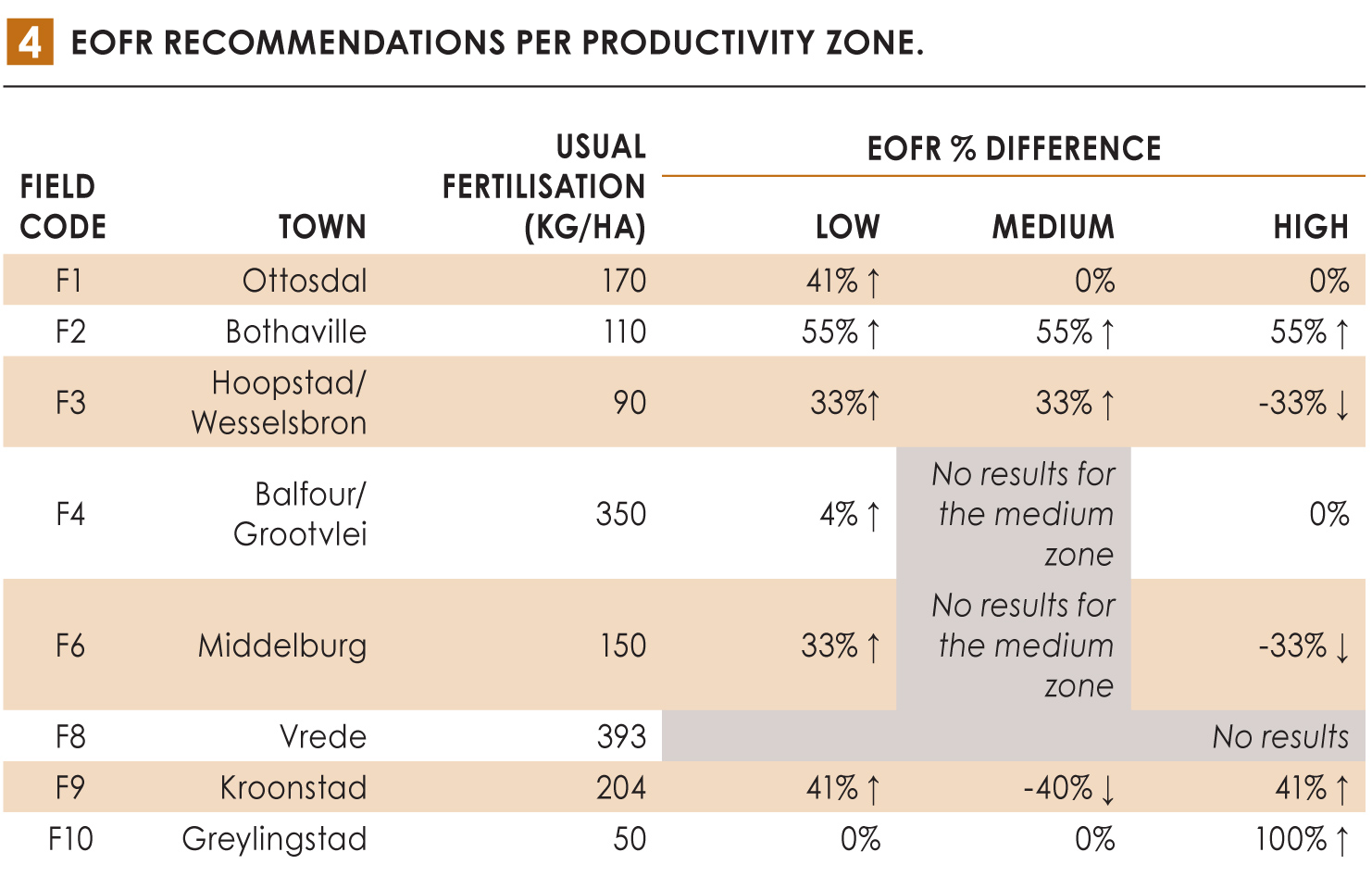
and 4. Table 4 shows similar patterns that emerged in fertiliser recommendations. The majority of trials recommended increasing fertiliser application by 14 to 55% in the low productivity zones; the biggest modifications were seen in Ottosdal (F1) and Bothaville (F2). Results were inconsistent in medium zones: two studies reported increases of 33 and 50%, two suggested no change, and one suggested a reduction of 40%. Due to the difficulty of striking a balance between fertiliser prices and yield responses, suggestions in high zones varied from large increases (41 to 100%) to decreases of 33%.
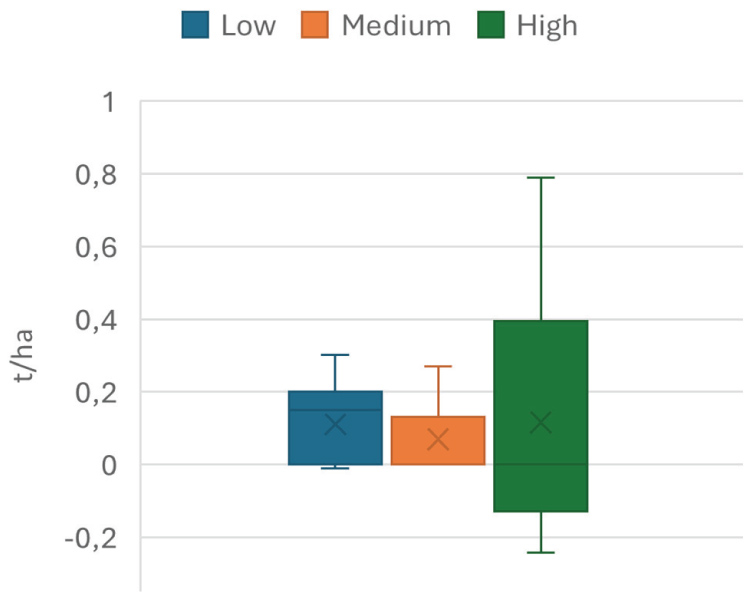
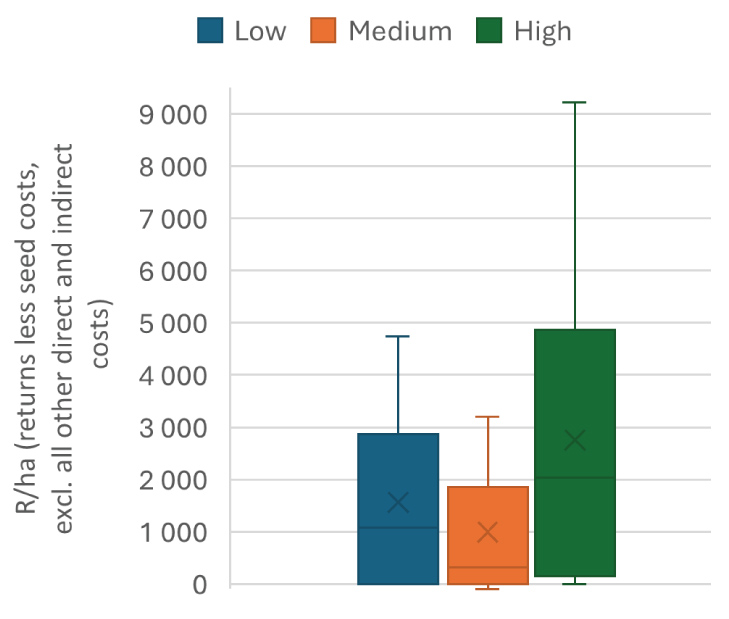
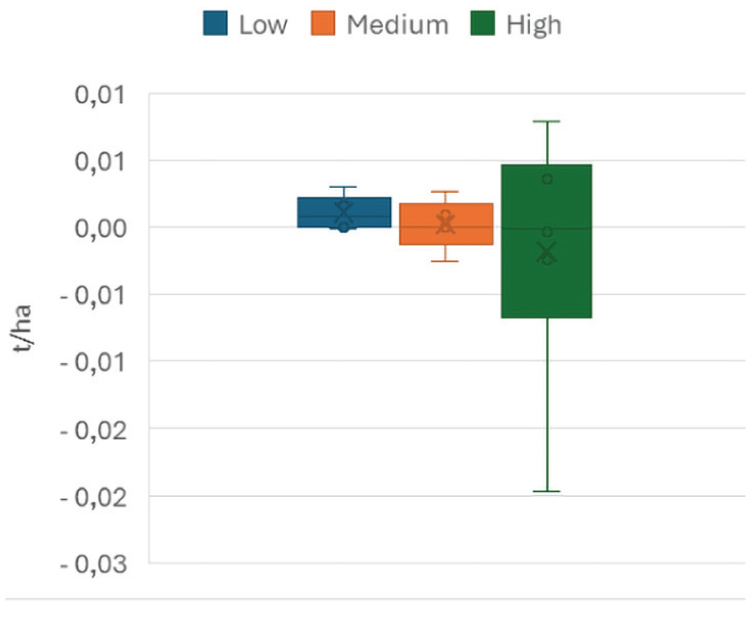
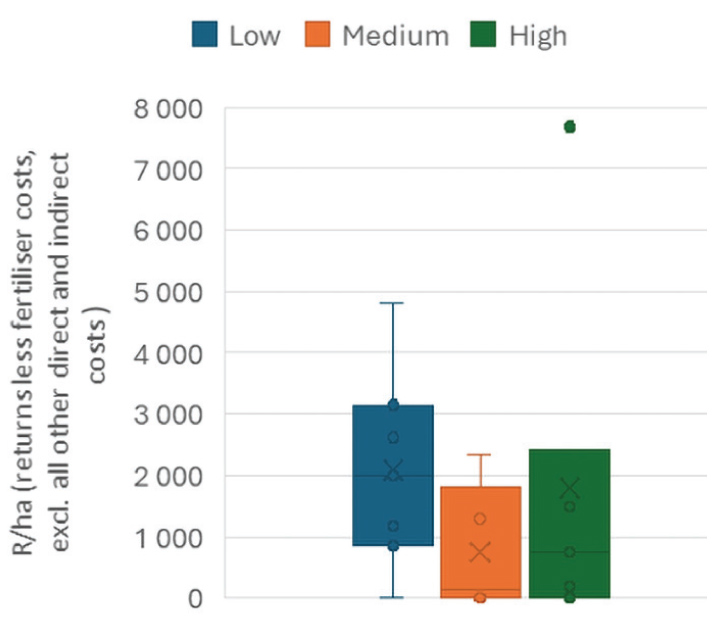
 Apart from one outlier of R7 690/ha, profitability analysis showed that fertiliser changes might result in benefits of up to R4 800/ha in low zones and R2 430/ha in high zones. The distribution of the profit per zone is shown in Figure 6. Nevertheless, yield responses were often low, frequently less than 0,3 t/ha (see Figure 5), supporting the idea that fertiliser choices should be made based on profit optimisation rather than yield maximisation.
Discussion
The 2024/2025 OFPE trials signify a significant change in the metrics for assessing crop management, emphasising profitability over yield as the principal gauge of agricultural success. The trials reveal that while yield increases with VRA are often modest and inconsistent, profits derived from adjustments in EOSR and EOFR can be significantly higher. This shift is crucial in an agricultural landscape marked by rising input costs and fluctuating commodity prices, where maximising yield is no longer a sustainable approach. Precision agriculture should focus on smarter input decisions, often yielding profit increases of R9 220/ha in high productivity zones despite limited yield growth. The trials also highlight the importance of zone-specific strategies in managing resources efficiently, given the varying conditions within fields. Uniform input strategies tend to overlook this variability, impeding profit optimisation. Tailored adjustments to seeding and fertiliser in accordance with specific productivity zones yield greater economic returns, demonstrating the necessity of data-driven management practices in modern agriculture. However, significant challenges persist, including variations in trial results due to external factors like weather and soil characteristics, which complicate the VRA benefits and result interpretations. The inconsistencies in input types and recordkeeping further hinder comparability.
Additionally, the adoption of digital tools for mapping and productivity zone design requires substantial training and support for producers, particularly smallholder farmers, who may be hesitant to embrace complex EOSR and EOFR recommendations without adequate guidance. Looking forward, the implications for South Africa’s grain industry suggest that well-implemented precision agriculture can boost profitability and resource efficiency, fostering economic resilience and environmental sustainability.
Success hinges on ongoing investment in producer education, comprehensive data collection, and flexible management strategies that are responsive to local conditions. Future research should also address the long-term consequences of VRA on soil health and productivity sustainability, ensuring that immediate profits do not compromise future agricultural viability.
Conclusions and recommendations
Precision agriculture may have a significant influence on South Africa’s grain industry if it prioritises profitability over output, as the 2024/2025 OFPE experiments show. EOSR and EOFR strategies demonstrated profit enhancements of up to R9 220/ha in high productivity areas, despite VRA yield results being inconsistent. This suggests a shift in focus from yield maximisation to profitability. Furthermore, zone-specific modifications are necessary because uniform input techniques ignore the financial advantages of customised fertiliser and planting rates across different productivity zones. Due to inconsistent results, producer involvement in local trials is essential to ensuring suggestions are pertinent and useful.
The OneSoil platform and similar digital tools can provide valuable insights for producers, but it is essential that they receive proper training and support to effectively use this technology. Key strategies for improvement include adopting profit-driven decision making, implementing zone-specific management plans, funding assistance and training for producers, enhancing data consistency and research practices, and using digital technologies for real-time adaptive management. By embracing these approaches, the grain industry in South Africa can enhance its sustainability and resilience, transforming precision agriculture from a scientific breakthrough into practical solutions for the challenges faced in modern farming.
Acknowledgements
This project would not have been possible without the generous support and collaboration of key industry partners. Grain SA provided invaluable guidance and producer engagement throughout the trials, ensuring that the research remained practical and relevant to South African producers. Their commitment to advancing sustainable and profitable farming practices has been instrumental in scaling On-Farm Precision Experimentation (OFPE) across the grain industry.
We would like to express our heartfelt gratitude to John Deere for sponsoring the SU-BFAP Chair in Precision Agriculture. Their support is crucial in making this collaborative project possible. This investment in innovation demonstrates a shared vision for a resilient and competitive agricultural future in South Africa.
Together, these partnerships have laid the foundation for meaningful progress in precision farming, bridging the gap between research and real-world application.