


Department Plant
Sciences, Plant Pathol-ogy, University of the
Free State

Dumolwenkosi Maposa,
Department Plant
Sciences, Plant Pathol-ogy, University of the
Free State

Dr Lisa Rothmann,
Department Plant
Sciences, Plant Pathol-ogy, University of the
Free State
Over the past two years, our team has conducted disease surveys at the national cultivar trials (NCTs) for sunflowers and soybeans led by the ARC-Grain Crops. By including surveys alongside these existing trials, we’ve been able to gather valuable insight into the ‘health status’ of crops across diverse production regions. These surveys confirm which diseases remain common, highlight the prevalence of existing diseases, and increase our vigilance for emerging pathogens.
Our team surveyed 41 sites across six provinces over the past season. Diseases were identified by their characteristic field symptoms, with diagnoses following the Compendium of Soybean Diseases and Pests and the Compendium of Sunflower Diseases and Pests to ensure accuracy and consistency. To capture a representative picture, surveys followed a Z-shaped walking pattern through each field. Along this route, 50 plants were randomly examined for visible symptoms, and the proportion of affected plants was recorded as the incidence. Representative samples were collected for laboratory confirmation using morphological and microscopic examination, with molecular verification underway.
In some fields, we also noted symptoms that did not match the characteristic signs of known diseases. These could represent early stages of infection, mixed or secondary pathogens, or abiotic stresses such as heat, chemical injury, or nutrient imbalance. Such observations (recorded as ‘unknown disease’) remind us that not all crop symptoms have a single clear cause and that continued monitoring and laboratory work are essential for accurate diagnosis.
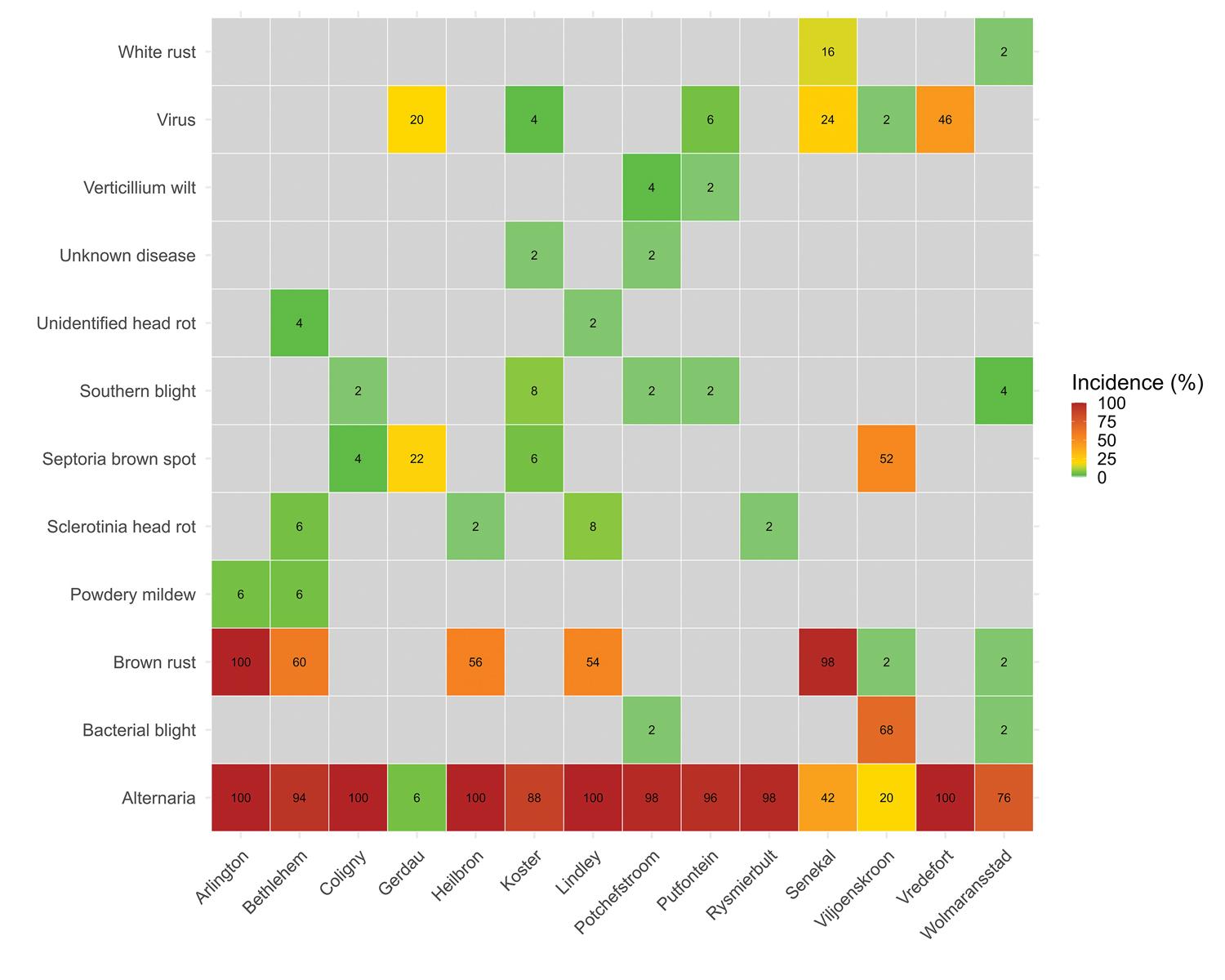
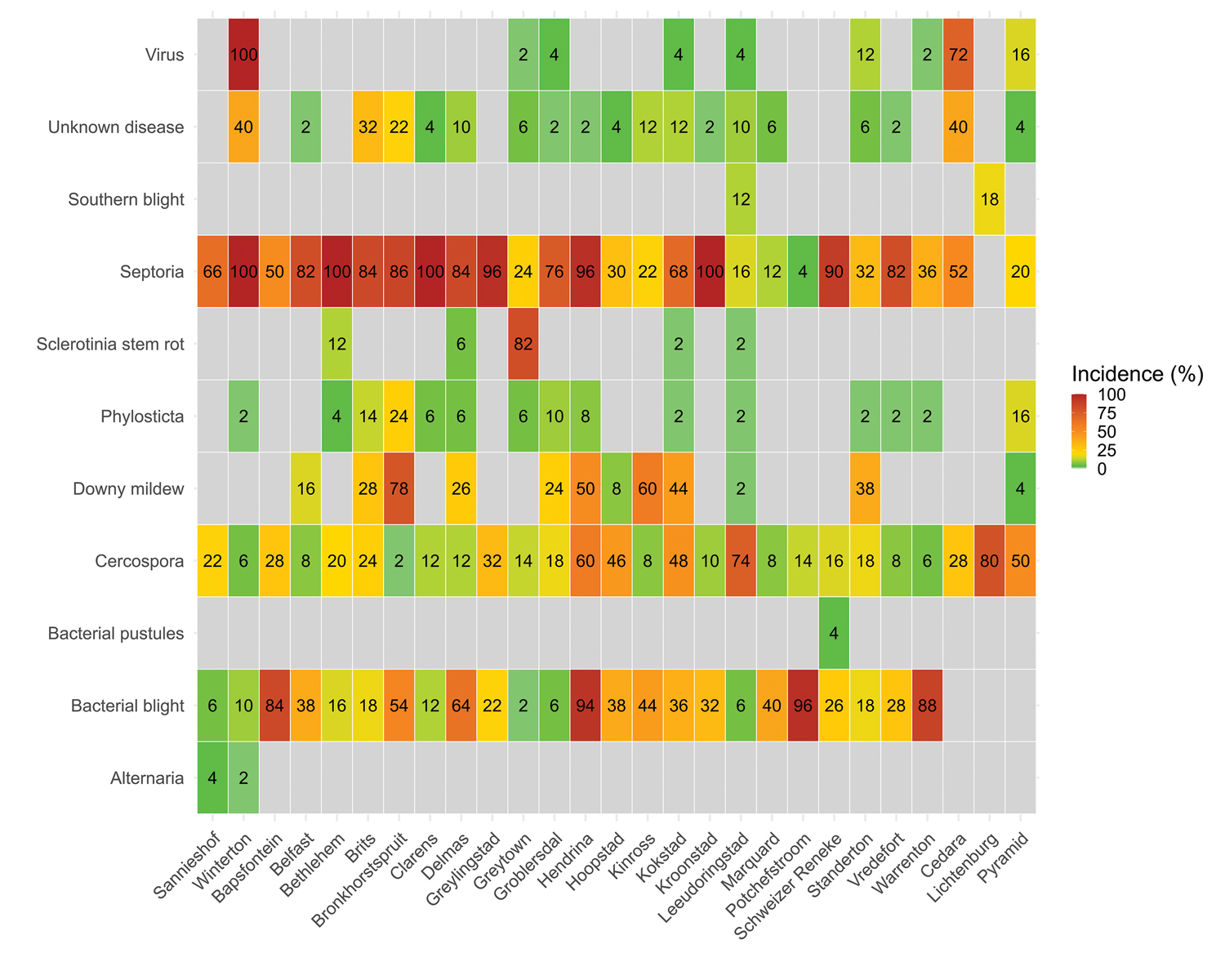
We assessed both the occurrence and extent of infections: Incidence refers to the percentage of symptomatic plants in a field, and frequency indicates how many sites each disease appeared at. To visualise how infections were distributed, data were compiled into a heat map showing where diseases were more or less common and revealing which issues were widespread versus localised. Although a few fields showed high infection levels, most cases were not yield limiting.
Compared to last year, sunflower diseases showed a shift in frequency: Alternaria leaf spot replaced Verticillium wilt as the most commonly observed disease. It was detected at all locations and in just over a quarter of the plants evaluated (26%). The pathogen persists on old plant debris and infected seeds, spreading via air and rain. In warm, humid conditions, it flares up as crops near maturity, showing as dark concentric leaf lesions and sometimes infecting stems and heads. When infection occurs in the head and seed, mycotoxins produced by Alternaria can affect grain quality. These compounds are secondary metabolites produced by certain fungi and, under heavy contamination, can be toxic to humans and animals when consumed.
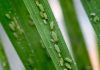
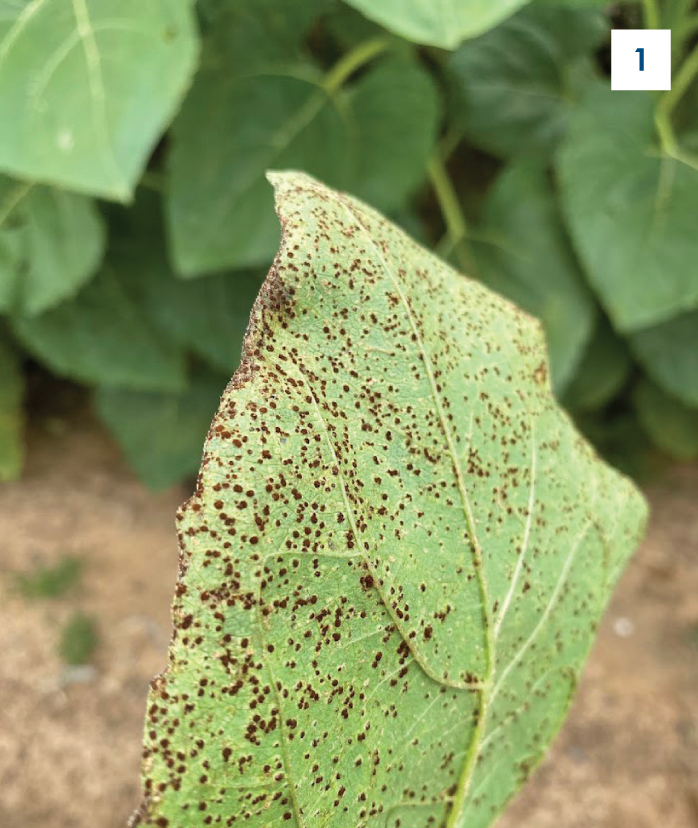
Brown rust followed in frequency (13,2%), with incidence varying widely (2 to 100%) across sites. Puccinia helianthi is a polycyclic pathogen capable of producing multiple generations of spores within a single season from the initial infection. This results in an exponential spread under favourable conditions. The disease thrives in warm and moist environments, particularly where there is high rainfall or persistent dew (Ramusi & Flett, 2015). Characteristic brown, uredinial pustules typically appear on leaves, petioles, and heads (Photo 1). A rapid field identification method involves gently pressing a finger against a brown lesion; if a brown powdery residue is left behind, it is likely rust. Brown rust was seen in about half the surveyed sites, a sharp contrast to last season, when none was recorded.
Other diseases, including Septoria brown spot (7,5%), Sclerotinia head rot (7,5%), southern blight (9,4%), bacterial blight (5,7%), and virus-like symptoms (11,3%), appeared less frequently. Sclerotinia head rot occurred at lower levels than expected, most likely because most NCT sites were planted early. Early planting often allows crops to mature before the main infection window, effectively resulting in ‘disease escape’. In contrast, most reports of Sclerotinia during the past season made by producers came from later plantings, which coincided with the period of peak ascospore release and favourable moisture conditions for infection.
Notably, southern blight, a stem disease caused by Agroathelia rolfsii and often mistaken for Sclerotinia basal rot caused by Sclerotinia sclerotiorum, was observed at five of the 14 sunflower sites. This is an increase from last season, although with very low incidences (ranging from 2 to 8%).
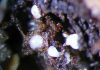
It is characterised by thread-like white mycelium and light brown, spherical sclerotia near the soil surface. In contrast, basal rot produces a fluffier, cotton-like mycelium with irregularly shaped black sclerotia.
The three most frequently observed soybean diseases this season were Cercospora leaf blight (19,0%), Septoria brown spot (18,3%), and bacterial blight (16,9%), found in almost all surveyed localities. While the frequency was high, within-field incidence varied considerably.
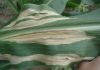
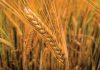
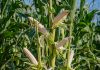
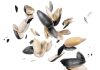
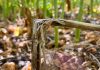
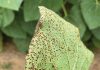
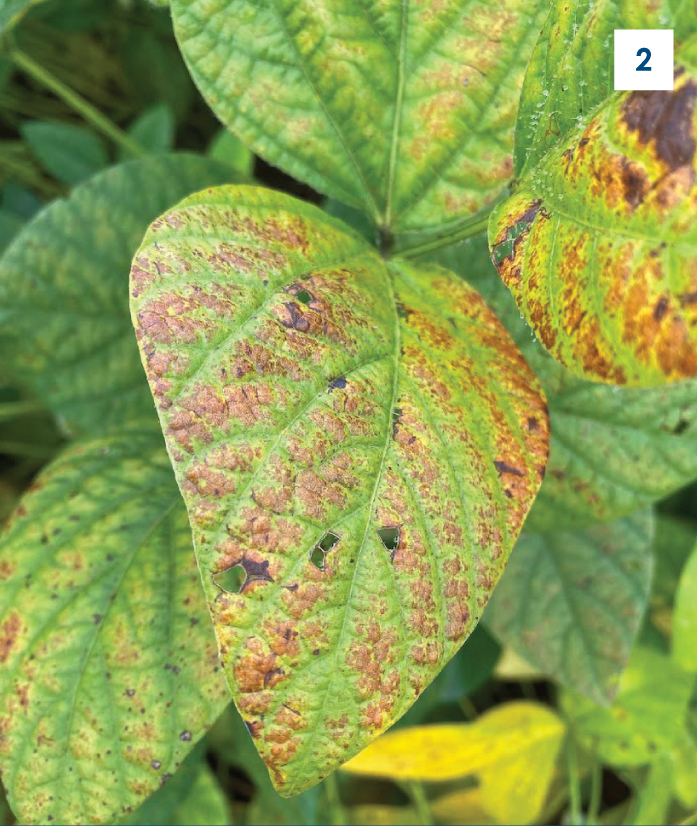
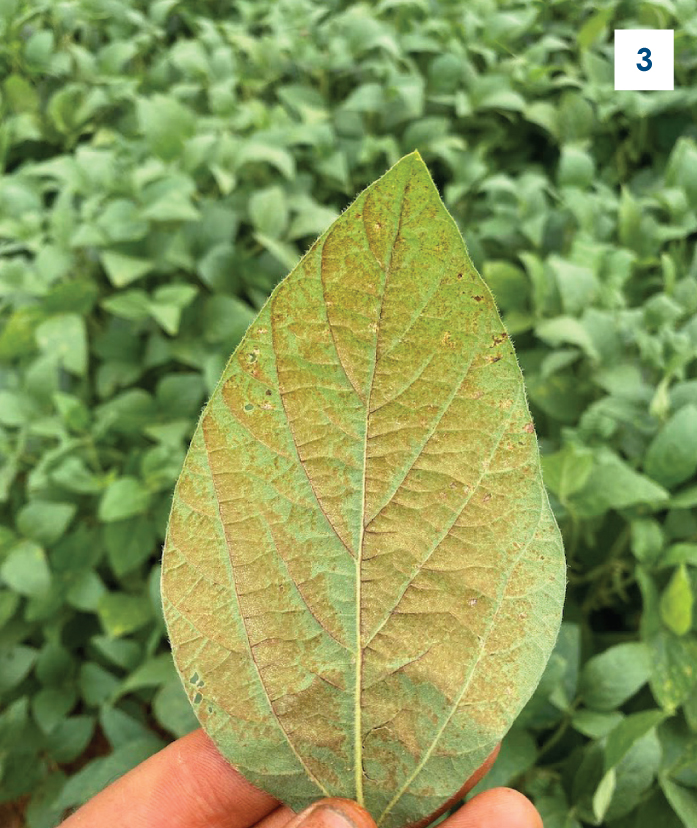
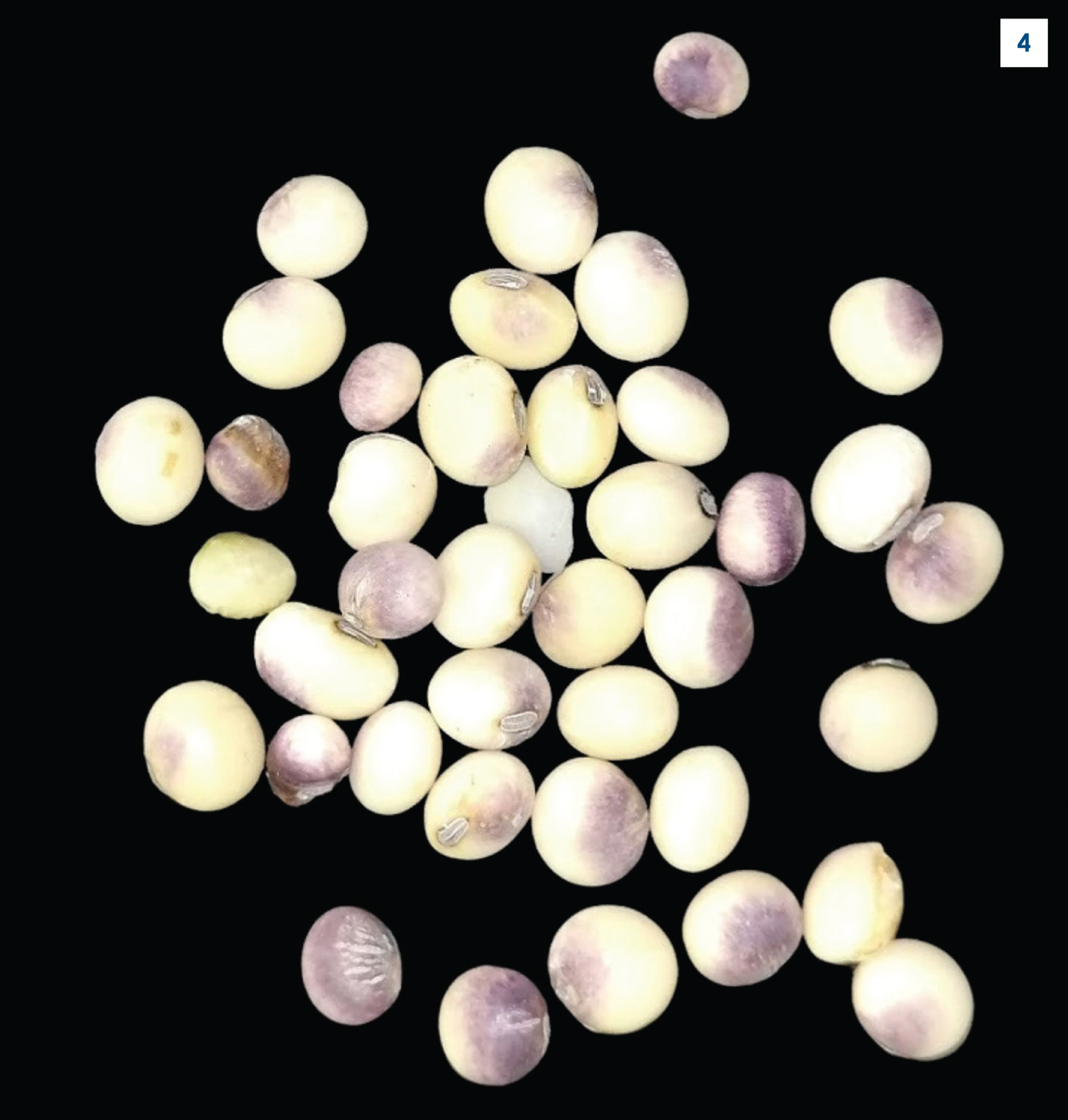
Cercospora leaf blight was observed at all sites (up from 94% of sites in 2023/2024). Incidence ranged from 2 to 80%, averaging 24,9%, about 13% lower than in 2023/2024. The disease causes the upper leaf surface to turn a bronze-purple colour with a ‘leathery’ texture, reducing photosynthesis and, when severe, potentially lowering yields by 15 to 30% (Rupe, 1989; Photo 2). It is sometimes mistaken for sunburn, which affects the underside of the leaf when leaves reorient under heat stress (Photo 3). The severity of Cercospora leaf blight symptoms on leaves doesn’t necessarily correlate directly to the severity of purple seed stain on the seeds (Photo 4). However, a severe infection of purple seed stain may affect the germination of seed (Webster et al., 2025).
Septoria brown spot thrives in dense canopies with moist soils. It typically starts low in the canopy and moves upward as the crop matures, producing dark brown, circular lesions often surrounded by yellow halos on the leaves. The higher rainfall this season likely contributed to an estimated 20% increase in incidence compared with last year.
Bacterial blight, long reported in South Africa (Meudi and Fourie, 2014), was also common but with variable incidence. It causes small, angular, water-soaked spots that expand into necrotic brown lesions on leaves bordered by a subtle yellow halo. It is commonly associated with hail damage or mechanical wounds on leaves.
What we’ve learned from this season’s disease patterns gives us a roadmap for the next, turning what we’ve seen in the field into practical steps for healthier crops. The disease management strategies below don’t necessarily add costs, they are about planning ahead and staying alert:
- Scout regularly to spot early signs of disease and pathogens in the field. Early detection allows for timely chemical applications when needed.
- Plant your crop rotation with grasses or cereals to break the disease cycle of broadleaf hosts like sunflowers and soybeans.
- Select certified seed to start your season with clean, pathogen-free material and reduce the risk of introducing inoculum into healthy fields.
- Manage weeds that can serve as alternative hosts and create favourable microclimates, which favour disease development in the season.
The disease survey was made possible with the support and contributions of the following organisations and individuals:
Funders: Department of Science, Technology and Innovation (DSTI), Technology Innovation Agency (TIA), Oil and Protein Seed Development Trust/Oilseed Advisory Committee (OPDT/OAC), Grain SA and South African Cultivar Technology Agency (SACTA).
Co-workers: Annelie de Beer, Lizette Bronkhorst, Heila Vermeulen, Dr Safiah Ma’Ali, and William Makgoga (ARC-Grain Crops), Louis Schoonraad (Corteva), Felix Middelton (LG Seeds), Joubert Swanepoel (Agricol),
and Dandré van Niekerk (Agricol).
You can access diagnostic image sheets by clicking on the link.