

For producers, the difference between a mediocre crop and a profitable one often lies in access to improved cultivars – seeds bred for higher yields, disease resistance, and resilience in an erratic climate. Behind the scenes, the South African Cultivar and Technology Agency (SACTA) helps drive this progress. Not by breeding itself, nor by certifying quality, but by directing industry funding into breeding programmes that keep producers competitive and ensure that wheat, barley, oats, and lupins remain viable in a changing agricultural landscape.
‘If you don’t move forward, you fall behind – and that’s exactly what SACTA helps farmers avoid.’
From funding gap to financial backbone
SACTA was established in 2016 as a non-profit company to manage statutory industry levies on selected self-pollinated crops. At the time, plant breeders faced a critical challenge: Unlike hybrid crops, where seed companies can capture value because producers must buy fresh seed each season, self-pollinated crops such as wheat and barley can be replanted from previous harvests. This reality left breeding underfunded and yield progress stagnant.
By collecting statutory levies and channelling them to commercial breeding programmes, SACTA provides a steady stream of investment for developing new cultivars. In effect, the agency became the financial backbone of cereal and legume breeding in South Africa. This role may be less visible than field trials or seed certification, but without sustained funding, innovation stalls.
Over time, SACTA’s mandate has grown beyond levy collection. Today, its engagement with stakeholders such as producers, breeders, and government helps fund innovation across wheat, barley, oats, and lupins.

Current state: the industry landscape
South Africa’s grain industry sits at a crossroads. Wheat production has declined from historical highs, pressured by global competition and the expansion of maize and oilseeds. Local milling and baking industries still demand quality wheat. However, meeting that demand increasingly requires imports.
Barley remains tightly linked to the malting and brewing industries, where consistent quality is critical. Oats have a smaller footprint but are seeing renewed interest as consumer demand for health-focused foods grows. Lupins, long overshadowed by soybean and other protein sources, are being reconsidered both as a rotational crop and a feed ingredient.
Each of these crops faces a similar challenge: the need for cultivars that deliver higher yields, improved disease resistance, and resilience in hotter, drier conditions. Breeding progress cannot be left to chance. It requires long-term investment – often a decade or more from first cross to commercial release. Without a funding mechanism, producers are left with ageing varieties ill-suited to current pressures. SACTA’s role is pivotal, providing funding continuity through targeted levy-funded programmes.
Driving progress through funding and dialogue
SACTA engages with the wheat, barley, oats, and lupin industries on two fronts: financial support and dialogue. Financially, levies collected at the first point of grain delivery/sale are pooled and directed to breeding companies who can deliver progress according to market share. This system is designed to be fair, transparent, and accountable, ensuring that the whole value chain benefits. SACTA also provides funding to developing farmers through interest-free input loans as well as bursaries for postgraduate research, helping nurture the next generation of producers and agronomists.
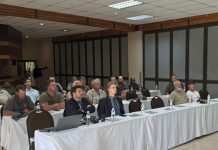
On the dialogue side, SACTA convenes stakeholders through annual meetings and ongoing engagement with farmer organisations and seed companies, ensuring the smooth collection and distribution of statutory levies. Explaining why levies matter and how they are used is critical in an environment where producers may be wary of additional costs. Transparency and accountability are hallmarks of SACTA’s approach, helping to build trust across the value chain.
Since SACTA’s inception, some 55 new wheat varieties have been registered, achieving average year-on-year yield increases of around 2%. Barley, oats, and lupins have seen eleven, six, and two new varieties, respectively. The number of wheat seed companies has grown from three to five, giving producers a wider planting choice, and maintaining South Africa’s global competitiveness.
Supporting emerging farmers: the Taung initiative
SACTA’s mandate goes beyond funding breeding programmes. It actively supports emerging wheat and barley farmers, ensuring new cultivars reach beyond established commercial operations.
This approach is illustrated by the Taung Irrigation Scheme in the North West Province. Here, SACTA has partnered with stakeholders to provide mechanisation support, including access to combine harvesters and essential equipment. For developing farmers, access to seed alone is not enough; they need the tools to plant, harvest, and market efficiently.
The Taung project demonstrates how breeding progress and farmer development intersect. New varieties must prove themselves not only in large-scale trials but also in the hands of smaller, resource-constrained producers. Engagement at this level strengthens trust in the levy system and highlights SACTA’s influence across the value chain.
Forward view: challenges and opportunities
Global competitiveness remains a major challenge. Imported wheat often undercuts local production, raising questions about the return on investment in breeding. Yet abandoning domestic breeding would leave producers exposed and compromise food security and grain quality. Engagement with policymakers and industry leaders is essential to ensure levy funding is complemented by broader support for local production.
SACTA also faces the task of broadening its reach. While barley and wheat dominate discussions, oats and lupins have untapped potential. By fostering closer partnerships in these emerging sectors, SACTA can ensure that breeding progress extends beyond established crops.
The opportunity lies in positioning SACTA not just as a funding conduit but as a catalyst for innovation; ensuring that producers benefit from new cultivars that meet both present and future challenges.
Conclusion
SACTA’s role is not glamorous, but it is impactful. Efficient levy administration ensures that breeding programmes are funded, emerging farmers are supported, and progress in crops that may otherwise be overlooked by commercial seed companies, is kept alive. For producers, this means more than new varieties – it is the assurance that tomorrow’s harvest is being built today.
SACTA AT A GLANCE
Founded: 2016
Purpose:
Manage statutory industry levies on self-pollinated crops to fund breeding programmes for wheat, barley, oats, and lupins.
Core functions:
- Provide financial support to commercial breeding programmes.
- Offer bursaries and interest-free input loans to developing farmers.
- Convene stakeholders through meetings and engagement to align breeding with market needs.
Mechanisation support:
Partners with initiatives like the Taung Irrigation Scheme to provide combine harvesters and essential equipment to emerging farmers.
- Impact in winter cereals industry:
- New varieties registered since inception: 55 wheat, eleven barley, six oats, and two lupin.
- Average year-on-year wheat yield improvements of ~2%.
- Number of wheat seed companies increased from three to five, expanding producer choice.
Vision:
Act as a catalyst for innovation, ensuring levy-funding translates into cultivars that meet present and future agricultural challenges.