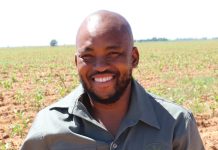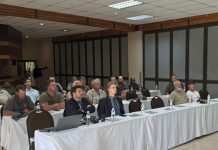


At the recent Mitigating Pesticide Residue for Food Safety conference held in Cape Town, Dr Godfrey Kgatle, research coordinator at Grain SA, spoke on the role that the organisation plays in balancing policy, science, producer realities, and innovation in grain production. His central message was that agriculture sustains both food and job security in South Africa, and policies must therefore allow producers to benefit from scientific progress while maintaining safe, responsible production systems.
From 0,6 to 6 tons: the role of innovation
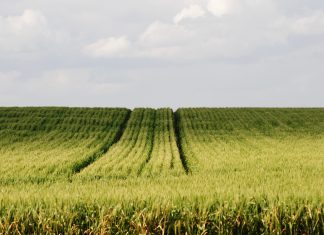
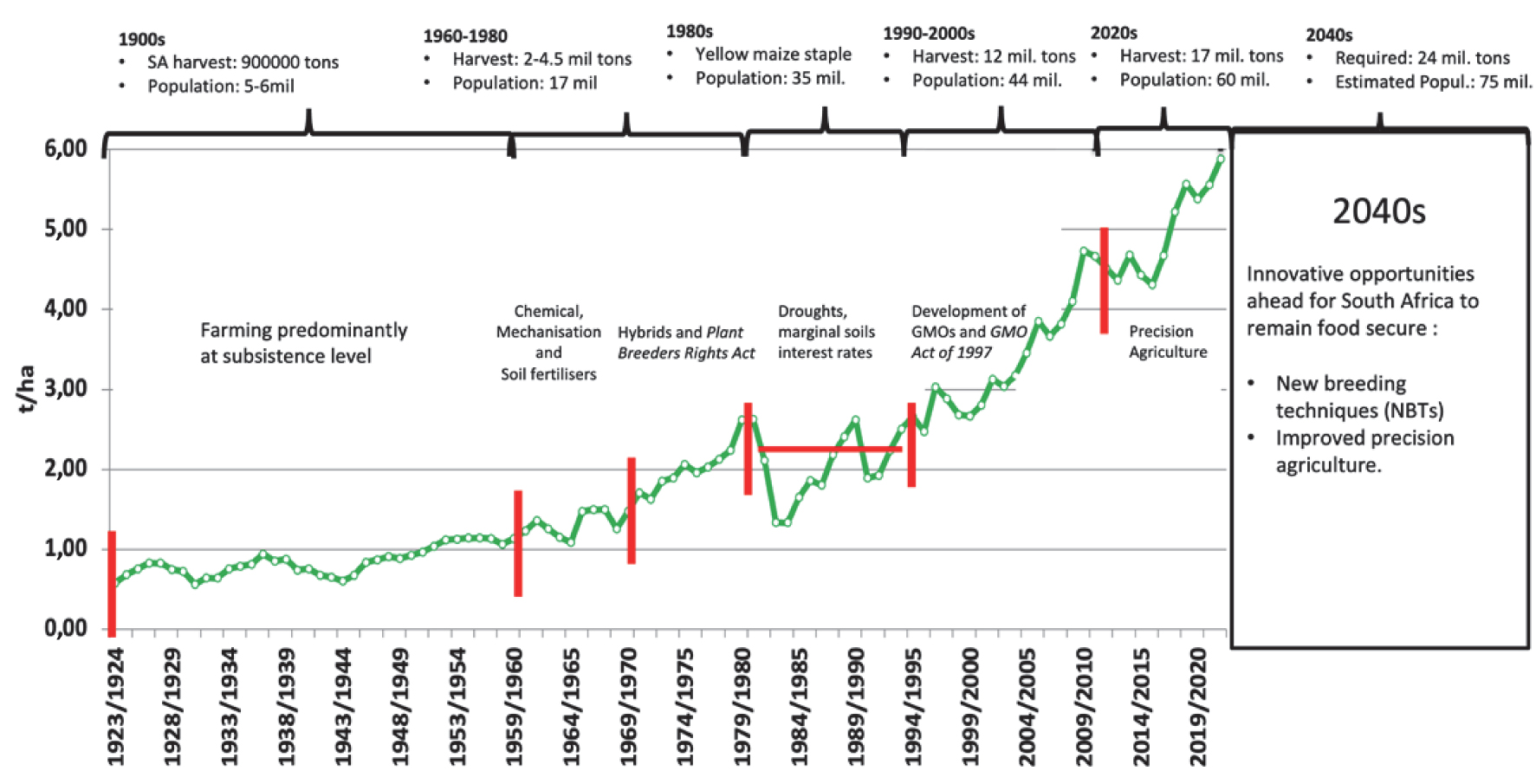
Dr Kgatle began by reflecting on the remarkable transformation of South African agriculture. ‘Our yields have grown from an average of 0,6 t/ha a century ago to around 6 t/ha today,’ he explained. This tenfold increase is the result of multiple forces: improved economics, engineering advancements, and cutting-edge
science (see Figure 1).
Central to this progress has been the responsible use of chemistry in crop protection. Producers have relied on herbicides, fungicides, and insecticides to protect their crops from devastating pests, diseases, and weeds. Without these tools, he noted, South Africa would not be able to produce the volumes of grain needed to feed its population and maintain its export markets.
https://www.grainsa.co.za/genetic-and-mechanised-innovations-in-sa-maize-production
The broader context, challenges and realities
In his presentation, Dr Kgatle also acknowledged the broader challenges facing producers. Rising input costs, load shedding, unpredictable weather patterns, and global trade pressures all contribute to a difficult operating environment. In this context, maintaining access to effective, affordable crop protection tools is essential for keeping farms viable. At the same time, global consumer expectations are rising, with stricter residue limits and sustainability requirements shaping access to international markets. Grain SA’s work, therefore, involves not only helping producers produce but also ensuring they can compete on the world stage.
Grain SA ensures the safe use of chemicals and compliance with regulations by working with government and industry partners to enforce Act 36 of 1947, promoting the responsible use of registered products according to label instructions, raising awareness on resistance management, advocating for integrated pest management, and highlighting the critical role of chemistry in protecting yields and food security. These points are discussed in detail below:
• Supporting compliance through Act 36
One of Grain SA’s most important roles is helping producers remain compliant with Act 36 of 1947, which regulates the use of agricultural remedies. Working closely with the Department of Agriculture and CropLife SA, Grain SA ensures that producers understand the importance of using only registered products according to label instructions. This focus on compliance helps South Africa maintain its standing as one of the world’s leading producers of high-quality grain. The regulations surrounding crop protection products are based on decades of residue and environmental data, ensuring that they can be used safely without leaving harmful traces on harvested crops.
• Monitoring resistance and raising awareness
Grain SA also works closely with research institutions and international resistance action committees (HRAC, IRAC, FRAC). These collaborations help producers recognise whether crop losses are due to resistance, product misuse, or natural tolerance. ‘Misuse of chemistry doesn’t just put yields at risk, but it shortens the lifespan of the very tools that keep our fields productive,’ Dr Kgatle explained. By guiding producers on resistance management, Grain SA is helping preserve the effectiveness of crop protection products for future generations.
• Advocating for integrated pest management (IPM)
While chemistry has been critical in achieving current yields, Grain SA consistently promotes IPM. This system combines multiple strategies such as cultural practices, biological tools, and responsible use of chemistry to manage pests and diseases sustainably. Dr Kgatle highlighted that IPM is particularly valuable when effective chemical solutions are not available. By diversifying management strategies, IPM reduces pressure on chemical tools and strengthens overall resilience on the farm.
• Protecting current yields with chemistry
Chemistry continues to be vital in defending yields. South Africa’s current national average of 6 t/ha would be at risk without crop protection tools. In 2025 alone, ear rots (Fusarium and Diplodia) and Sclerotinia have caused significant yield losses, with no effective chemical solutions currently available. ‘Imagine if a pest like fall armyworm or a disease like leaf blight swept across our fields without any chemical tools to stop them,’ Dr Kgatle warned. ‘The impact on food security and livelihoods would be catastrophic.’ Protecting chemistry through proper use is therefore essential if producers are to maintain and build on today’s yield levels.
• Promoting safe food and trade standards
Finally, Grain SA ensures that South African grain remains safe for local consumers, livestock, and export markets. Through regular residue and mycotoxin testing conducted in partnership with institutions such as the South African Grain Laboratory (SAGL), producers and traders are assured of compliance with international standards. Grain SA has also produced crop-specific production manuals, chemical reports, and extension materials to guide producers on correct usage, withholding periods, and record-keeping. These efforts help safeguard South Africa’s reputation as a global supplier of top-quality grain.
Producers as custodians of the land
Dr Kgatle stressed that South African producers are deeply committed to environmental stewardship. Many are fourth- or fifth-generation producers, farming with the long-term perspective of leaving their land in better condition for their children and grandchildren. ‘Producers respect nature because their livelihoods depend on it,’ he explained. This philosophy has positioned South Africa among the global leaders in conservation and regenerative agriculture, where the protection of soil, water, and biodiversity is seen as integral to farming success.
‘It is not food if it is not safe’
Ultimately, Dr Kgatle reminded delegates that food must be safe before it can be considered food. Producers, policymakers, scientists, and industry stakeholders all share the responsibility of ensuring that grain produced in South Africa is safe to eat, safe to trade, and safe for the environment. Grain SA’s role is to stand at the intersection of these interests, advocating for science-based policies, supporting compliance, encouraging innovation, and guiding producers toward responsible practices.
Balancing the future
South Africa’s journey from 0,6 to 6 t/ha demonstrates the power of innovation, collaboration, and responsible farming. The task now is to sustain and build on these achievements while balancing the needs of producers, consumers, policymakers, and the environment. Dr Kgatle concluded, ‘Producers in South Africa farm responsibly, not only for today but for the generations that will come after them. Our job is to ensure they have the tools, the knowledge, and the policies that allow them to keep producing safe, high-quality food for the country and the world.’