


The agrochemicals that enabled ever-increasing yields on stable hectares are facing an unprecedented squeeze. This is due in part to the growing realisation that many of these chemicals come with an unmanageable human and environmental cost, and in part to a marked slowing in the rate at which new agrochemicals with commercial potential are being discovered.
Dr Todd Cardwell, senior agronomist and international market development specialist at the US cooperative Land O’Lakes, points out that most of the active ingredients used in commercial agriculture today were discovered from the late 1970s to the late 1990s, with the boom in discoveries beginning to tail off around the turn of the century.
‘In any given year there would be 20 or 30 new active ingredients being released, compared to the one or two we have today,’ he says.
This gave successive generations of producers a wealth of choices to keep pests at bay, with new options regularly emerging to replace older ones that may have lost efficacy due to resistance developing in target pests or adverse environmental or health effects emerging after years of use.
Another factor playing into the shrinking number of novel agrochemicals, according to Rupert Anelich, consultant to the crop protection industry, is the increasing cost associated with registering new products. This forces multinational principal companies to choose their products far more carefully and focus on products that can be registered in all major international markets in order to justify and recoup the very high development cost.
For producers who cut their teeth in these years of abundant, accessible, and low-cost agrochemicals, current developments in crop protection represent a significant challenge. New products are expensive, and their use often has to be much more finely timed according to the life cycle of whatever pests they are fighting. Meanwhile, it is not yet clear how some key products facing the chopping block – notably paraquat and terbufos – will be replaced.

Photo: Jeanne van der Merwe
Costs influence sustainability
Corné Louw, head of Applied Economics and Member Services at Grain SA, says since the far-reaching new regulations concerning highly hazardous pesticides were announced in August 2023, the organisation’s working groups on commodities and its Production/Input Working Group have been closely studying the list of affected products. Those considered essential for sustainable production were shared with the Registrar of Act 36 of 1947 (the Fertilisers, Farm Feeds, Agricultural Remedies and Stock Remedies Act) and industry body CropLife SA.
‘One cannot lose sight of the cost and efficacy of alternative products,’ he says. ‘If the new product doesn’t work as well as the old one, it will increase the producer’s input costs. Less effective products ultimately affect a producer’s sustainability.’
Where a replacement product requires more than one application, both the higher product cost due to the higher volumes
required, and the time and labour associated with additional applications must be considered.
Louw says it is also ironic that conservation agriculture (CA) is considered a valuable approach to reduce a producer’s dependence on certain agrochemicals, yet the practice relies on pesticides that have to be phased out by 2035 in terms of the new regulations and the United Nations’ Global Framework on Chemicals.

Photo: Jeanne van der Merwe
New approaches show promise
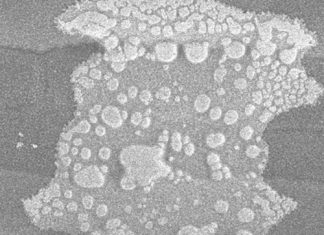
The squeeze on pesticides does not, however, mean that all valuable products are necessarily lost to growers. Dr Cardwell has been involved for many years in developing adjuvants that enable crop protection products to perform optimally by ensuring pesticide droplets retain the optimal size and consistency to be taken up by the target pest and remain there long enough for the chemicals to do their job.
‘Especially in the past decade or so, the technology associated with adjuvants evolved significantly,’ says Anelich. ‘The interactions that result between the adjuvants and crop protection products can have a hugely beneficial impact on the efficacy of your spray applications.
‘I also believe adjuvants could evolve to a point where you can reduce your dose of pesticide and obtain a better result. There is also the possibility that appropriate adjuvants could improve the efficacy of those newer-generation pesticides which generally don’t perform as well as some of the older products.’
The withdrawal of very effective organophosphates such as terbufos may also lead crop protection companies to revisit other products that may not previously have made financial sense, but which may now have more market potential because the blockbuster product has been withdrawn.
Other technological advancements, such as vast improvements in spray nozzle technology and the variable application rates made possible by precision agriculture technology, combined with the use of specialised weather forecasting technology, are already integral to many grain producers’ operations, both internationally and locally.
Dr Mieke Daneel, nematologist with the Agricultural Research Council, says producers should also go back to the basics when using new-generation products.
‘The older-generation agrochemicals made things very easy for producers because they were very effective and very stable. With newer-generation products it is non-negotiable to store them in the correct conditions and apply them according to the label instructions. If you don’t do this, efficacy can be significantly reduced.’
Anelich and Dr Daneel both emphasise that new-generation agrochemicals are not as robust as the older organophosphates, many of which could outlast their expiry date by years even if stored in less than ideal circumstances.
‘Your supporting practices have to be far more focused,’ says Anelich. ‘Scouting and monitoring your crops becomes far more important, and your spray equipment has to be properly calibrated and serviced.’ In addition, Dr Daneel says it becomes far more
important to follow the label recommendations precisely, as newer-generation agrochemicals tend to perform within far narrower
parameters than traditional products.

Photo: Jeanne van der Merwe
Moving beyond chemistry
Dr Daneel says all three principles of CA should be combined to gradually reduce a grower’s dependence on some agrochemicals.
‘Minimum tillage and permanent soil cover retain the soil microbiome and with that the beneficial nematodes and other microorganisms that control soilborne pests. Crop rotations can break the life cycle of problem pests such as plant-parasitic nematodes if the cultivars are selected correctly, but conversely, if you plant a cultivar that’s susceptible to nematodes, it can make your nematode problem worse.
‘Many of the cover crops can improve soil quality by replenishing soil nutrients while some cover crops, such as Chloris gayana, Festuca, Tagetes patula, Avena strigose and Brassica juncea, can reduce the incidence of problem nematodes.’
She concedes that improvements associated with CA occur gradually and over multiple seasons. ‘Generally, the aim of integrated pest management is not to correct problems but rather prevent them as much as possible.’
Anelich says while the crop protection industry is hard at work looking for alternatives, he believes a dearth of candidates for crop rotation is a significant problem, especially in marginal areas with small profit margins, such as the sandy soils of the western summer cropping regions where most of South Africa’s maize is grown.
‘Crop rotation needs far more attention, and in this respect our growers need new cultivars that are more effective at avoiding problems such as nematodes. The potato industry, for instance, has moved away from big potatoes that remain in the ground for 120 to 140 days, to smaller potatoes that are harvested before the nematodes can do significant damage.’
He believes summer grains also need more coordinated and focused technical support, the equivalent of the support services that emanate from the Western Cape Department of Agriculture’s long-term trials that have supported the uptake of CA in the province. In this regard, the trial farm established at the North-West University in Potchefstroom shows great promise. (See the article ‘NWU CSA: a platform for innovation, research, and inclusive education’ on page 94 of SA Grain of August 2025.)
Keep talking
Louw says throughout the search for new products and new approaches, all stakeholders have to commit to open conversations about the need for crop protection products.
‘The manufacturers and suppliers of the products, the Registrar (of Act 36 of 1947), and also the lobby groups that want all agrochemicals banned all need to get together. People prefer to avoid this aspect, but agrochemicals should be seen the same way the public sees medication. If you’re prescribed blood pressure medication, but you use it incorrectly, it will be harmful, and the same goes for agrochemicals. You need certain things to protect your plants and keep them healthy, but if you use them incorrectly, it’ll be harmful to the plant, the person applying it, and the environment.
‘So we need transparent discussions between all these parties about why these products are necessary. Nobody wants to deliberately harm or poison anyone; there are certain reasons why the use of certain products is essential. We have to be responsible, know the risks and try to manage them together.’