


research manager: Water Use, Water Research Commission (WRC)

Prof Sylvester Mpandeli, senior research manager: Water Use, WRC
 Prof Stanley Liphadzi, executive: Research, Development and Innovation, WRC
Water scarcity ranks among humanity’s greatest challenges today, alongside land degradation and food insecurity. These challenges are worsened by climate change and rising demands from competing sectors and a growing population. For example, over 60% of available freshwater resources in South Africa are utilised in agriculture, mainly on about 1,3 million ha of irrigated land.
The demand for water for irrigation is expected to increase as the country plans to expand its irrigated area by over 45 000 ha by 2030 to meet the rising food requirements of its increasing population. This is exacerbated by the fact that almost 98% of available freshwater resources are already allocated, leaving little room for economic growth. Furthermore, the country experiences highly variable annual rainfall that ranges between 460 and 840 mm.
Projections suggest that agricultural productivity in South Africa will have to double from current levels by 2050 to feed a population estimated to increase to about 80 million people in the same period. However, climate change and limited energy resources compound these challenges, as rising temperatures lead to higher evapotranspiration rates. Additionally, climate change causes increased variability in rainfall, resulting in more frequent and intense droughts and floods. Therefore, transforming water management in agriculture has become an urgent priority as water resources are fully or over-allocated and increasingly degrading and depleting.
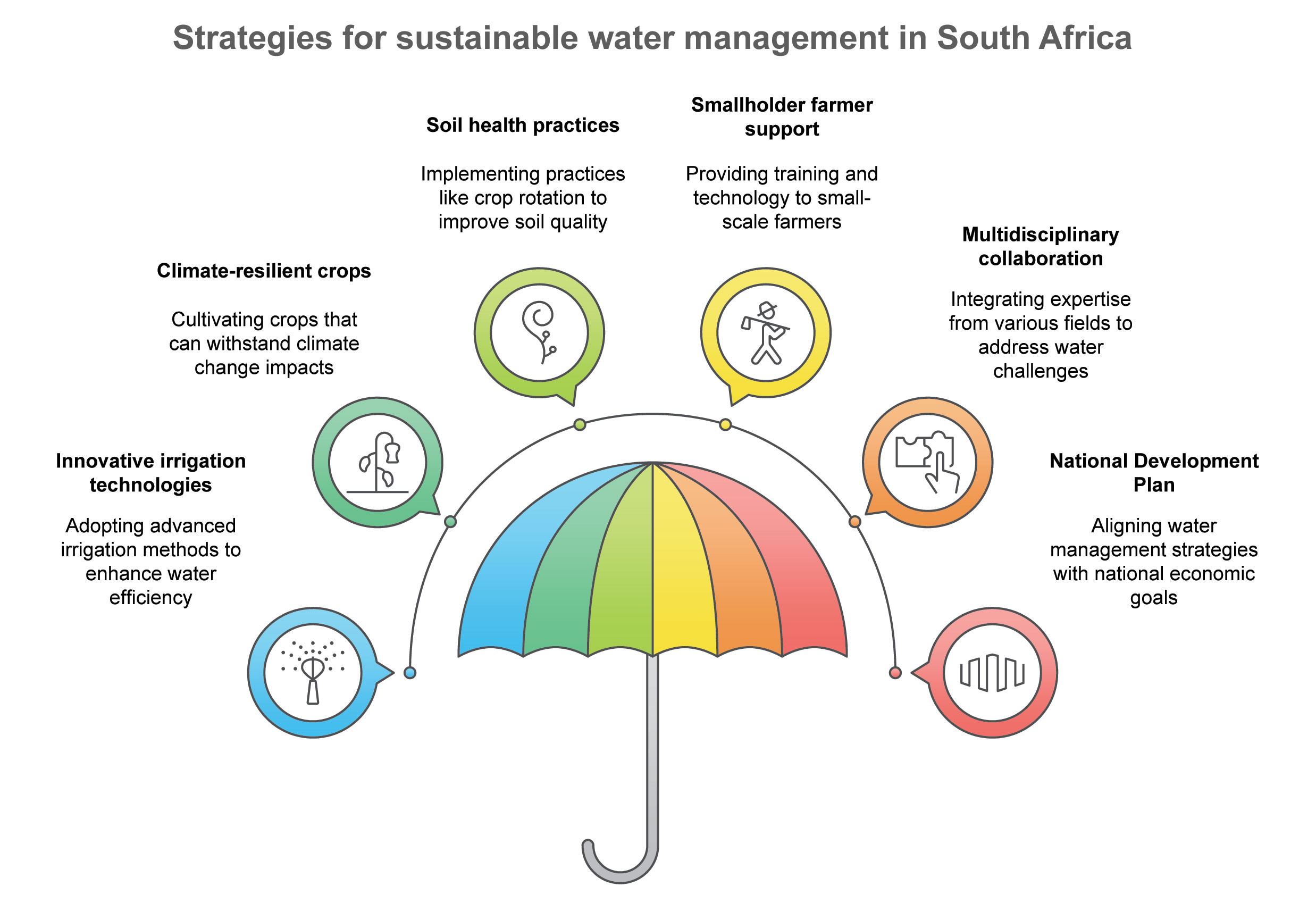
To address the interconnected challenges of water scarcity, land degradation, and food insecurity, agriculture must adopt sustainable and innovative practices that enhance crop-water productivity, improve efficiency, and minimise environmental impact. Key strategies include investing in water-efficient irrigation, mainstreaming climate-resilient, underutilised, indigenous crops, adopting soil health practices like crop rotation, and supporting smallholder farmers with training and technology. This requires resilience-based interventions that are multidisciplinary and inherently interdisciplinary, involving specialist fields such as engineering, hydrology, climatology, and geology, which should also address institutional, policy, and management issues through applied social sciences. Ignoring these specialist areas during interventions only yields partial solutions and sector efficiencies at the expense of other equally important sectors.
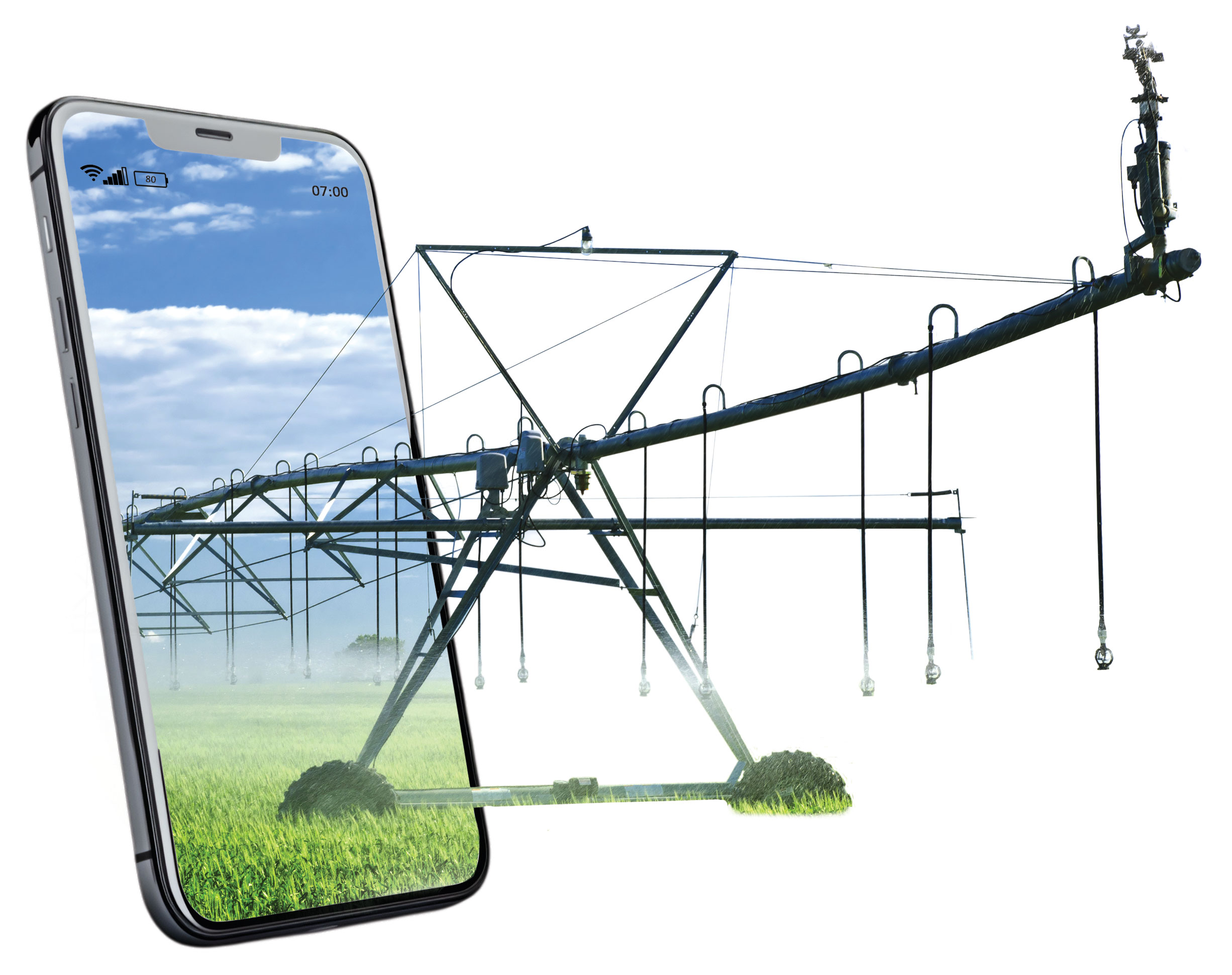
South Africa’s efforts to ensure water and food security are clearly outlined in the National Development Plan (NDP), where agriculture is recognised as a key pillar for driving economic growth. The NDP recognises that a transformed agricultural sector is essential for enhancing water and food security and creating employment opportunities. Agriculture plays a significant role in the country by contributing approximately 3% to the national gross domestic product (GDP) and providing 7% of formal employment. The NDP aims to stimulate economic growth through agriculture by expanding the irrigated areas and creating jobs. It emphasises the importance of supporting smallholder farmers and reducing their vulnerability to climate change.
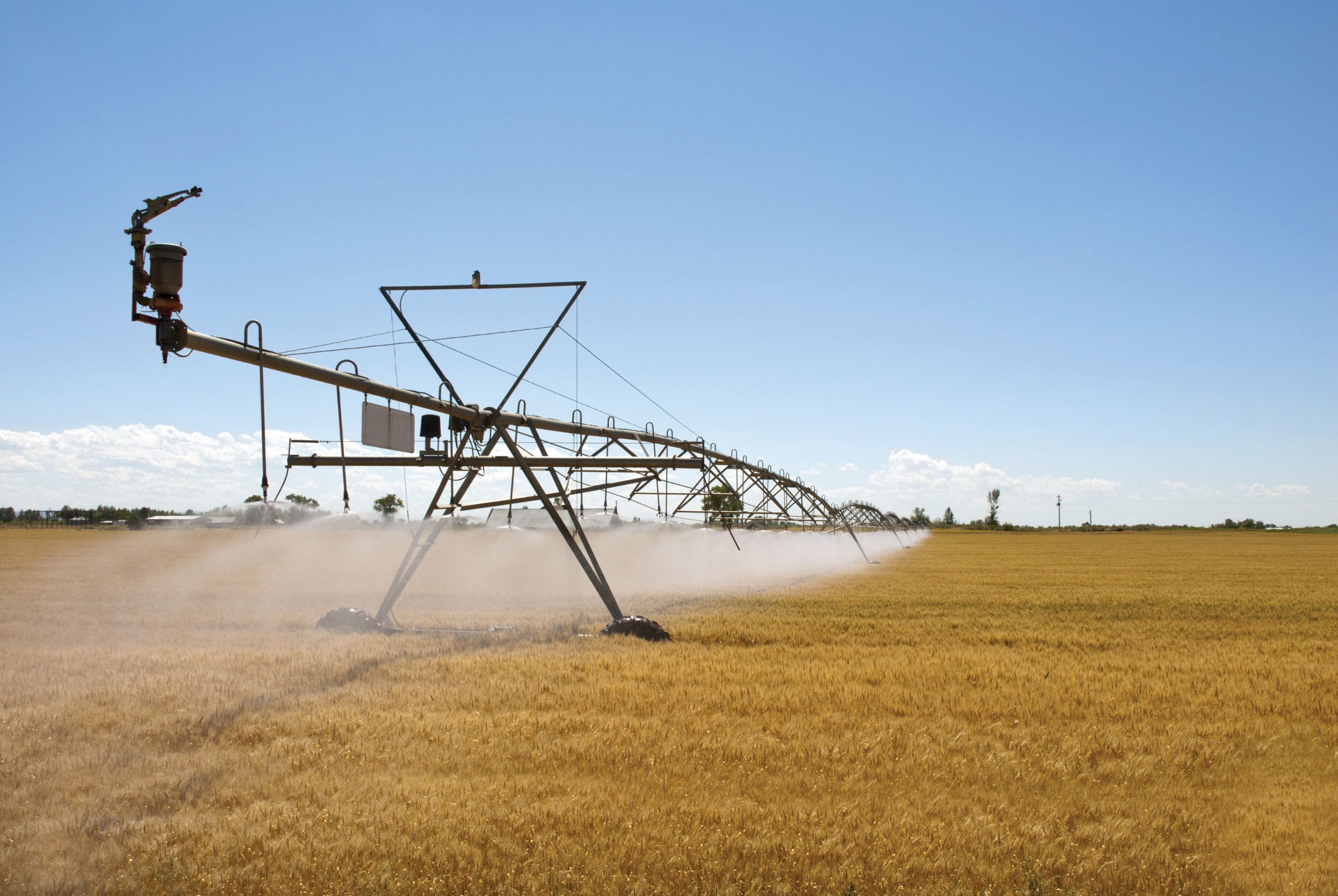
There is, therefore, a need to promote sustainable irrigation technologies that optimise food production without increasing water applied and with positive environmental spinoffs. Sustainable irrigation technologies and practices enhance water use efficiency and productivity in agriculture and reduce environmental burdens, including energy use. The Water Research Commission (WRC) has spearheaded research on sustainable water use for the past 50 years as part of its research agenda. The innovations include smart water management, a component of the digital transformation which applies information and communication technology (ICT) and (near) real-time data and responses to measure, control, and distribute agricultural water to save water and energy. The digital interventions have been easing water scarcity in the country by regulating water for food production and domestic use, among other uses. These interventions are implemented on a small scale, managed locally, and are hydrologically independent and self-regulating. This approach is transforming rural livelihoods and enhancing adaptation and resilience to climate change at the local level.
The WRC and its partners have developed a model to estimate crop evapotranspiration, yield, and water use efficiency for small grains such as soybean and sorghum in each quinary catchment. This model benefits mostly rural farming communities by guiding them towards the best agronomic practices to maximise attainable yields. Additionally, another project created an operational model called OPERA, which aims to increase water use efficiency and resilience in irrigation.
This technology enables the direct mapping of soil water – similar to in-situ observations – using air- or space-borne radar. It also assesses crop water stress through thermal infrared sensors and models the interactions between crops, soil, and the atmosphere. When effectively combined with terrestrial measurements, these mapping tools provide valuable decision support for enhanced agricultural water management.
To address the challenges of salinity, a study by the WRC developed a decision support system (DSS) and guidelines for transferring technology to manage irrigation-induced salinity effectively through precision agriculture. In a related project, an integrated bioeconomic model was developed to manage site-specific water and salt stress in irrigated agriculture. This was accomplished by linking the transient state soil-water-crop model (SWAMP) to an economic model and an optimisation procedure, allowing the evaluation of site-specific water and salinity management strategies.
As part of the digital transformation in irrigation, smartphone applications have been developed to support on-farm irrigation scheduling. These web-based and mobile applications are tailored to specific crops, including indigenous, underutilised crops. Comprehensive guidelines for using these apps provide step-by-step instructions for producers.
These user-friendly irrigation applications are important in crop cultivation as water requirements for most crops are now well documented. For example, one such smartphone application is designed to forecast water needs in apple orchards several days in advance, using readily available data as inputs. This orchard water use app enhances irrigation scheduling and water allocation planning by offering detailed forecasts of actual orchard evapotranspiration and its components. While it is currently used in apple orchards, the app is also being tested in other types of orchards.
A project prototyped in the Inkomati-Usuthu Water Management Area (IUWMA) developed a tool for conjunctive groundwater and surface water use for solar-driven, smallholder irrigated agriculture. The tool supports conjunctive water use in areas suited for implementing solar pumps for the first time in smallholder irrigated agriculture in South Africa. The developed tool has won the WatSave Award, an internationally recognised award, at the International Committee on Irrigation and Drainage (ICID) conference in Malaysia. In addition, the WRC has been leading research on drone applications in agricultural water management, specifically exploring how drones can enhance smart water management and precision agriculture on smallholder farms. This innovative research has produced valuable applications for real-time crop health monitoring, yield forecasting, and irrigation scheduling.
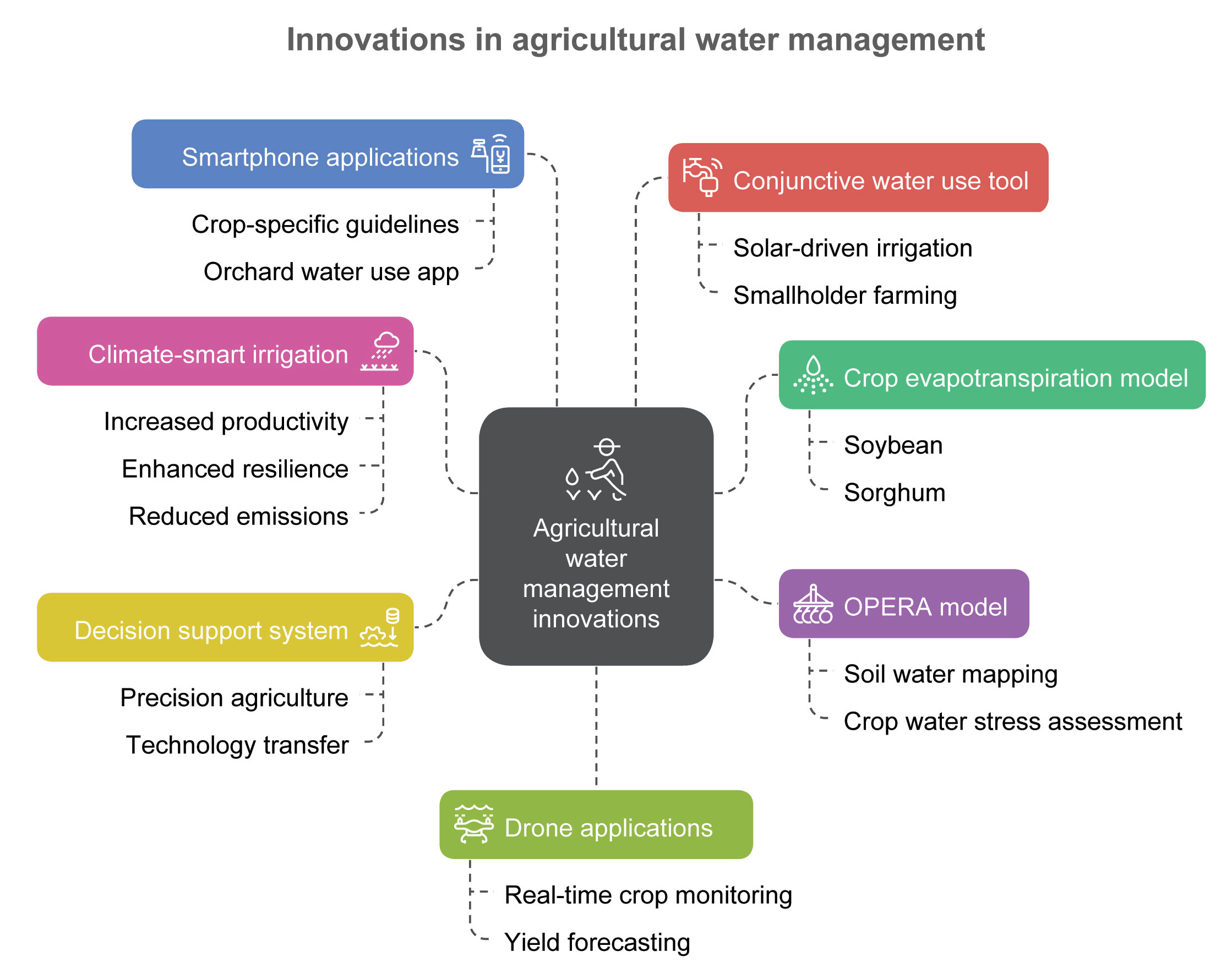
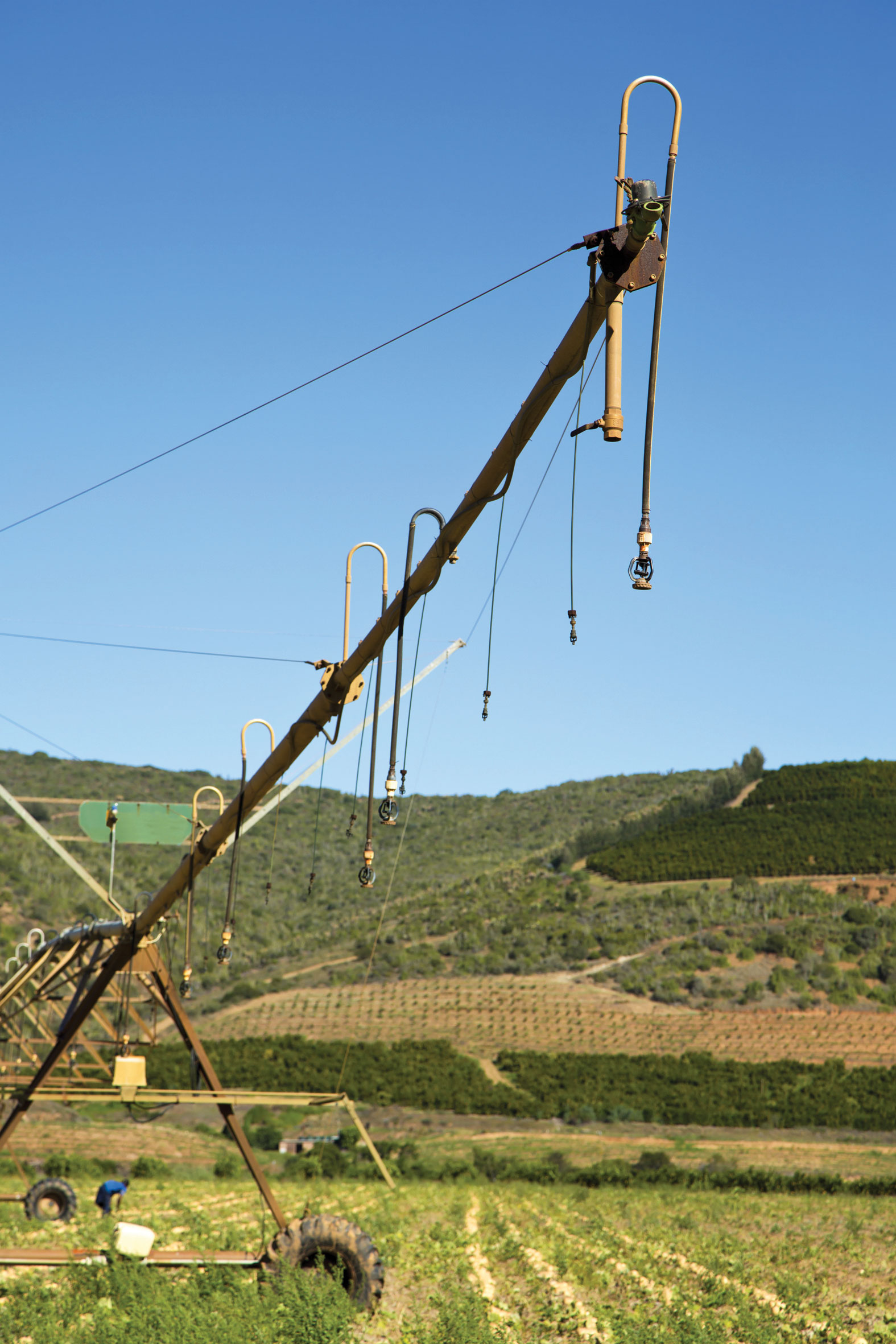
The WRC is active in research that promotes climate-smart irrigation (CSI) practices. CSI, powered by innovative technologies, forms an important part of the transition towards sustainable and regenerative agricultural practices. Increasing water efficiency and environmentally friendly farming practices translates into less greenhouse gas emissions, while improved fertiliser efficiency means fewer agrochemicals entering soils and water systems. CSI practices are essential components of integrated approaches for managing irrigated areas. They address the interconnected challenges of food insecurity and climate change. CSI practices and technologies aim to achieve three outcomes simultaneously:
- Increased productivity: Irrigated agriculture should always aim to produce (a) more food using fewer resources and (b) higher-quality food to enhance nutritional security and increase incomes.
- Enhanced resilience: Improving efficiencies in irrigated agriculture reduces vulnerability to drought, pests, and diseases. It strengthens the ability to produce sufficient food during prolonged drought periods and shorter growing seasons.
- Reduced emissions: Innovative irrigation practices lead to lower greenhouse gas emissions for each calorie or kilogram of food produced. Additionally, they help prevent deforestation caused by agriculture and promote carbon sequestration.
Therefore, climate-smart agriculture offers numerous benefits, including addressing climate change while systematically considering the synergies and trade-offs between productivity, adaptation, and mitigation. Innovative technologies are essential for enhancing water and food security, both at the off-farm level – such as water transport infrastructure and irrigation system distribution – and at the on-farm level, including efficient water application methods and adopting advanced irrigation technologies. Specifically, improved irrigation techniques serve as crucial tools for promoting the sustainability of
irrigation and water resources on farms.
Expanding the irrigated area is vital for enhancing food and water security. However, the first step towards effective agricultural water management is having a coherent policy framework across interconnected sectors. This is key to minimising policy spillovers and unintended trade-offs. Innovations that enhance water use efficiency are essential for the resilience and adaptation of the agricultural sector, ensuring food security for the increasing population.
Despite acknowledging the significance of these innovative technologies for sustainable irrigation, their adoption has been notably slow, revealing the gap between scientific advancements, policy formulation, and practical implementation. Understanding these dynamics highlights the need for transformative and holistic approaches to irrigation development.