

From invasive pests and diseases threatening South Africa’s grain crops to the regulatory hurdles that limit export growth, biosecurity is increasingly recognised as a cornerstone of agricultural resilience. These challenges and the opportunities to address them, took centre stage at the 2025 National Biosecurity Summit, held on 10 and 11 June at the University of Pretoria. Convened by the National Biosecurity Hub under the theme ‘Collaborative Actions for Food Security and Trade’, the summit brought together stakeholders from government, academia, and industry to discuss how stronger partnerships can build a more coordinated, cross-sector response.
Outbreaks like foot-and-mouth disease (FMD) continue to disrupt the livestock industry and grain producers face mounting risks from plant pathogens and restricted market access to gaps in surveillance and diagnostics. In this context, the summit emphasised the urgent need for integrated, proactive strategies and data sharing that work across commodities and value chains.
A call for collective action
Opening the summit, University of Pretoria vice-chancellor, Prof Francis Petersen, emphasised that biosecurity is not just an agricultural concern, it is an economic, environmental, and social imperative. He noted that the increasing frequency of disease outbreaks, especially in the livestock industry, is a symptom of weak surveillance, made worse by climate change and globalised trade.
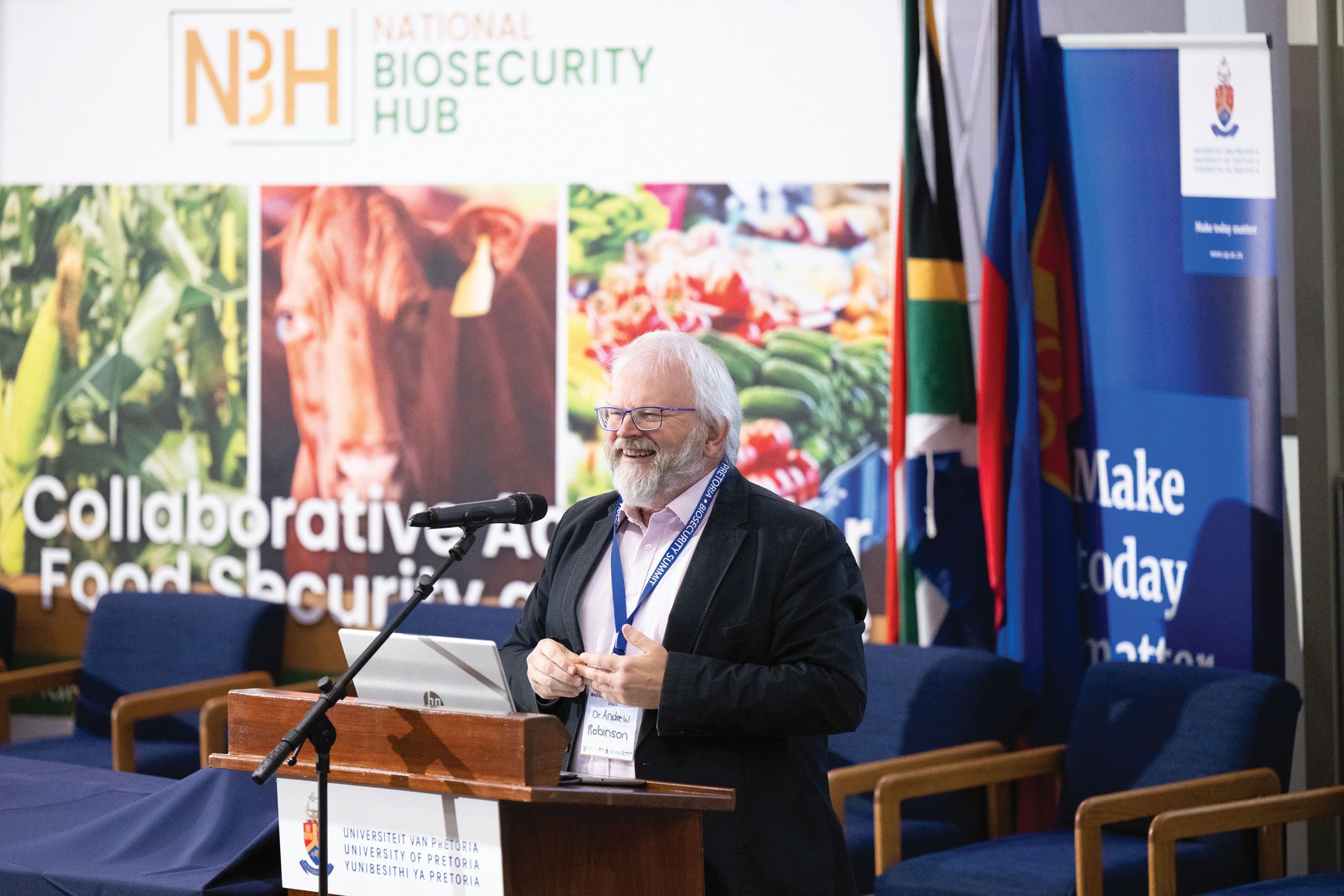
This was echoed by the keynote speaker, Prof Andrew Robinson from the University of Melbourne’s Centre of Excellence for Biosecurity Risk Analysis (CEBRA), who underlined the economic returns of investing in biosecurity. ‘Every Australian dollar spent on biosecurity returns thirty dollars to the GDP,’ he said, urging South African policymakers to focus on practical, operational outcomes that benefit producers directly.
Trust, transparency, and the triple helix
A recurring theme was the need for trust between researchers, regulators, industry, and government, as well as across sectors. ‘We academics have expansive and expensive ideas,’ Prof Robinson noted, ‘but they must be translated into action.’ He highlighted the ‘triple helix’ model of university impact: research, teaching, and direct service to society.
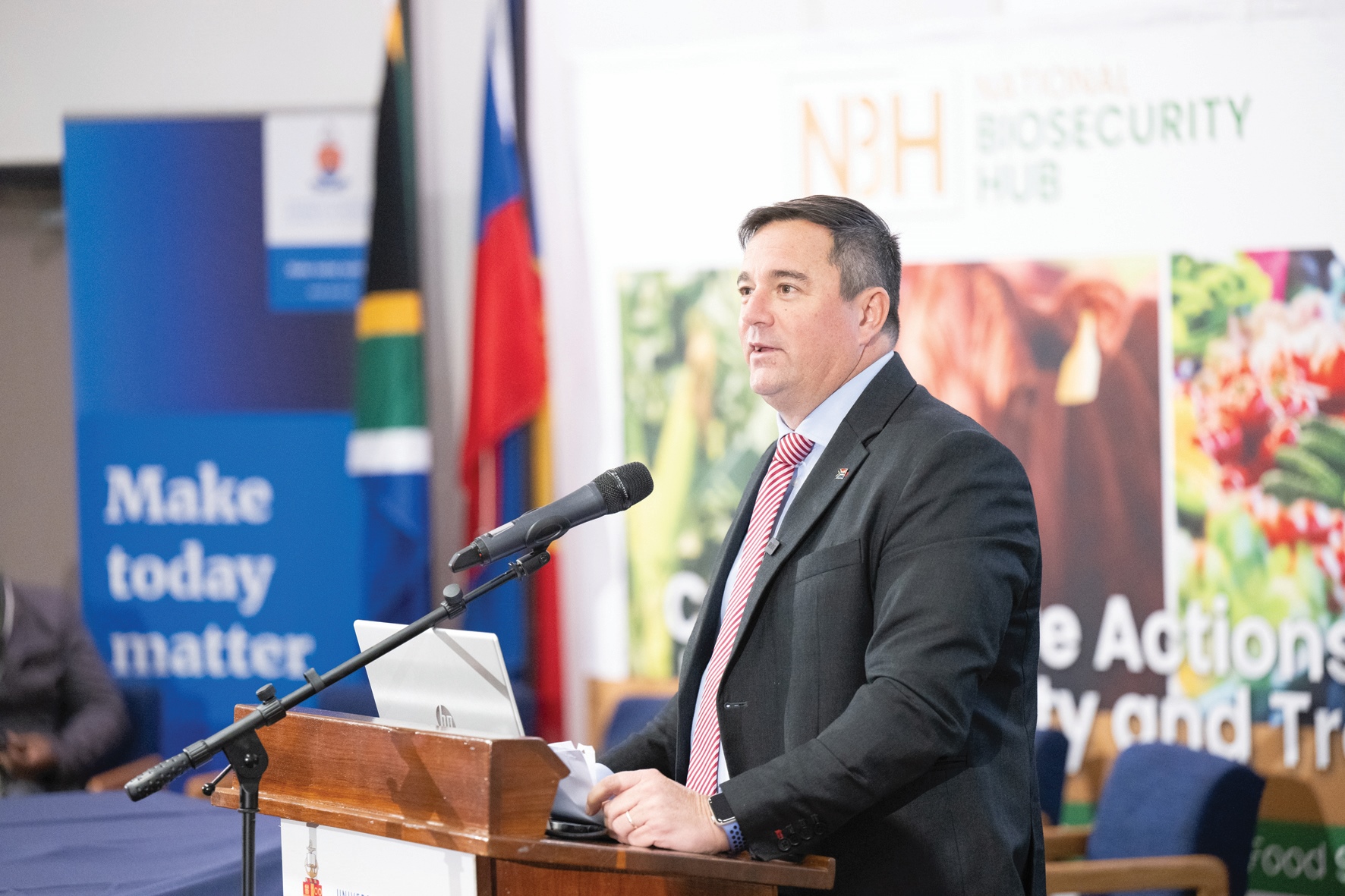
South Africa’s Minister of Agriculture, John Steenhuisen, acknowledged shortcomings in the current system but expressed commitment to change. Biosecurity, he stated, is now one of the department’s top seven strategic pillars. He also announced plans for a national biosecurity compact to foster collaboration and shared responsibility across stakeholders.
Wandile Sihlobo, chief economist of Agbiz, added a sobering note: For thirty years we’ve been making plans, but we’ve implemented them half-heartedly. He stressed the urgency of resolving issues around plant health and regulatory inefficiencies, which are blocking market access for high-value exports.
Partnerships that work: lessons from the field
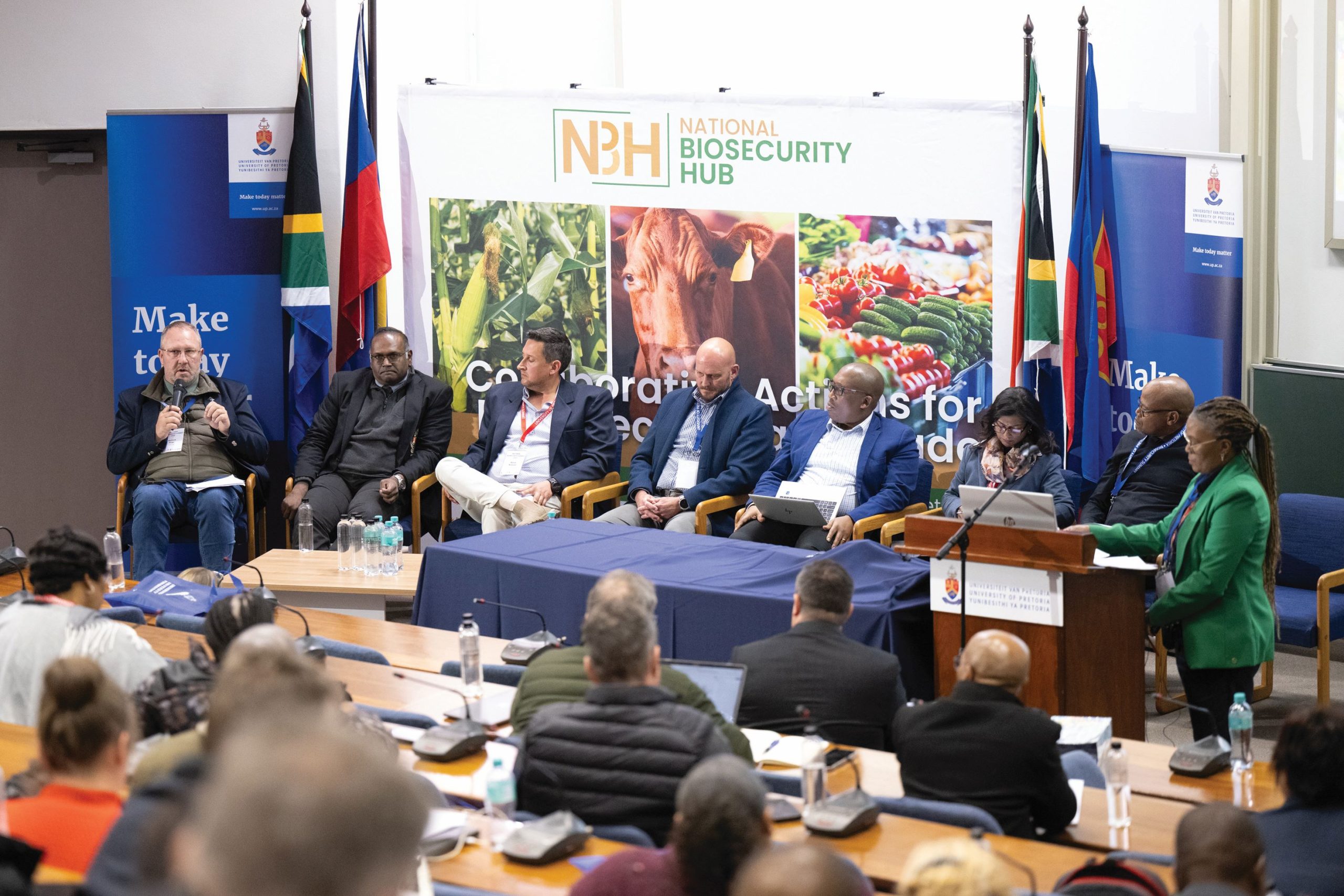
Public-private partnerships (PPPs) took centre stage on day two. The consensus: when they work, they work because of clearly defined roles, shared goals, and mutual respect. But too often, a lack of communication and structural support stalls progress.
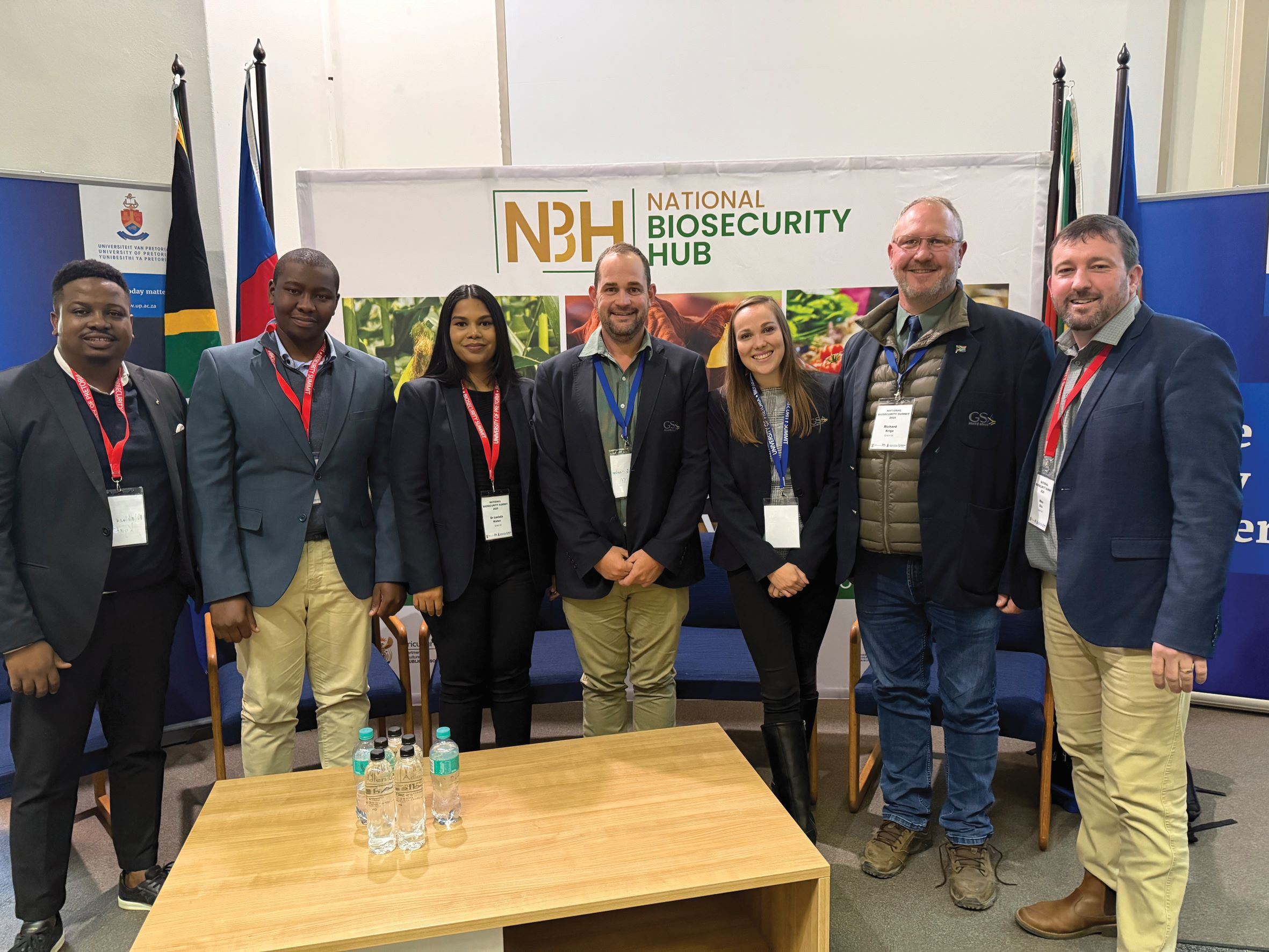
Richard Krige, chairperson of Grain SA, emphasised the importance of honest partnerships to address biosecurity shortcomings and called for smarter investment into centres of excellence. He also shared how trust-based partnerships have helped establish diagnostic clinics for pests and diseases and laid the groundwork for the development of a grain industry biosecurity plan. He stressed that proactive, on-farm biosecurity measures are essential, particularly since many grain producers also rely on livestock enterprises.
Industry leaders also called for better coordination between provincial and national departments and underscored the urgent need for veterinary and plant pathology expertise. Dr Vinny Naidoo noted that while veterinary students graduate in healthy numbers, nearly half leave the country – highlighting a worrying brain drain.
Strengthening capacity and communication
Beyond diagnostics and infrastructure, speakers called for broader biosecurity awareness – from schools to farm gates. They called for integrating biosecurity information into school curricula and developing multilingual, culturally relevant public awareness materials, especially for rural communities.
Surveillance was another major theme, with experts advocating for digitised systems and incentives for early reporting of pests and diseases. Many urged a harmonised national network that connects local clinics and laboratories with central databases, helping turn scattered capacity into strategic advantage. The establishment of a national biosecurity diagnostic network was discussed as a critical step in improving early detection and coordination, especially in underserved regions.
Towards a national compact
Across sessions, it became clear that South Africa’s biosecurity future lies not in isolated fixes but in cohesive systems. There were strong calls to map existing research and diagnostic capacity, reduce duplication, and set collaborative research agendas that align with industry needs.
Perhaps most importantly, participants called for sustained leadership and accountability. Co-designing solutions, aligning incentives, and clearly articulating the ‘who benefits and how’ will be critical to sustaining any PPP or national compact.
Looking ahead
The summit closed with renewed energy and cautious optimism. While biosecurity challenges are well-known, from porous borders and slow regulatory turnaround to underfunded surveillance, there are also numerous opportunities that are emerging. The foundation for action exists, in both political will and industry expertise. What is needed now is honest collaboration, strategic funding, and bold steps towards implementation. The summit carried a clear message for each of the three sectors represented:
Message to government – stewardship and succession
- Biosecurity is a shared responsibility.
- Develop the next generation of regulatory scientists.
Message for industry – enabling market access
- Access to markets depends on a functional biosecurity system.
Message to the research community – reimagine our role
- Partnerships are critical, within and across sectors.
- Research must align with sanitary and phytosanitary (SPS) and trade goals.
- Nurture the next generation of regulatory scientists.
As Prof Robinson aptly put it: ‘It’s better to solve the right problem approximately than the wrong problem exactly.’ For South African agriculture, getting the problem right – and solving it together – may be the surest path to securing both food systems and futures.
Contact Dr Marinda Visser and the National Biosecurity Hub team at marinda.visser@up.ac.za or isabella.bezuidenhout@up.ac.za for more information.