


Agricultural development, in particular the attainment of increased plant growth and yield, has in the past depended largely on intensive agricultural practices that overlooked the essence of agricultural and environmental sustainability.
By around the end of the 20th century, the green revolution resulted in the global booming of the agricultural sector by the introduction of new varieties of high-yielding seeds and the pioneer finding of producing ammonia artificially through the Haber-Bosch process. Despite this global booming of the agricultural sector with enhanced plant productivity and rapid and superfluous production of crops, the overuse of artificial fertilisers resulted in the deterioration of soil health, leading to a decline in sustainability (Basu et al., 2020).
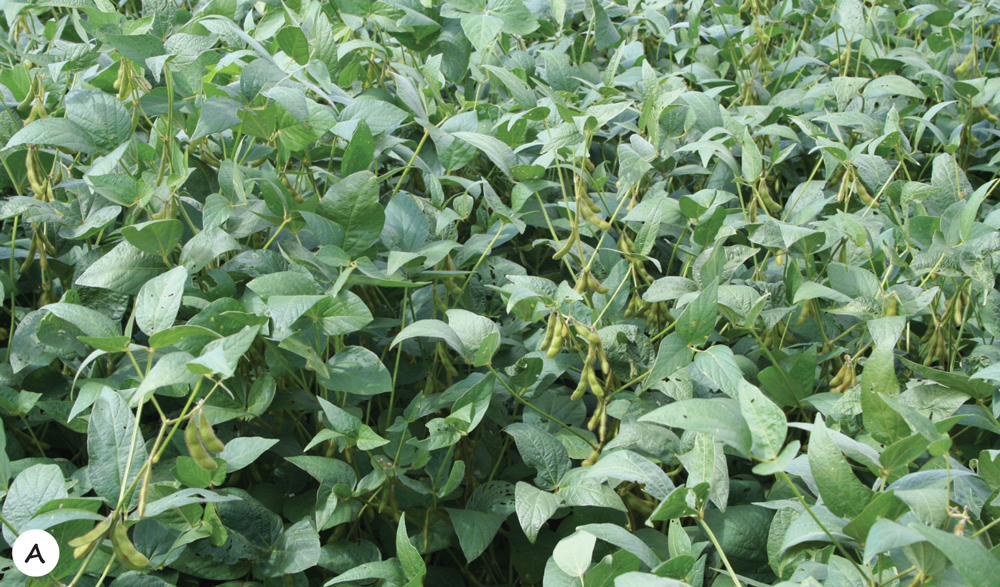
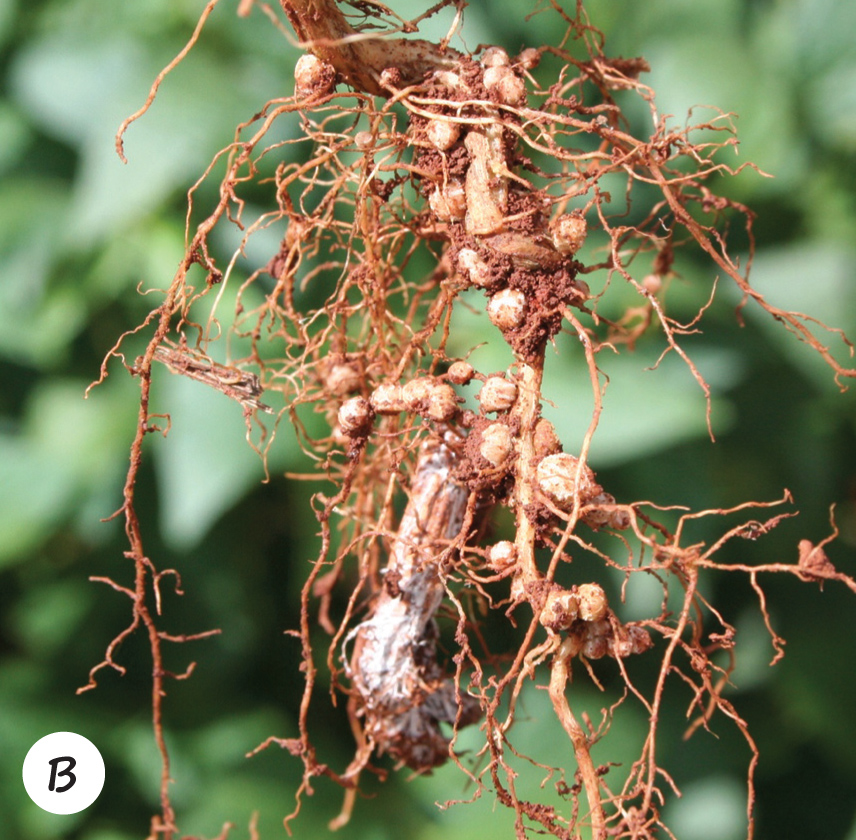
Photo: Ahmed Hassen
Currently, however, an essential aspect of agricultural systems is to improve crop yield and generate a large quantity of nutritious foods without harming the environment (Yang et al., 2024). One of such sustainability goals would be achieved through the process of biological nitrogen fixation (BNF) with legume crops, either through the inoculation of elite rhizobia inoculants or using the native rhizobia in the soil. The use of rhizobia inoculation in the cultivation of legume crops is very important due to its cost-effectiveness as well as the environmentally friendly nature of these inoculants. This is more evident in soils with very low nitrogen (N) and where producers, particularly smallholder producers, cannot afford to buy expensive synthetic fertilisers, which also harm the environment in the long term. On the other hand, rhizobia inoculants are cheaper for smallholder producers, making legume production more affordable and reducing the dependence on external inputs (Herridge et al., 2008). Therefore, it is essential to train producers on how to use rhizobia inoculants and to make them understand why such inoculants are preferable to synthetic fertilisers in legume farming.
In addition to being cost effective, rhizobia inoculation is more environmentally sustainable since it reduces the dependence on synthetic N fertilisers. Such fertilisers are very harmful to the environment as they contribute to greenhouse gas (such as nitrous oxide emissions), ground water contamination, and soil acidification. BNF, by introducing elite strains of rhizobia into the soil, does not lead to nutrient depletion and environmental pollution (Giller, 2001).
Apart from these roles, using rhizobia inoculants in the soil improves soil health by increasing long-term soil fertility by naturally enriching soil nitrogen which could benefit subsequent crops in practices that involve rotations of legumes versus non-legume crops. In addition, rhizobia inoculation does not disrupt soil microbial diversity which plays so many vital roles in plant-soil interactions and hence crop productivity (Vanlauwe et al., 2001).
However, not all rhizobia inoculations are successful since the success of inoculation largely relies on the correct rhizobia strain and legume host compatibility, methods of application of the inoculants, as well as timing and the soil-limiting factors. It is essential that producers be trained or acquainted with the handling and storage of the rhizobia inoculants they purchase or are provided with and how to treat the seeds before planting. They should also learn to avoid exposing the rhizobia to heat or sun since these will inactivate or kill the active ingredient of the inoculant product, the rhizobia (FAO, 2018).
Some producers may argue that they get quicker yield boosts when using synthetic N fertilisers in comparison to rhizobia inoculation. However, these cannot always be more sustainable. For better results in some systems, a starter N combined with rhizobia inoculation gives a better result than using synthetic fertilisers alone (Hungria et al., 2006). It should, however, be kept in mind that rhizobia inoculation can have a comparable or even higher yield when proper management practices are used on the soils. Generally, in short-term outputs synthetic N fertilisers seem to be more effective than rhizobia inoculation. However, the full potential of legumes as an N source could be exploited by producers by training them how to use rhizobia inoculants.
The ultimate effect would be ensuring better adoption, long-term yield stability, and environmental and soil health. Rhizobia inoculation is not just an option, but a necessity in soils with nutrient-poor status and for producers who cannot afford to purchase expensive synthetic N fertiliser.
References
- Hungria, M, Franchini, JC, Campo, RJ et al. 2006. Nitrogen nutrition of
soybean in Brazil: contributions of biological N2 fixation and N fertilization. Scientia Agricola 63 (2), 102 – 110. - Basu, A, Prasad, P, Das, SN, Kalam, S, Sayyed, RZ, Reddy, MS & El Enshasy, H. 2021. Plant Growth Promoting Rhizobacteria (PGPR) as Green Bioinoculants: Recent Developments, Constraints, and Prospects. Sustainability, 13, 1140. https://doi.org/10.3390/su13031140.
- FAO. 2018. Smallholder farmer training manual on legume seed inoculation. Rome: Food and Agriculture Organization. http://www.fao.org/3ca3610en/CA3610EN.
- Vanlauwe, B, Wendt, J & Diels, J. 2001. Combined application of organic matter and fertilisers. In: G Tian, F Ishida and J Diels (eds.) Sustaining Soil Fertility in West Africa. SSSA Special Publication 58, 247 – 280.
- Hassen, AI et al. 2014. Nodulation efficacy of Bradyrhizobium japonicum inoculant strain WB74 on soybean (Glycine max L.) is affected by several limiting factors. Afr J. Microbiol. Res 8, 1 – 11.
- Giller, KE. 2001. Nitrogen Fixation in Tropical Cropping Systems. Cabi.
- Herridge, DF. 2008. Inoculation technology for legumes, In: M.J. Dilworth Dilworth
et al. (eds.), Nitrogen-fixing Leguminous Symbioses, 1st edition, 77 – 115. - Yang et al. 2024. Diversifying crop rotation increases food production, reduces net greenhouse gas emissions, and improves soil health. Nature Communications, 15:198.