


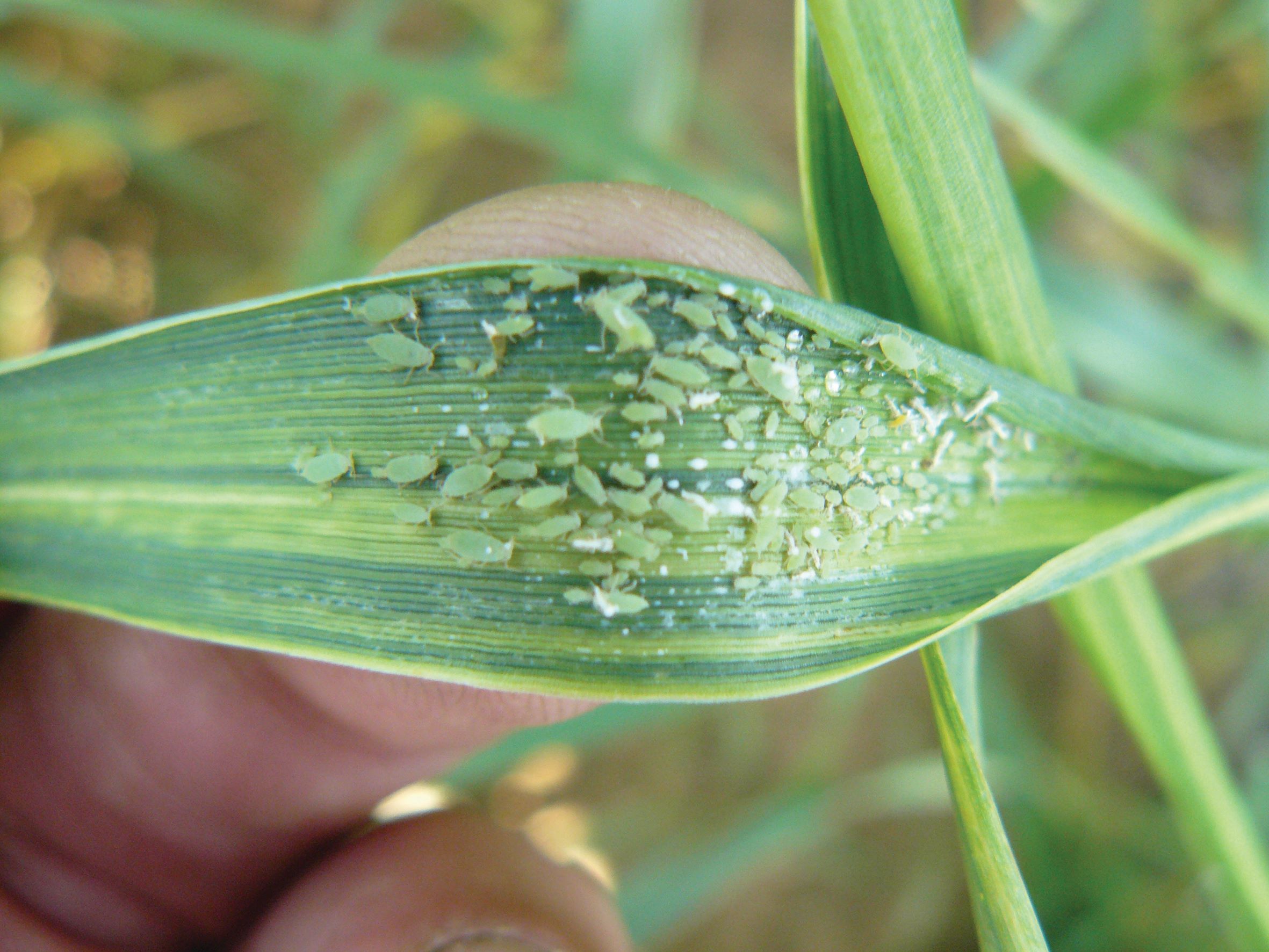
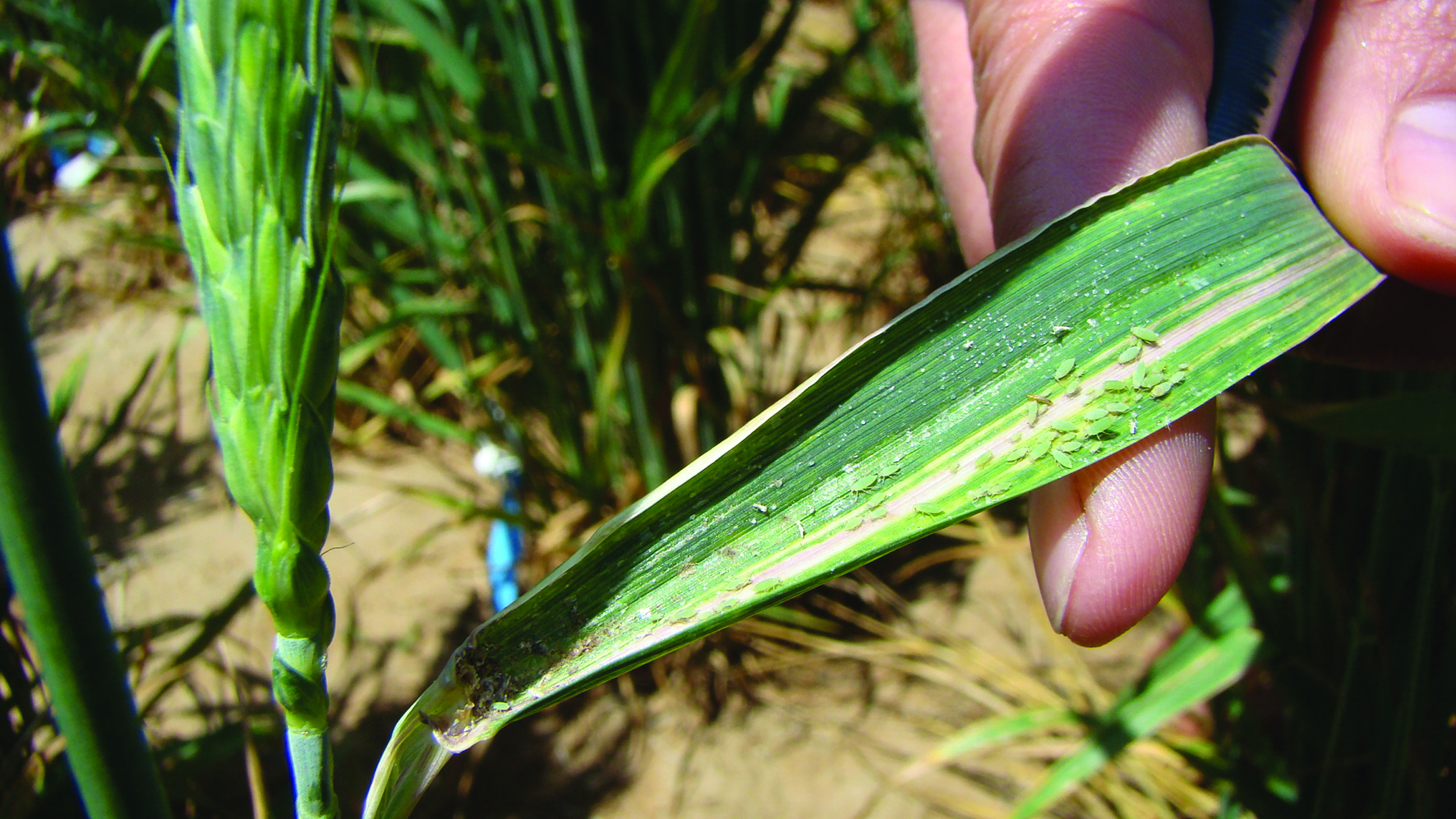
Russian wheat aphid (RWA) is very adaptable to selection pressure and persists in the wheat production areas of South Africa despite management practices. As a result of selection pressure, five RWA biotypes occur in South Africa in response to deployment of RWA-resistant cultivars. The recently recorded and most virulent biotype is RWASA5 and there is no current dryland wheat cultivar on the market in South Africa with adequate resistance against this biotype. The widespread use of limited active ingredients against RWA is also resulting in a susceptibility shift in RWA populations in the wheat production areas of South Africa.
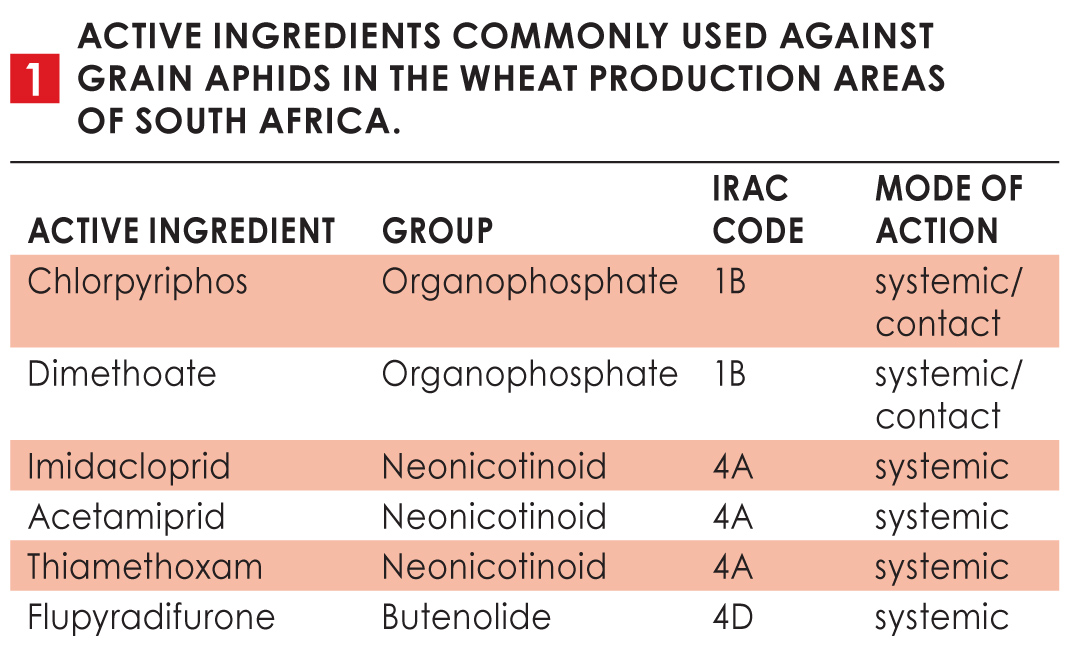
Active ingredients commonly used against RWA, chlorpyriphos, dimethoate, imidacloprid, acetamiprid, and thiamethoxam are limited to two groups, organophosphates (1B) and neonicotinoids (4A) (Table 1). During 2023, the Minister of Agriculture published in the Government Gazette (No. 3605) the intention to ‘prohibit the use of agricultural remedies containing chlorpyrifos as active ingredient’. Dimethoate is also being phased out in South Africa because it falls under CMR categories 1A or 1B of the GHS (Globally Harmonised System of Classification and Labelling of Chemicals). CMR stands for substances that are carcinogenic, mutagenic, and toxic to reproduction. This means that products containing dimethoate classified under these CMR categories, will no longer be registered or allowed for use after June 2024. This further limits the active ingredients available for control of RWA. However, flupyradifurone was registered in South Africa recently for control of RWA on wheat. This active ingredient belongs to a different group, butenolide and IRAC code 4D (Table 1). Since this active ingredient has not been used widely and persistently, the chance of a shift in susceptibility to this active ingredient in RWA populations is unlikely.
 Dryland and irrigation wheat sampled
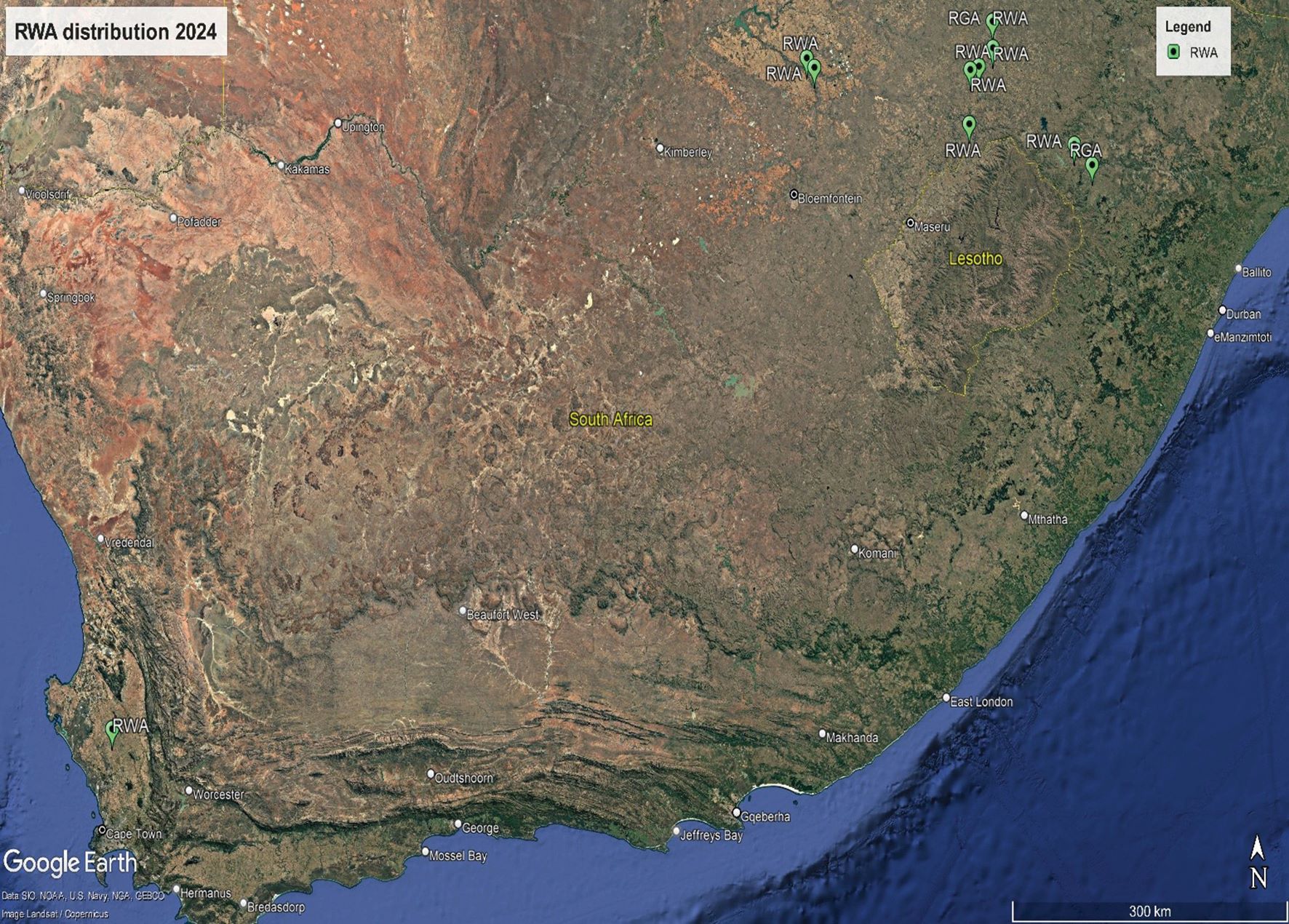
RWA populations were sampled in the dryland wheat production areas in the Western Cape and eastern Free State and in the irrigation wheat production areas in the western Free State and KwaZulu-Natal (Figure 1). RWA samples collected were screened against commonly used active ingredients to determine possible shifts in susceptibility of these populations against these active ingredients.
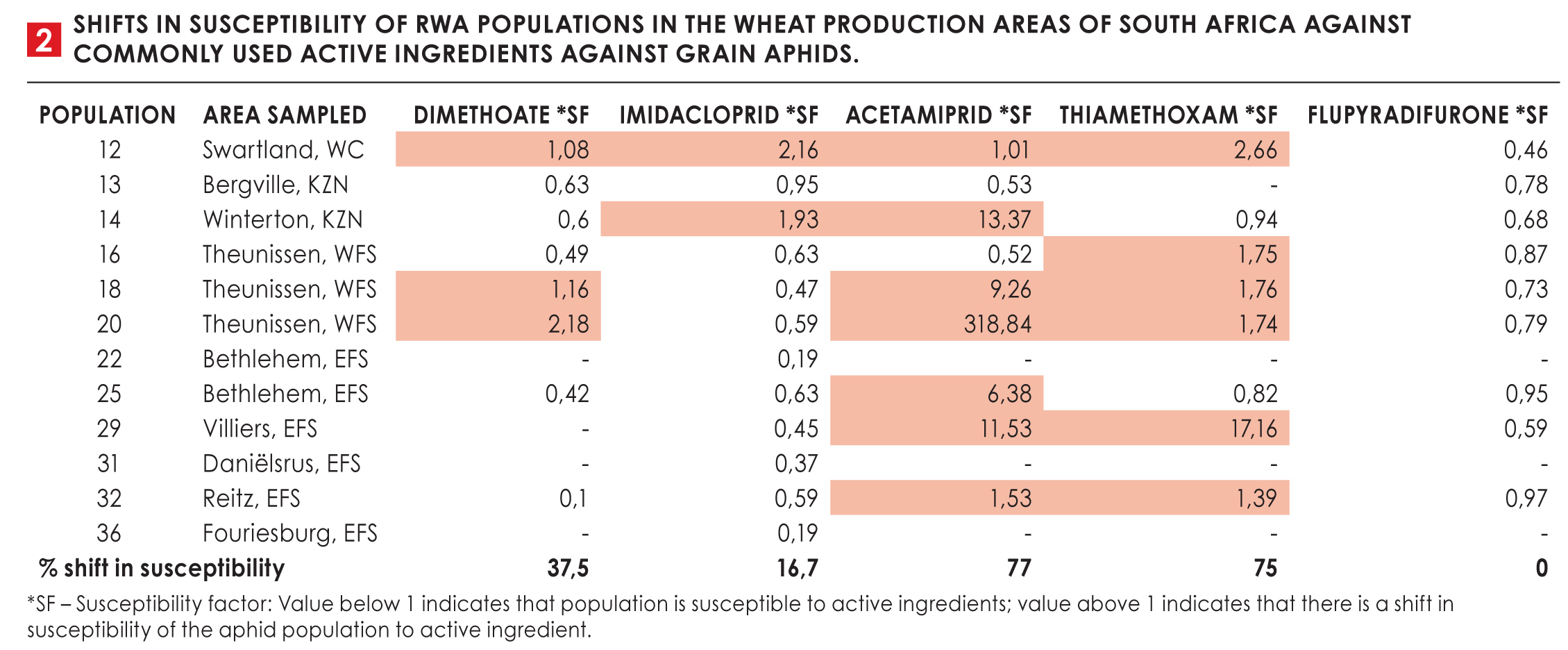
There were RWA populations in the Swartland area of the Western Cape that showed a shift in susceptibility against dimethoate, imidacloprid, acetamiprid, and thiamethoxam (Table 2). RWA populations in the Bergville area, KwaZulu-Natal, showed a shift in susceptibility against imidacloprid and acetamiprid, while populations in the Theunissen area in the western Free State showed a shift in susceptibility against dimethoate, acetamiprid, and thiamethoxam. Populations in the Bethlehem area, eastern Free State, showed a decrease in susceptibility against acetamiprid, and populations in the Villiers and Reitz area, eastern Free State, showed a decrease in susceptibility against acetamiprid and thiamethoxam. Based on the RWA populations screened there was a 37,5% shift in susceptibility against dimethoate, 16,7% against imidacloprid, 77% against acetamiprid, and 75% against thiamethoxam. As expected, there were no shifts in susceptibility of RWA populations against the active ingredient flupyradifurone.
 The shift in susceptibility and ultimate development of resistance against a specific active ingredient in the RWA population will depend on the widespread and persistent use of the active ingredient. Any management practice or change in the environment will exert selection pressure on RWA populations. To mitigate the development of insecticide resistance in RWA populations it will be necessary to limit the selection pressure of chemical control on RWA. This can be achieved by not only rotating between active ingredients, but also between groups and alternative management practices.
 Regular monitoring is essential to determine the occurrence, distribution, and population density of RWA in wheat production areas. Management protocols should be adapted and updated to changes in RWA populations. Chemical control should only be applied when necessary to protect yield loss.