


Department of
Agronomy, Stellenbosch University

Dr Henk Smit,
Department of Grass
and Forage Science, Christian Albrechts
University, Germany
In many parts of the world, crop and livestock production have become separated, geographically, economically, and culturally. This decoupling, often a byproduct of industrialisation and specialisation, has brought short-term gains in efficiency but also long-term consequences: degraded soils, lost biodiversity, declining resilience, and rising greenhouse gas (GHG) emissions.
In South Africa’s Mediterranean climate region, especially the Western Cape, farming systems were historically mixed, and there are now compelling environmental and economic arguments for establishing even stronger links between crops and livestock. This article presents insights from a recent review of livestock integration within conservation agriculture (CA) systems and outlines the opportunities and challenges of this approach in the Mediterranean context. It is based on an article published in the African Journal of Range and Forage Science, by Swanepoel and Smit (2025)1.
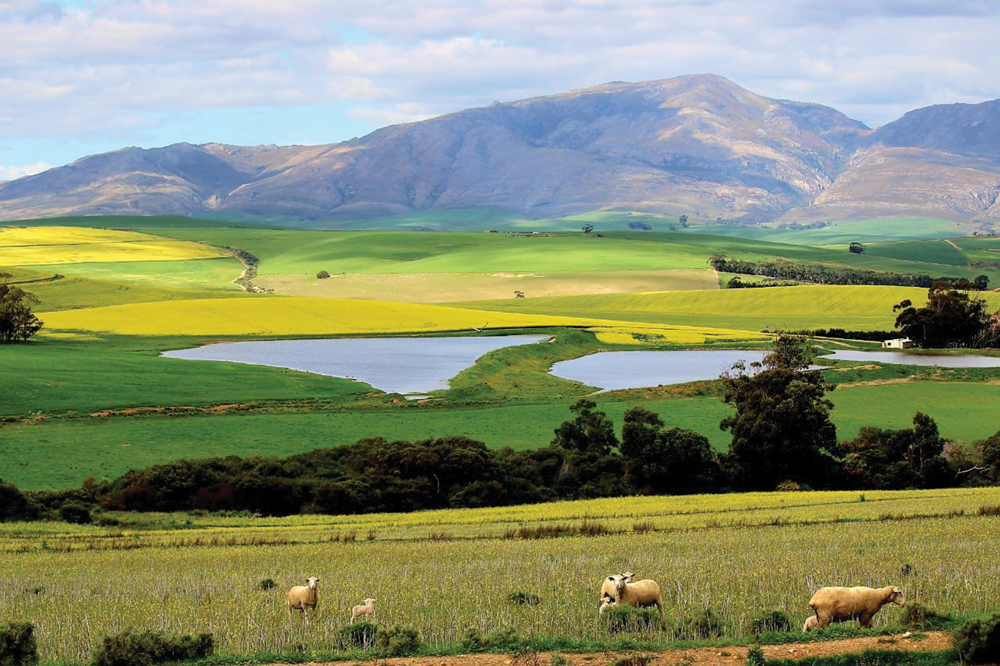
The Western Cape’s Mediterranean climate region is a vital agricultural region for South Africa, producing over half of South Africa’s wheat and almost all of its canola. It’s also home to a substantial sheep industry: More than 2,6 million animals produce meat and wool, often on the same farms where crops are grown. Despite this, over time, many farms have specialised, leading to either monoculture cropping or intensive livestock production.
CA has been increasingly adopted in the region due to its benefits for soil health, water retention, and resilience to climate variability. However, many producers following CA systems have recently focused primarily on crops (specialised or continuous cropping systems), often downplaying the role livestock can play in closing nutrient loops and enhancing sustainability.
Mixed crop-livestock systems reconnect livestock with arable land through shared use of resources like crop residues, forage crops, and pastures. In CA systems, sheep can graze on pasture crops like lucerne, annual medics, and cover crops, while also consuming crop residues during fallow periods. This creates a circular system where nutrients are recycled through manure, reducing reliance on synthetic fertilisers.
These systems offer multiple benefits:
- Enhanced soil health: Grazing promotes organic matter inputs through root turnover and manure.
- Reduced input costs: Livestock manure helps reduce fertiliser use, while animals can graze on non-human-edible biomass.
- Biodiversity and weed control: Livestock grazing in diverse rotations disrupts weed and pest cycles.
- Economic resilience: Diversified production buffers producers against climatic or market shocks.
Cover crops as a bridge between systems
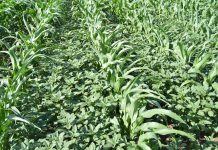
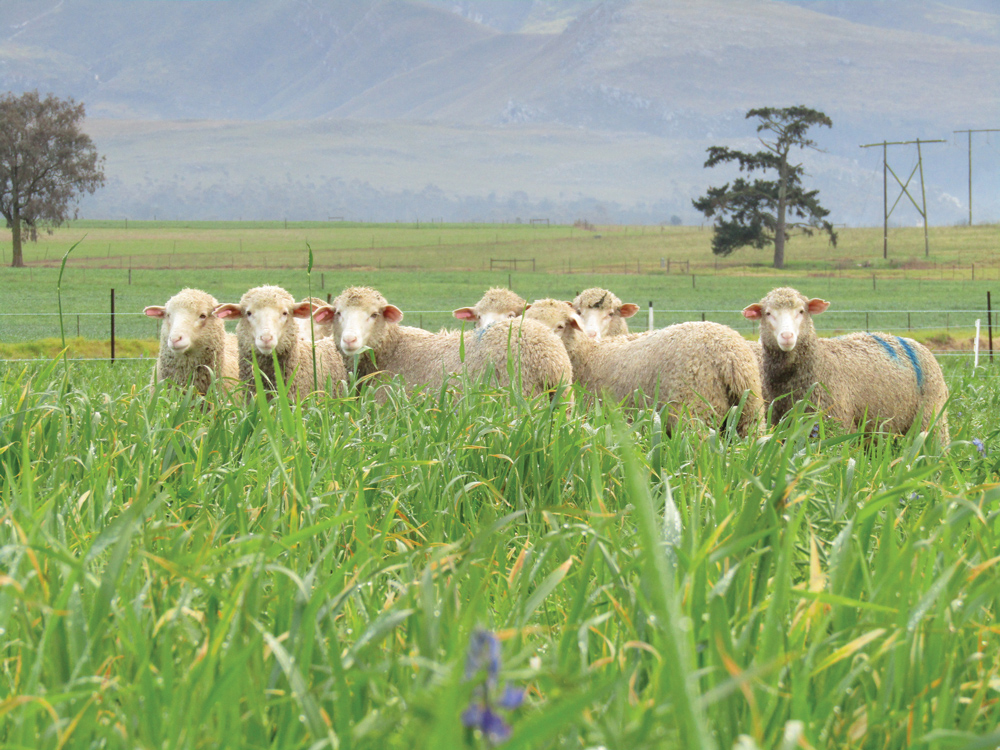
A promising development in integration is the use of grazed cover crops. These ‘service crops’ are planted primarily for ecosystem benefits, like soil protection, nitrogen fixation, and weed suppression. When grazed by livestock, they offer additional fodder value.
Studies have shown that grazing cover crops does not negatively affect wheat yields and may even enhance wheat protein content. This dual-purpose use maintains soil cover while providing economic return. Grazed cover crops may also reduce the need for traditional pasture phases, making them more appealing in tight crop rotations.
However, there are trade-offs: Cover crops replace income-generating cash crops during their growing season. Integrating livestock into the systems helps offset this cost while delivering ecological benefits.
Key challenges
Despite the promise, integration is not without its complications. Several key challenges have been identified that affect the successful integration of livestock into CA systems:
- Soil quality
Many Mediterranean soils in the Western Cape are relatively poor in organic matter due to historic monocropping and intensive tillage. Livestock integration can help rebuild soil carbon, but careful management is needed to avoid overgrazing and compaction. - Environmental trade-offs
Livestock, especially ruminants, produce methane and contribute to nitrous oxide emissions. But when integrated properly, grazing on residues and cover crops can reduce a system’s overall environmental footprint by replacing fertiliser use and enhancing soil health. Work conducted at Langgewens research farm2 has shown that the carbon footprint of systems with livestock and legumes can be lower than those of continuous cropping systems. - Economic viability
While integrated systems can reduce input costs and increase resilience, they also involve more complexity and upfront planning. Cash crops tend to be more profitable than livestock in good years, but livestock provide insurance in poor ones. Long-term profitability often favours mixed systems, but adoption depends on knowledge, risk tolerance, and support structures.
Towards a circular, resilient future
Findings reaffirm that integrated crop-livestock systems offer powerful tools for regenerating soil health, improving farm resilience, and reducing the environmental impact of agriculture in South Africa’s Mediterranean region. CA provides a strong foundation, and the inclusion of livestock, when well-managed, enhances its ecological and economic benefits.
Integrated agricultural systems create synergies between crops and livestock that ensure the recycling of nutrients, minimise by-product waste, reduce external inputs, and promote sustainable resource management. Furthermore, this approach offers multifaceted benefits such as resource utilisation and efficiency, increased production, climate resilience, and preservation of biodiversity.
Integration of livestock is, however, not simple. It demands systems thinking, investment in knowledge, and a willingness to rethink traditional models. But as climate change and resource constraints tighten their grip, such transformations are not just desirable, they’re necessary.
Developing farming systems that reflect nature’s circular processes offers a promising path towards enhancing long-term productivity, food security, and environmental sustainability in South Africa’s Mediterranean region.
References
- Swanepoel, PA & Smit, HPJ. 2025. Integration of livestock into conservation agriculture systems in the Mediterranean climate region of South Africa. African Journal of Range and Forage Science, 42(1): 1-9.
- Matthews, L, Strauss, JA, Reinsch, T, Smit, HPJ, Taube, F, Kluß, C & Swanepoel, PA. 2025. Legumes and livestock in no-till crop rotations: trade-offs between nitrous oxide emissions, carbon sequestration, yield, and protein content. Agricultural Systems, 224: 104218. https://doi.org/10.1016/j.agsy.2024.104218