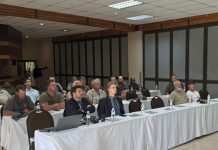


Nation in Conversation, hosted by Senwes at NAMPO 2025, brought together industry leaders, academics, policymakers, and producers to unpack South Africa’s most pressing agricultural issues. Over six sessions, participants explored how agriculture can remain resilient, relevant, and competitive amidst infrastructure breakdowns, political uncertainty, sustainability demands, and policy reform.
Session 1: Strengthening rural infrastructure
Rural infrastructure is the lifeblood of South African agriculture, yet roads, railways, water, and electricity systems are crumbling. The panel stressed that without functioning logistics, productivity and investment are severely constrained.
‘It’s cheaper to import soya from Argentina to
Cape Town than from the North West by road.’
– Theo Boshoff, CEO of Agbiz
Despite government inefficiencies, producers and agri-businesses are stepping in. Senwes, for instance, has independently repaired over 300 km of rural roads. Transnet’s Moshe Motlohi pointed to four key priorities: greener transport, better security, digitalisation, and safety. Yet national logistics costs remain at 11 to 12% of GDP, nearly double the global benchmark.
SANRAL’s Marlize Nel-Verwey admitted road projects can take up to eight years and require better funding models. Encouragingly, rural areas are outperforming metros in inclusive growth, as shown by a new UJ index. The message: the public and private sectors must collaborate more effectively to unlock rural potential.
Session 2: Politics, policy, and agricultural resilience
With political instability and economic stagnation looming, agriculture must help steer South Africa through turbulent waters. Panellists warned that progress cannot be left to government alone.
‘We need to step up and man up.’
– Johann Kotzé, CEO of AgriSA
Wandile Sihlobo from Agbiz urged the sector to continue implementing the Agriculture and Agro-processing Master Plan despite political cycles. Internationally, South Africa must seek ‘new friendships’ in emerging markets. Economist Dr Frans Cronjé reminded attendees that economic growth remains ‘abnormally low’ and that deep poverty and unemployment must be addressed before structural reform, like secure property rights, can succeed.
‘We won’t see stability on land rights
until we’ve dealt with poverty.’ – Dr Frans Cronjé
Session 3: Sustainability and ESG in practice
This session centred on how producers can meet environmental, social, and governance (ESG) goals – not as a luxury, but as a necessity.
‘If you don’t adapt now, your children won’t have a
future on the farm.’ – Cobus van Coller, producer
Without a national benchmark for sustainable farming, producers lack guidance. Still, procurement standards help define best practices. AgriSA’s Jolanda Andrag and Nedbank’s Herman de Kock stressed the importance of collaboration and long-term financial planning.
Small-scale producers face disproportionate risks due to climate change and cost pressures. Prof Danie Jordaan from the University of Pretoria underscored the need to integrate them meaningfully into sustainability strategies.
‘We can’t leave the smaller organisations behind.’ – Prof Danie Jordaan
The panellists concluded that rewarding sustainability – both in cash and non-cash ways – requires better data and coordination across the agricultural value chain.
Session 4: Preparing for the future of commercial agriculture
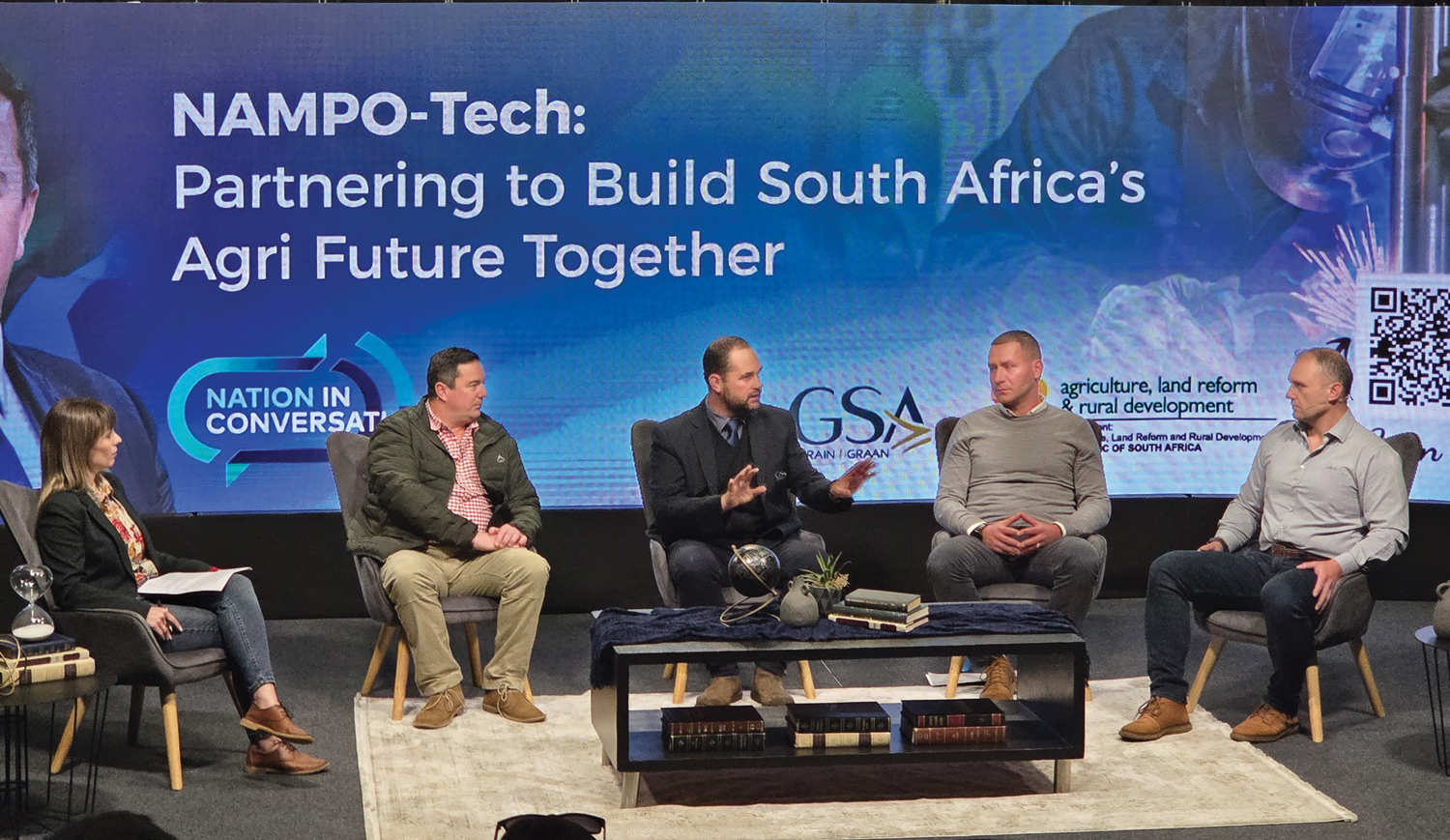
Technology, climate pressures, and generational transitions are reshaping commercial farming. South Africa’s producers are embracing change, but investment in research and development (R&D) remains too low.
‘Only 2% of global agricultural R&D investment is in Africa.’
– Prof Danie Brink, Stellenbosch University
Precision agriculture is no longer optional. Dr Tobias Doyer, CEO of Grain SA, and Prof Ferdi Meyer, MD of BFAP, discussed how AI, genetics, and digital tools are changing the game. However, affordability and access remain challenges, especially for emerging farmers.
‘Our producers are phenomenal at tuning out
the political noise. They simply farm better.’
– Johann Kotzé
Trade is also pushing standards higher, not just for export markets but locally too. The takeaway: collaboration, education, and technological access are key to a future-ready sector.
Session 5: Technology for efficiency and yield
With growing pressure on resources, smart technologies – from data analytics to automation – are helping producers do more with less.
BFAP’s dr Tracy Davids noted that data, when used well, benefit not only early adopters but the entire sector. However, smaller farms still lag in access by up to five years. John Deere’s Lafras Cronjé and Nedbank’s Gideon Rossouw called for financing models that widen access and unlock value across all farm sizes.
‘You don’t need the latest tractor to access the latest tools.’
– Lafras Cronjé
The message was clear: innovation must be inclusive to transform South African agriculture at scale.
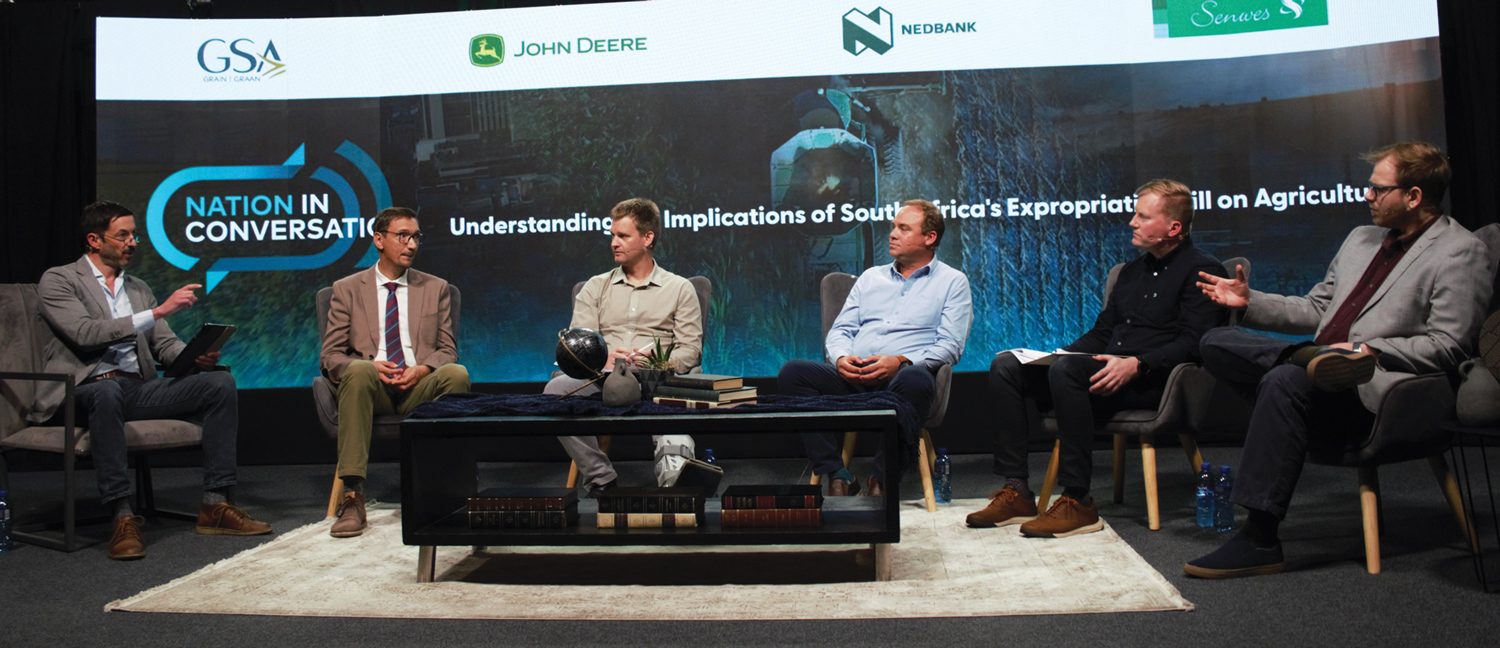
Session 6: Expropriation Act – clarity or crisis?
In the most anticipated and heated session, panellists debated the new Expropriation Act – a replacement of the outdated 1975 legislation – and its effect on agriculture, investment, and property rights.
‘The word “expropriation” has been weaponised.
It’s become toxic.’ – Dean Macpherson, Minister
of Public Works and Infrastructure
Macpherson insisted that the act simply standardises procedures and strengthens safeguards. But critics said it introduces risk, especially through Section 12.3, which permits nil compensation under certain conditions.
‘Zero compensation is neither fair nor equitable,
and that is what the Constitution demands.’
– Willem de Chavonnes Vrugt, AgriSA
Solidariteit’s Jaco Kleynhans questioned whether the process was too politically motivated. Theo Boshoff from Agbiz offered a pragmatic view, arguing that courts will be the final arbitrators of fairness, but that legal costs could hinder access to justice.
‘If a farmer loses the land they rely on for income,
where will they get the money to fight it in court?’
– Hermann Pretorius, Institute of Race Relations
At the core of the discussion was trust. Uncertainty breeds hesitation, reduces investment, and heightens risk. Macpherson acknowledged the need for clarity and pledged to improve the supporting regulations in consultation with the sector.
‘We need growth in this sector, which relies on confidence.’
– Willem de Chavonnes Vrugt
Kleynhans reminded the audience that this act came after a failed attempt to amend the Constitution – a warning that the law could be a political workaround.
The session concluded with cautious consensus: While clarity is improving, much depends on how the act is implemented, how courts interpret it, and how transparent government remains. Producers were urged to stay engaged and informed as this legislative landscape evolves.
Conclusion
Nation in Conversation at NAMPO 2025 confirmed that agriculture stands at the crossroads of risk and renewal. Whether tackling policy reform, infrastructure, or innovation, one theme echoed across all sessions: collaboration is the key to resilience. South African agriculture may face immense challenges, but with shared vision and decisive action, it holds the power to shape the nation’s future.