

In the industrial heart of Pretoria West, a facility is reshaping the future of soya processing in Africa. Pretoria Protein Company operates the continent’s first energy-neutral soybean crushing plant, where environmental sustainability underpins every decision.
Their golden framework involves utilising every part of the soybean. The oil is processed for future food and industrial uses, the hulls become a fibre-rich by-product, and the high-protein soybean meal, which is the main focus, is turned into animal feed. This creates a closed-loop system of efficiency and environmental responsibility.
Unlike many crushers that prioritise oil extraction, Pretoria Protein Company’s process focuses on the soybean meal. The aim is not to extract as much oil as possible at the expense of the meal, but to preserve and protect the nutritional value of the protein base. The outcome is a nutrient-dense, high-quality feed ingredient that meets the needs of monogastric livestock producers.
That doesn’t mean the oil and hulls are overlooked. The extracted oil undergoes stringent refining tests to ensure it meets food- and industry-grade requirements, and the hulls are incorporated into other agricultural applications. But it’s the soybean meal that leads. Delivering consistent, high-protein soybean meal requires ongoing monitoring, precise data, and deliberate decision-making at each stage of the process. Pretoria Protein Company’s laboratory is central to this approach.
From intake to dispatch, its work is continuous and active. Upon arrival, every load of soybeans is graded. The lab tests for moisture, protein, oil content, and other quality indicators. This initial analysis allows raw material to be stored by grade, giving production teams the flexibility to blend batches for a consistent and predictable input – an essential step given the seasonal and regional variability of soybean crops.
Sampling continues throughout production, with hourly tests at key points on the line. Protein, fat, fibre, moisture, urease activity, and KOH solubility are all measured to ensure the product remains within the target specifications. This level of control allows issues to be addressed in real time rather than post production.
Physical characteristics are also continually reviewed. Flake thickness and cracked bean size are carefully monitored, which influences everything from oil extraction to pressing efficiency. Managing these factors guarantees a consistent and uniform output. Standard oil testing includes moisture and sediment levels, colour values (red and yellow), rancidity, and phosphatide content. These measures ensure the oil meets safety, appearance, and shelf-life requirements, helping to produce a viable and
marketable by-product.
Pretoria Protein Company adopts a quality assurance approach focused on prevention rather than correction. The aim isn’t to test a finished product and classify it accordingly, but to operate a process where each batch already meets specifications. Every dispatch undergoes a final laboratory check before a certificate of conformance (COC) is issued, providing customers with documented confidence in product quality and traceability.
The lab also performs particle size distribution tests to assist feed manufacturers who rely on uniformity for optimal mixing, handling, and performance.
To verify the accuracy of in-house results, the company regularly sends samples to accredited external laboratories for independent testing. These third-party validations ensure the lab’s equipment and methodologies remain aligned with industry standards.
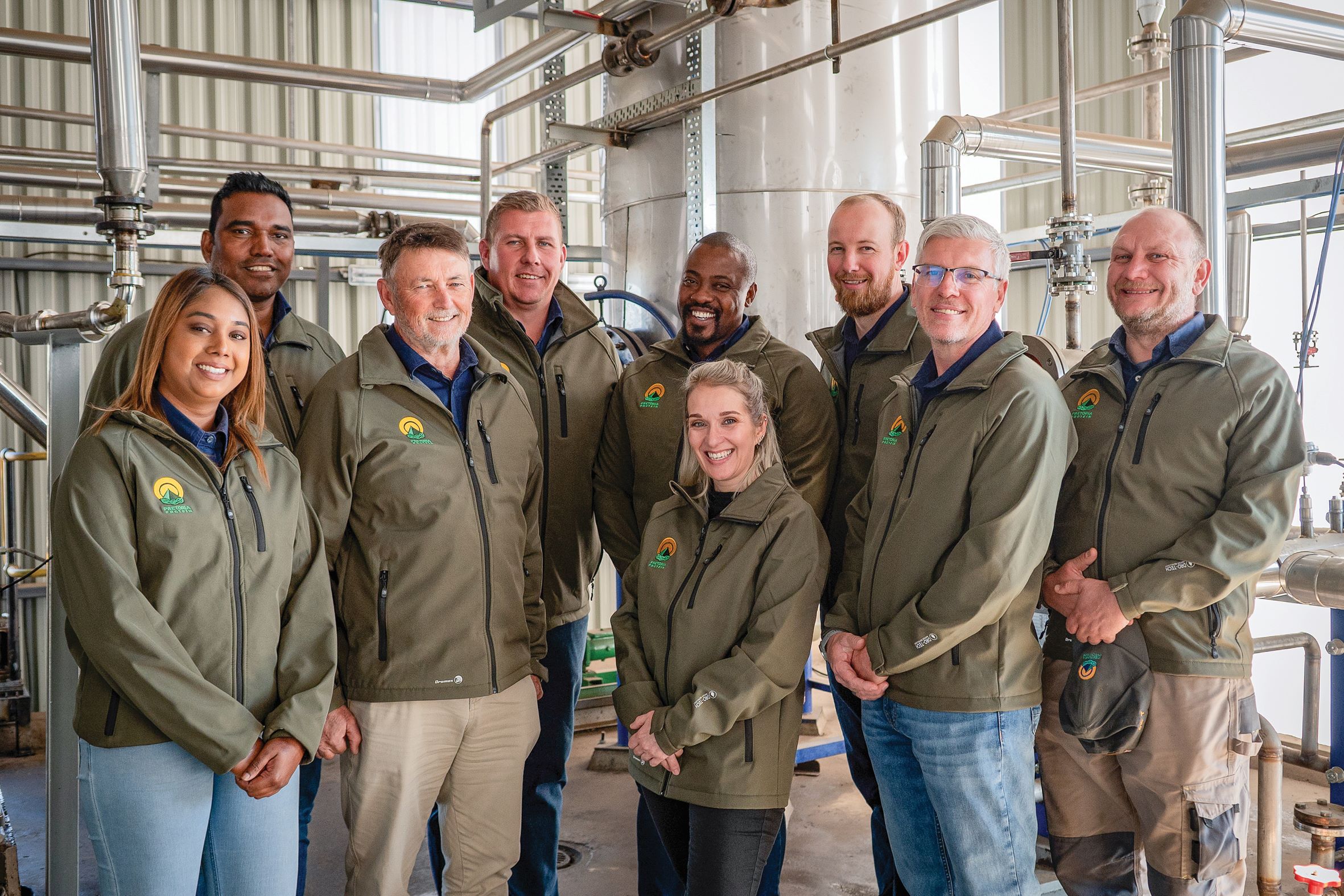
Naturally, even the most effective processes depend on people. Pretoria Protein Company’s lab technicians are trained not only in technical testing but also in interpreting results and understanding how these results impact daily operations. Their ability to respond to data immediately helps keep quality consistently high.
By designing a system where the soybean meal remains the flagship product, but no part of the soybean goes to waste, Pretoria Protein Company has discovered a way to serve both the market and the planet. It’s a process grounded in science, guided by values, and carried out with care.